
Why you should put artichokes on the menu more often
Translated from Dutch. Original title: “Waarom je wat vaker artisjokken op het menu zou moeten zetten”
A purple flower
The artichoke consists of fleshy leaves folded around the artichoke heart. If you let an artichoke grow to maturity, it produces a beautiful purple flower, which, sadly, you can't eat. Although the vegetable is available all year round, it tastes best fresh between December and May. That's reason enough to give them a try this month, especially when you hear about these health benefits:
1. They are good for your heart
Research tells us that artichokes can lower your cholesterol level. Studies have also shown that the juice of artichoke leaves has a positive effect on blood pressure, thanks to its high potassium content.
2. Artichokes contain good micronutrients
Micros, or micronutrients, are all the vitamins, minerals and trace elements in a food product. And artichokes contain plenty of them: vitamins B1, B11, C and K, and the minerals folium, iron, potassium and phosphorus. Did you know they also contain the most antioxidants of all vegetables? Antioxidants protect the cells and tissues in the body and guard you against disease. But be careful: if you overcook them, a large part of these nutrients is lost.
3. They also contain good macros
As well as good micros, artichokes also contain good macros: nutritional values in terms of carbohydrates, proteins and fats. Per 100 grams, artichokes contain just 47 calories, 10.5 grams of carbohydrates, 3.3 grams of protein and 0.15 grams of fat. The protein percentage in particular is fairly high for a vegetable, and they also have a high fibre content, namely 5.4 grams.
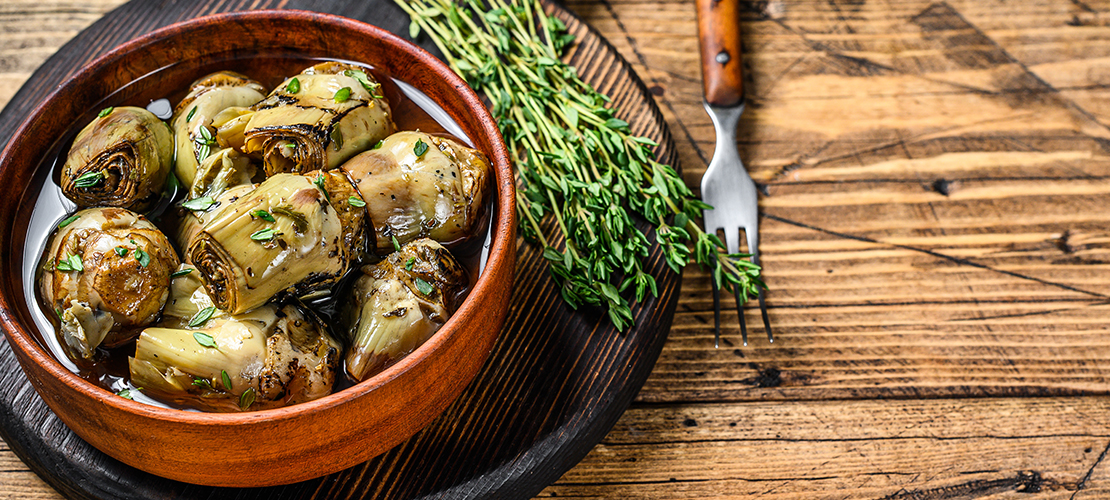
Do note that if you opt for a tinned variety, these nutritional values can be very different. The artichokes are often preserved in oil, which means the number of calories and fats is much higher.
Read also
Tinned, frozen or fresh vegetables: which is the healthiest?
4. Artichokes aid digestion
People who suffer from stomach and bowel problems would do well to eat artichokes regularly. Scientific research shows that they have a positive effect on digestion. The vegetable can help with heartburn, nausea and vomiting.
Want to receive the best stories from Fifty & Me in your inbox? Then sign up for the newsletter.
Image © Shutterstock
 Health
 Health
 Health