
Hair loss at menopause: how to fight back
Do we really need to list again all the damaging effects of the menopause? This much-dreaded stage of a woman's life is marked by hormonal upheaval, and characterised in particular by hair loss. But it is not inevitable. Let's take a closer look.
Translated from French. Original title: “Faire face à la chute de cheveux à la ménopause”
Why does the hair fall out?
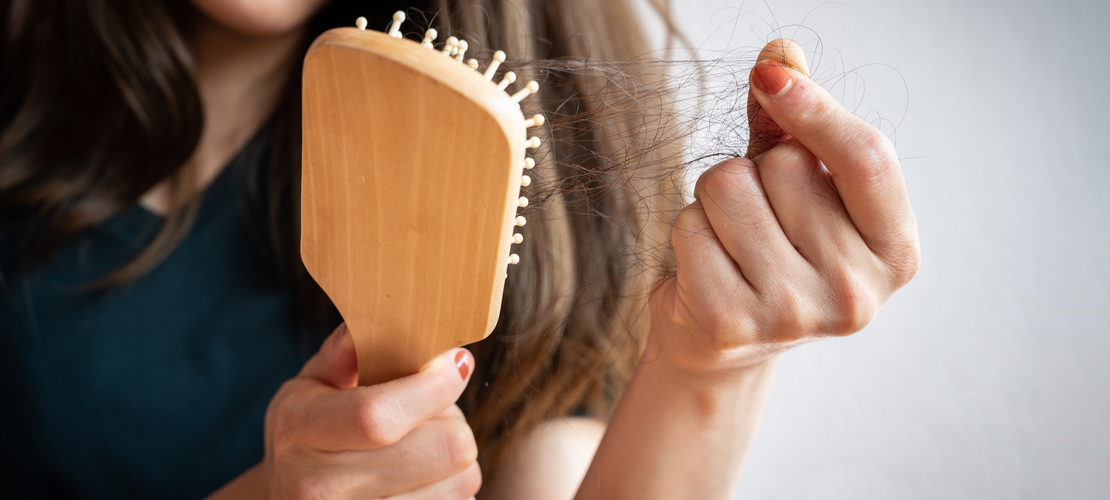
The menopause brings a hormonal upheaval, with a sudden slowdown in the production of oestrogen. These female hormones are important for hair growth. The phenomenon weakens the hair and causes it to fall out, which is known as reactive hair loss. More hair is lost than the normal 80 to 100 or so strands a day. The visible result is hair that is sometimes thinner, and hair that grows back more slowly. It is thought to affect almost one post-menopausal woman in two.
Which treatment should you choose?
For hair loss made worse by the menopause, suitable treatments do exist. They slow the loss and encourage hair growth. Many brands offer anti-hair-loss treatments that work in two ways: stimulating hair growth and limiting hair loss. They are not miracle products, however, and it takes patience for them to work. It can be a few months before you see the first effects. In the most serious cases, medical advice may be needed, from a dermatologist, but also from an endocrinologist or your gynaecologist, since the problem is hormonal in origin. A specialist hormone treatment and/or certain suitable medicines may be prescribed. In extreme cases, there is even a more radical solution: a hair transplant.
Everyday habits to change
Certain habits can also help to limit hair loss. Stop brushing too roughly and avoid exposing your hair to the sun. Forget, too, hairstyles that are very (too) tight, which weaken the hair fibres and encourage hair loss. After a shower or a swim, do not dry your hair by wringing it out with a towel. Wet hair is very fragile. There is no point in attacking it with a hairdryer either, which will have the same result: hair loss. Wet hair should dry naturally, in the open air.
Food: a precious ally for your hair
What should you eat to stimulate hair growth? Foods rich in vitamins E and B5 should be on the menu. Vitamin B5 strengthens the vitality of the hair, and you can get it from offal, eggs and poultry. These foods also contain vitamin B12, as does fish, which is essential for transporting oxygen. Add fruit as well, to be sure of getting vitamin C, a powerful antioxidant. Also include foods rich in protein, zinc, iron and omega-3, such as oily fish. To make sure you are getting everything your hair needs, you can take a course of food supplements. Take them in moderation to avoid any overdose (as already mentioned in a previous article).
 Health
 Health
 Travel