
Why Looking After Your Eyesight Matters After 50
One day, you find yourself holding a menu at arm's length. You adjust the lighting to make out the lines of a book. You blink more often, almost without thinking. There is probably nothing to worry about: it is most likely presbyopia, the loss of flexibility in the lens that makes close-up vision more difficult. But as time goes by, other signs creep in: dry eyes, blurred vision at the end of the day, increased sensitivity to light. These symptoms are common and often dismissed… wrongly so.
Translated from French. Original title: “Pourquoi c’est important de prendre soin de sa vue après 50 ans ?”
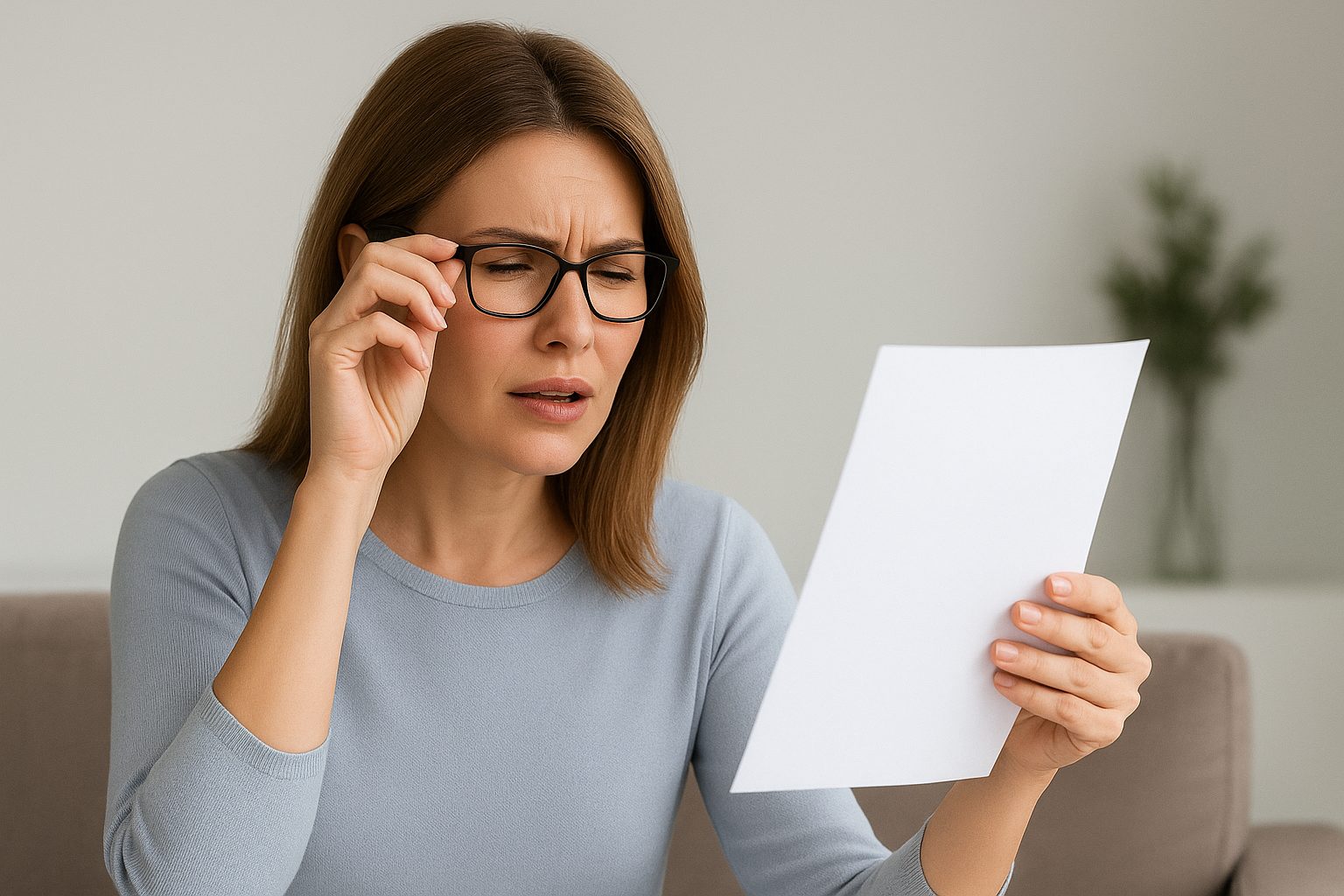
Protecting your fine vision
From around the age of fifty, certain eye conditions gain ground without raising any alarm. Discreet but regular vigilance can make all the difference. Age-related macular degeneration (AMD) affects the central part of the retina and impairs fine vision. Reading, sewing and recognising a face become harder. A retinal examination can detect it at an early stage, when treatments are still effective.
Excessively high pressure inside the eye can damage the optic nerve: this is glaucoma. It develops with no pain and no symptoms until the visual field is irreversibly lost. A check-up every two years is enough to identify it.
Finally, cataracts occur when the lens becomes clouded, giving the impression of seeing through a hazy filter. They can be corrected very simply with a routine surgical procedure.
Even in the absence of any major problem, an eye examination every two years is an essential preventive measure.
Eye yoga: an effective ritual
Inspired by Ayurveda, eye yoga relaxes the muscles of the eye, boosts microcirculation and reduces visual fatigue.
To practise at home, just a few minutes are enough:
- Palming: warm your hands and cup them over your closed eyes, breathing slowly for one minute.
- Zoom in, zoom out: focus on an outstretched thumb, slowly bring it towards your nose, then move it away again. Ten times.
- Eye movements: trace a circle, a square and a figure of eight on its side with your eyes, without moving your head.
Dry eyes are not inevitable
With age, the natural production of tears decreases. Dryness, a tight feeling, a sensation of grit under the eyelids… these are all small signals not to be ignored.
Beyond moisturising eye drops, diet plays an essential role. Omega-3s (camelina oil, oily fish, flaxseed) strengthen the membranes and promote good lubrication of the eyes. Water, quite simply, remains a fundamental ally.
Screens tire your eyes more than you think
Our eyes were not made to stare at a screen for eight hours a day. Yet that is our daily reality. The result: eye strain, heavy eyelids, blurred vision and poorer concentration.
The solution? Rest your gaze. The 20-20-20 rule still reigns supreme: every 20 minutes, look at something 6 metres away for 20 seconds. And whenever you can, step out into natural light. Nothing is as restful as the horizon.
Preserving your sight, prolonging your freedom
Our gaze does more than simply see. It illuminates, selects, connects. It captures what makes sense, what moves us, what we sometimes only see with age. Preserving your vision is not giving in to the fear of growing older; it is nurturing your freedom: reading, cooking, driving, observing, contemplating. Keeping in touch with others. And with yourself.
copyright: IA
 Health
 Health
 Health