
What is Verneuil's disease?
Little known to the general public, Verneuil's disease is a dermatological condition feared for its consequences. It is painful both physically and for the damage it does to self-image. It is an ordeal endured by the 4% of the population affected, with a ratio of three women to every man. One small ray of light: the disease tends to fade away at the menopause.
Translated from French. Original title: “Qu’est-ce que la maladie de Verneuil ?”
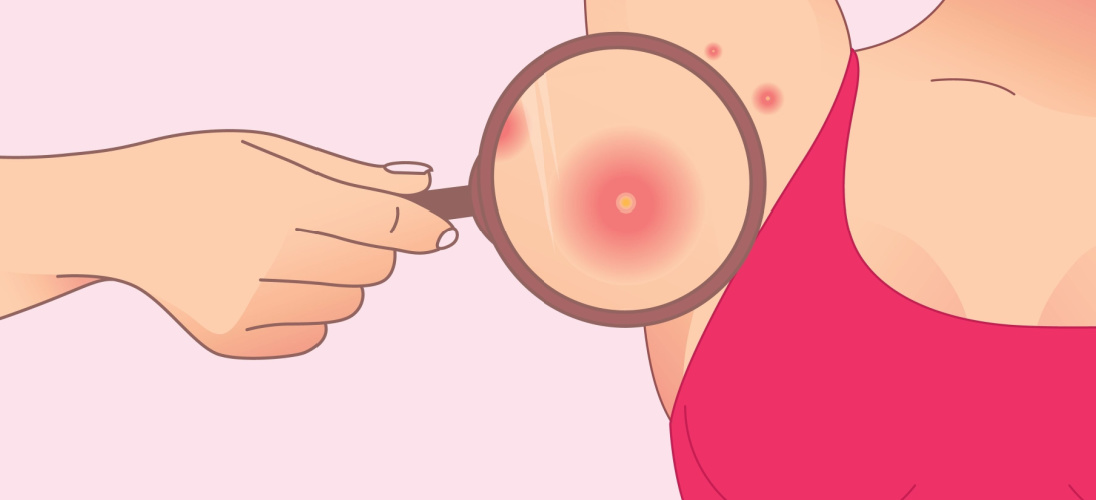
Verneuil's disease: what is it?
Listed in the medical textbooks as hidradenitis suppurativa, Verneuil's disease (named after the surgeon who first described it in 1854) is a chronic, progressive dermatological condition. Its severity is classified in three stages. Stage 1 involves a few nodules concentrated on one part of the body. At stage 2, the lesions are more widespread and may also disappear. Stage 3 is defined by lesions that are present permanently. Most patients do not generally progress beyond stage 1, which accounts for around 68% of cases.
Multiple causes behind its onset
The causes of this inflammatory disease have not yet been definitively established. However, the medical literature puts forward certain predisposing factors. One is a hormonal imbalance that begins at puberty and disappears of its own accord at the menopause. Other triggering factors include a genetic origin and a natural predisposition found in people who are overweight and/or smoke.
What are the symptoms of Verneuil's disease?
A striking feature of this condition is that Verneuil's disease is marked by painful and dramatic-looking symptoms. Nodules, often containing pus, appear in the folds of the body, such as the groin, the armpits, the buttock crease or under the breasts. Spots, boils and red patches may also appear. Besides the physical pain these lesions cause, the psychological repercussions prove hard to live with day to day. Patients are stigmatised because of their lesions and because of a fear of contagion, which is unfounded. Sufferers may be tempted to withdraw from social life.
What treatments are available?
Verneuil's disease is also little known within the medical profession, and it is sometimes confused with other conditions that have similar symptoms. As the website louvainmedical.be points out, “the time taken to reach a diagnosis can be as long as 12 years”. The condition requires a multidisciplinary approach. A first appointment with your GP allows the nodules to be examined clinically and any family history to be looked into. To treat the early stages of the disease, a dermatologist will prescribe antiseptics and antibiotics. Surgery is considered only to treat and remove the nodules at stage 3 of the disease (4% of cases). Scientific research is also exploring new avenues for treating the disease. “The recent use of biological treatments for this condition looks promising,” the website louvainmedical.be adds. Help from a dietitian to reduce the risk of being overweight is another option.
Note: this article is not intended to replace medical advice.
Photo Shutterstock.
 Health
 Health
 Health