
What is sarcopenia?
Once we reach our fifties, natural ageing brings with it muscle loss and a decline in strength. The phenomenon is caused by an imbalance between protein synthesis and proteolysis or, put more simply, the building up and the breaking down of muscle mass. For postmenopausal women, this loss of muscle mass occurs to varying degrees. When it goes beyond the normal threshold, doctors speak of sarcopenia. There are ways to prevent it.
Translated from French. Original title: “Qu’est-ce que la sarcopénie ?”
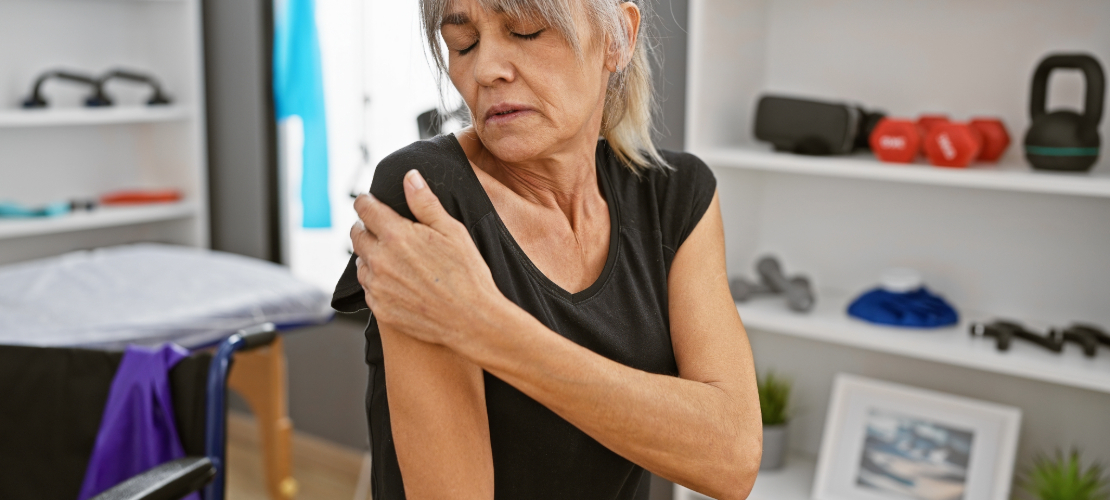
Sarcopenia: what is it?
Sarcopenia can be defined as a progressive and significant loss of muscle mass, strength and function caused by natural ageing. This definition, put forward by the European Working Group on Sarcopenia in Older People, is generally adopted. Muscle loss begins in our thirties and accelerates at 50 or 60. By the age of 70, the average loss is estimated at 50% of muscle mass (1). Sarcopenia is described as primary when age is its cause, and as secondary when it results from pathological or nutritional factors, or from immobility. According to a European study published in 2017, sarcopenia affects some 30% of women over 65. The same study points out that sarcopenia will continue to rise in Europe, reaching 12.9% of older people in 2045, compared with 11.1% in 2016 (1).
How can you tell whether you have sarcopenia?
How does a doctor make a diagnosis? By carrying out a number of tests, such as measuring grip strength, but also calculating walking speed and the time needed to stand up from a chair or perform a few simple exercises. As a preventive measure, an annual test is recommended for people over 50. (2)
How can you protect your muscle mass?
Leading a healthy lifestyle, including regular physical activity, can help slow muscle loss. But which sports are recommended to reduce the risk of sarcopenia? Sports coach David Moens replies: "You need to combine two types of exercise: endurance sports such as brisk walking, cycling or swimming and, above all, resistance exercises, using stretchy resistance bands or dumbbells suited to your body type. Sessions should add up to at least three hours a week."
Regular sessions over several months could help you regain 20 to 30% of your muscle mass. (3)
Prevention also focuses on diet, which should be balanced and sufficient: around 1 g of protein per kg of body weight for women, fruit and vegetables for their antioxidants, and foods rich in calcium and vitamin D for healthy bones. (3)
References:
1 Cruz-Jentoft A et a.l Sarcopenia : european consensus on definition and diagnosis. Age and aging 2010 ;39 :412-23 2 Cooper C et al. Tools in the assessment of sarcopenia. Calcif Tissue Int. 2013 ;93(3):201-10
2 . https://www.mysprintt.eu/fr/la-future-pr-valence-de-la-sarcop-nie-en-europe-une-demande-de-mesures-de-sant-publique
3. Boirie Y. Physiopathological mechanism of sarcopenia. J Nutr Health Aging. oct 2009;13(8):717‑723
© Illustration: Shutterstock
 Health
 Health
 Health