
What is computer vision syndrome?
Whether for work or for keeping in touch with the (grand)children, screens are very much part of everyday life for women in their fifties. The average Belgian is said to spend a fifth of their weekly waking hours in front of a screen. Such prolonged use can trigger certain complaints, including computer vision syndrome (CVS). Fortunately, there are ways to find greater eye comfort again.
Translated from French. Original title: “Qu’est-ce que le syndrome de la vision artificielle ?”
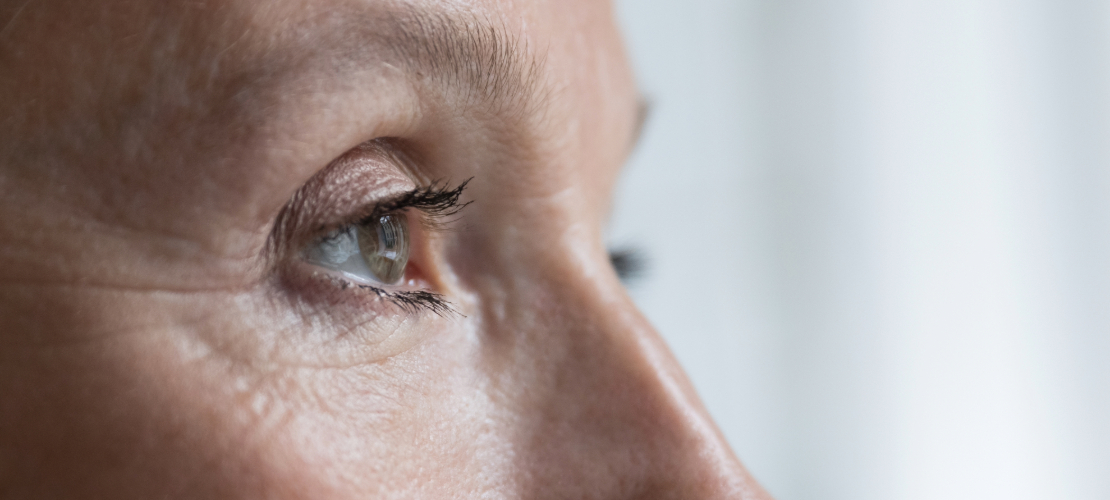
Computer vision syndrome: what is it?
Classed as a public health issue, computer vision syndrome (CVS), or digital eye strain, is defined as a set of symptoms caused by prolonged use of digital devices. The condition has become more common since the widespread adoption of remote working (1) and the massive everyday use of screens. It is thought to affect younger generations just as much as older users (2). According to a study published by Proximus in February 2024, the average Belgian spends between 150 and 180 minutes a day in front of a screen.
The syndrome has multiple causes, such as poor posture at the screen, inadequate lighting and possible glare. Seeing an ophthalmologist regularly also helps to make sure your vision is properly corrected, ruling out another possible cause. Between the ages of 50 and 60, certain vision problems can indeed appear and make the symptoms of computer vision syndrome worse (2), such as greater sensitivity to light and presbyopia. Changes in vision are thought to affect some 97% of people aged 60 and over.
What are the symptoms of computer vision syndrome?
Studies carried out on CVS confirm it: spending more than three hours a day in front of a screen carries a 90% risk of developing certain characteristic symptoms (1 and 2):
- Eye strain
- Blurred vision
- Frequent headaches
- Neck pain
- Eye irritation
- Dry eyes
- A general feeling of tiredness
- Photophobia
How can you reduce the symptoms?
Cutting down on screen time is a pious hope for many of us. Even so, adopting a few daily habits will help to ease the symptoms. (2) The first and most obvious solution is to take regular breaks to rest your eyes. The rule is to take a 20-second break every 20 minutes, letting your gaze rest on something in the distance. You should also take a break of around ten minutes every two hours, ideally stepping outside to enjoy natural light, whose benefits are well known, notably for the quality of sleep during the menopause.
Another tip is to make sure you blink often enough. As for the screen, it should be placed about 50 centimetres from your eyes. Do not overlook the built-in tools that can help you cut down on screen time, either. A simple adjustment to your smartphone settings will alert you when you exceed a set limit. Finally, medical advice may recommend wearing rest glasses or using eye drops to relieve the dry eyes that come with CVS.
References:
(1) https://www.ncbi.nlm.nih.gov/pmc/articles/PMC10902934/
(2) https://www.ncbi.nlm.nih.gov/pmc/articles/PMC9961559/
 Health
 Health
 Health