
The slimming powers of fibre after 50
For a long time, fibre was reduced to a rather unglamorous role: keeping things moving. That view is now largely outdated. Research into the microbiome and appetite regulation has revealed that fibre is involved in far more complex mechanisms.
Translated from French. Original title: “Les pouvoirs minceur des fibres à 50 ans et plus”
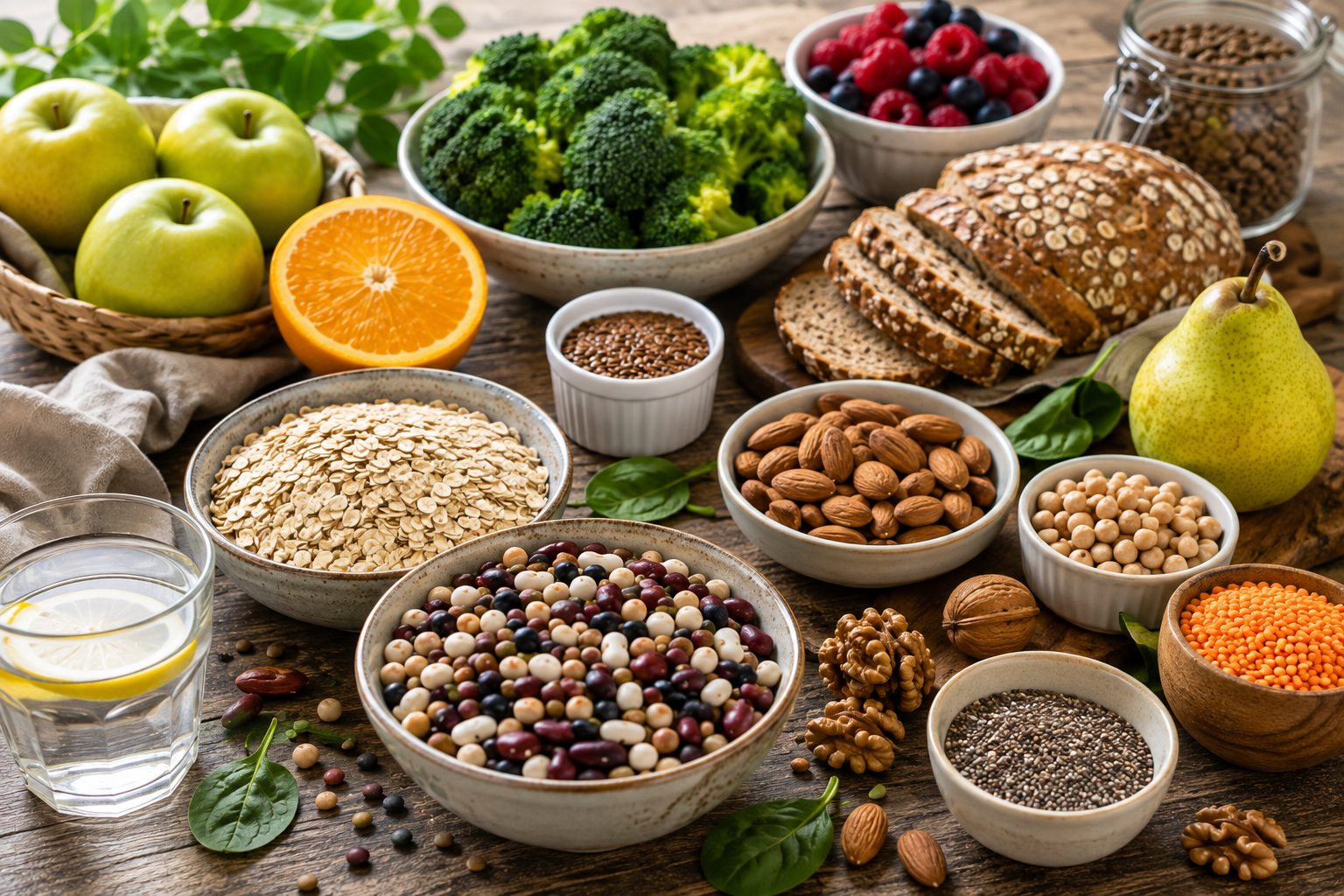
Found naturally in vegetables, fruit, pulses, wholegrain cereals, seeds and nuts, fibre is a type of carbohydrate that our bodies cannot fully digest. It therefore passes through part of the digestive system without being absorbed in the way ordinary sugars are. And that is precisely what makes it so valuable.
Soluble or insoluble?
Not all fibre is the same. Insoluble fibre, found in wholegrain cereals and many vegetables, absorbs water, adds bulk to stools and helps keep digestion regular. Soluble fibre, found for example in fruit, oats and certain pulses, forms a kind of gel in the gut when it comes into contact with water. This gel slows down digestion and the absorption of certain nutrients. Rather than trying to favour one type, it is better to aim for variety: vegetables, whole fruit, lentils, chickpeas, beans, wholemeal bread, porridge oats, nuts and seeds all complement one another perfectly.
Why can fibre help you manage your weight?
Of course, no single food can make you "slim down" on its own. But a diet that is naturally rich in fibre can help to regulate your appetite more effectively.
The first benefit: fibre increases satiety. Foods that contain it often require more chewing and take up more room in the stomach. The result? You may feel full for longer.
The second advantage: soluble fibre slows the absorption of carbohydrates. This helps to avoid blood sugar levels rising or falling too quickly after a meal.
Finally, some fibres are fermented by the bacteria in the colon. This fermentation produces, among other things, short-chain fatty acids, compounds that are being studied for their effects on gut health and metabolism. A well-fed microbiome is far from a minor detail: the gut also plays a part in the signals involved in hunger and fullness.
In other words, the appeal of fibre does not lie in some mysterious "fat-burning" effect, but in a combination of mechanisms that can make it easier to eat in a filling, balanced way.
After 50, an added benefit
As we age, our nutritional needs do not disappear – quite the opposite. At the same time, energy expenditure may fall, particularly when muscle mass and physical activity decline. The aim is therefore not to eat less and less, but to choose more wisely what goes on your plate. And fibre-rich foods have a strong hand to play here.
A plate made up of vegetables, pulses or wholegrain cereals provides volume and satiety while delivering plenty of micronutrients. Pulses have an extra advantage: they combine fibre with plant protein. Lentils, chickpeas, white beans and kidney beans deserve a regular place on the menu.
The mistake to avoid: going from almost none to far too much
Deciding overnight to replace all your usual foods with their ultra-high-fibre versions is not necessarily a good idea. Increasing your intake too abruptly can cause bloating, wind or digestive discomfort. Your gut and your microbiome need time to adjust. The key word, then, is gradual.
You can start simply by adding a piece of whole fruit during the day and more cooked vegetables at mealtimes. Then gradually swap some refined starchy foods for semi-wholegrain or wholegrain versions. Finally, introduce pulses once or several times a week, depending on how well you tolerate them. There is no need to turn your diet into a competition: consistency matters more than a dramatic increase for a few days.
Increasing your fibre intake without drinking enough can be counterproductive. Some fibres absorb a lot of water, so proper hydration is essential if they are to do their job correctly in digestion. Water remains the go-to drink. Soups, fruit and vegetables also contribute to your daily hydration.
How can you get more fibre on your plate?
A few changes are often enough to make a real difference. At breakfast, choose porridge oats or wholemeal bread rather than highly refined cereals. At lunchtime, add a generous portion of vegetables and alternate white rice with brown or semi-wholegrain rice. For an afternoon snack, opt for a piece of whole fruit with a few nuts rather than a fruit juice. And in the evening, a vegetable soup served with lentils or chickpeas is an easy way to boost your fibre intake.
Whole fruit is in fact preferable to juice when you are looking for fibre: pressing or straining a fruit removes some of it, and liquid is generally less filling than fruit you have to chew.
No need to count every gram
It can be useful to know the nutritional recommendations, but there is no need to turn every meal into an accounting exercise. The best guide is often your plate: the more varied the plant foods you eat every day, the easier it becomes to increase your fibre intake naturally.
After 50, the right instinct is not to eat less at all costs, but to make more room for foods that truly fill you up and nourish you. And in that respect, fibre really does have more than one trick up its sleeve.
 Health
 Health
 Health