
The Benefits of Asparagus
When planning our daily portions of vegetables, let's not forget asparagus. A miracle vegetable with plenty of other attractions besides.
Translated from French. Original title: “Les bienfaits des asperges”
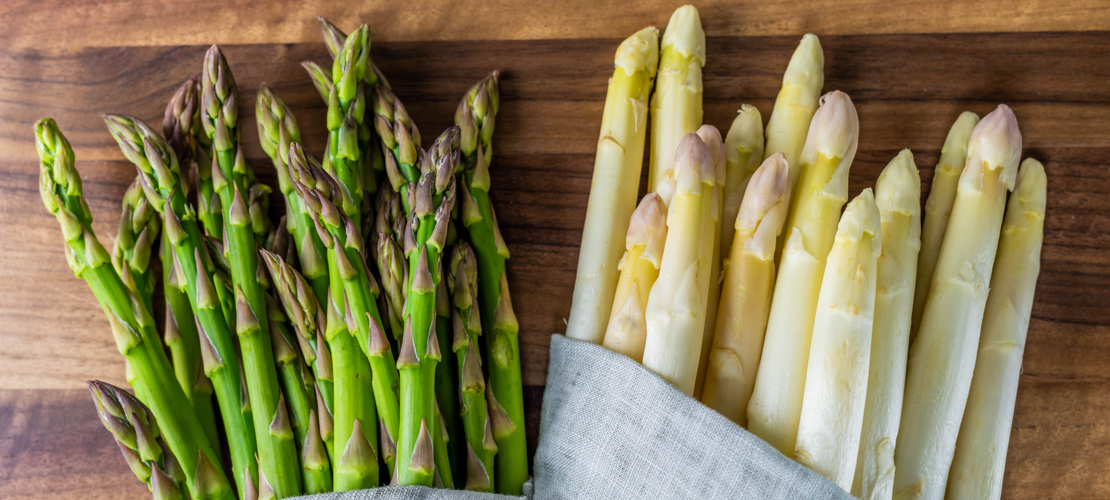
Asparagus: your slimming ally
If you have a few kilos to lose before summer, eating asparagus, in moderation, produces a feeling of fullness that is both quick to arrive and long-lasting. This is thanks to asparagus's high fibre content. It is also a low-calorie vegetable (25 kcal/100 g) and rich in water.
Let's make the most of the benefits of asparagus
Detox effect. Particularly by drinking the water in which asparagus has been cooked.
Excellent intestinal transit, helped along by the abundant fibre.
Vitamins E and C. Two super vitamins with beneficial effects on the skin: antioxidant and anti-ageing.
Low sodium content. Ideal for combating high blood pressure.
Slows the absorption of fats and sugars.
Beta-carotene, a major antioxidant for preserving eyesight and preventing cellular ageing.
Diuretic action.
All of these advantages are found in white asparagus as well as in the green variety.
A few contraindications
However, despite all the benefits mentioned, asparagus is not recommended for everyone. This is the case for people who are taking anticoagulant treatment. The reason is the vitamin K in asparagus, which is not well suited to the prescribed medication. Those who suffer from attacks of gout or kidney problems should also keep their asparagus consumption to a minimum. Eating a lot of asparagus can also lead to the formation of kidney stones, because of the purines it contains. Medical advice may prove useful in these cases.
Another problem, temporary and harmless, caused by eating asparagus: foul-smelling urine. The culprit is a sulphur compound with an obscure name: methyl mercaptan.
How should you eat asparagus?
If you are eating fresh asparagus (from March to the end of June), it must first be washed thoroughly to remove as much pesticide residue as possible. This is a vegetable that should not be eaten raw. It must be cooked, either boiled or steamed (steaming is preferable, as it retains the maximum amount of nutrients). When it comes to recipes, only your imagination sets the limits. But the best way to enjoy asparagus is to eat it hot or cold, simply with melted butter sauce, a vinaigrette or a little homemade mayonnaise. To choose well, look for asparagus with tightly closed tips and undamaged stalks.
Finally, you can also drink asparagus as a juice, for the maximum detox effect. Simply put it through a juice extractor. The only drawback is the loss of the fibre. The vitamins and antioxidants, however, are still very much present.
 Health
 Health
 Health