
Snacking: why and how to cut back
Eating out of sheer habit, or to fill a void, or to ease stress. It's something most of us do a little, isn't it? Who doesn't have a chocolate bar or some sweets in their desk drawer or handbag? Yet it is a habit worth curbing if we want to avoid a range of health problems.
Translated from French. Original title: “Pourquoi et comment limiter le grignotage”
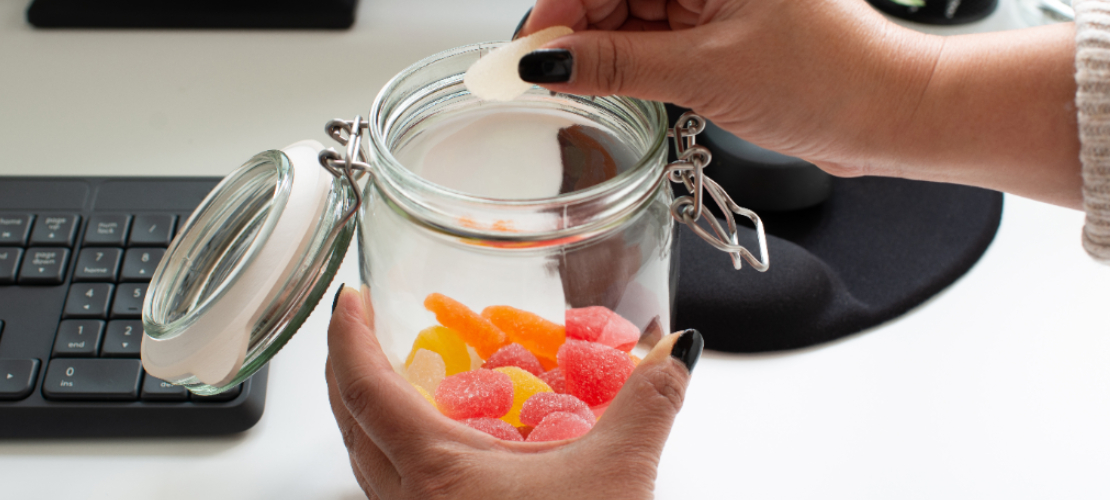
Why do we snack?
As nutritionist Martine Jeandrain explains: "Hunger is rarely the main reason we dip into the plentiful food that is within easy reach. Most of the time, the urge to snack comes from boredom or from a need to calm a state of stress. We start eating anything and everything in response. These foods do little for our health, but they have a soothing effect on a passing bout of unease. A few squares of dark chocolate won't put you in danger. What matters, too, is to work out what drives us to reach for these snacks. Is it an emotional void? A personal or professional worry? These are reasons that may call for a consultation with a specialist."
Why should we limit snacking?
It is far from a trivial question if we want to spare ourselves a good deal of health trouble. "The list of snacking's harmful effects on health is as long as your arm. Obesity heads it, but it is followed closely by a number of equally serious dangers: teeth in poor condition because of the sugar consumed in large quantities; chronic inflammatory diseases, which often result from a high-carbohydrate diet brought about by snacking. But also premature ageing, cardiovascular risks and deficiencies. A sweet treat eaten in place of a piece of fruit, for example, can lead to nutritional deficiencies, with migraines, fatigue, a dull complexion and many other harmful effects as a result. Not to mention the development of certain cancers, notably through the presence, and above all the accumulation, of toxic additives, including the notorious titanium dioxide (E171) found in sweets," Martine Jeandrain points out.
Five anti-snacking tips
- Drink plenty of water. It creates a natural feeling of fullness.
- Swap sweet treats for healthier foods that keep you full for longer. An apple, for instance, is an excellent appetite suppressant and low in calories (52 calories per 100 g). Or a portion of fromage blanc, a hard-boiled egg or a few nuts to slip into your pockets.
- Avoid snacking in front of a screen. Absorbed in a programme, we are unaware of how many snacks we are getting through.
- Don't skip meals, to avoid mid-morning or late-afternoon cravings.
- Make sure you get enough sleep. What's the connection? A shortfall in hours of sleep leads, among other things, to the production of ghrelin, a hormone with an orexigenic effect (it stimulates appetite). The less we sleep, the more ghrelin is produced, with a heightened urge to eat for no reason. Lack of sleep also triggers the production of cortisol, which likewise increases appetite.
 Health
 Health
 Health