
Should you really brush your teeth straight after a meal?
Some everyday habits die hard, and we often adopt them without stopping to wonder whether they make sense. Brushing your teeth straight after a meal is one of them. It is a practice that now has to be reconsidered in light of the way we eat these days, with more acidic products on our plates.
Translated from French. Original title: “Faut-il vraiment se brosser les dents juste après le repas ?”
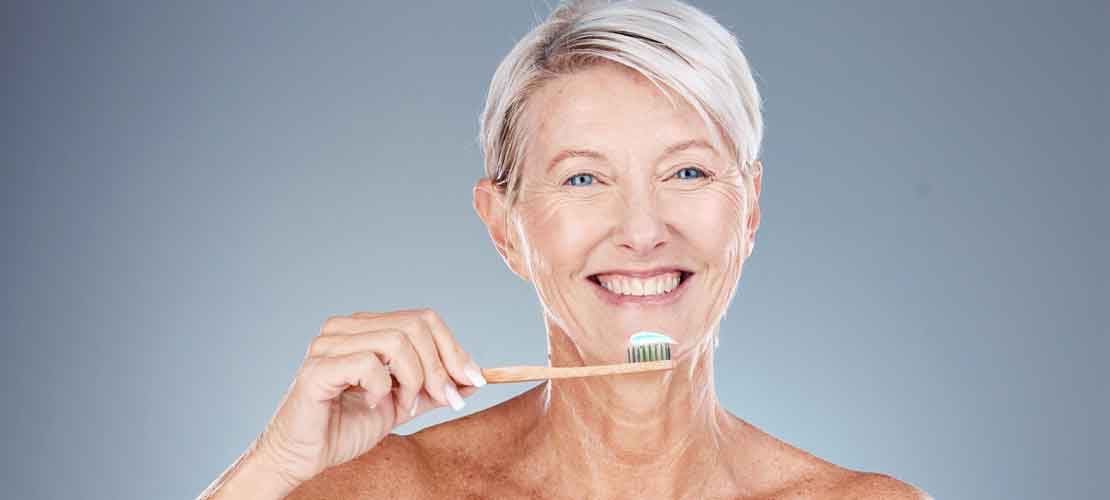
A little patience before brushing after a meal
Among our friends and family, there will always be someone who slips off to the loo after a meal to brush their teeth discreetly. It is not an example to follow after eating or drinking anything acidic (fizzy drinks, fruit, salads and so on). The website Allodocteurs.fr recommends "waiting between 30 and 60 minutes to give the saliva time to flush out the harmful substances. Brushing your teeth immediately after consuming these acidic products endangers tooth enamel through the corrosive action of the acid." The risk is heightened by certain healthy habits, such as eating several pieces of fruit a day.
Drinking a glass of water and/or chewing gum (for around 15 minutes) can help counter acidity by stimulating saliva production.
How often should you brush your teeth?
Looking after your teeth is a given. But when and how should you go about it? Brushing two to three times a day is enough to maintain good oral health, provided you do not snack between meals. As for the most important brushing of the day, it is the one in the evening, so it is best done thoroughly. Why? Because during the night, saliva is not produced in the same quantities as during the day, so the protective effect on your teeth is weaker. A thorough clean involves both a toothbrush and dental floss, to remove bacteria and food debris lodged between the teeth. Brushing should last no less than two minutes, the ideal length of time to remove as much dental plaque as possible. And for those who find it difficult to brush their teeth during the day, there is a natural alternative: the Siwak stick. It is easy to keep in a pocket or handbag, and it makes toothpaste and water unnecessary.
The right accessories
Effective brushing takes time, regularity and the right brush movements in the mouth. For anyone who tends to rush the job, an electric toothbrush is an effective solution, as the oscillations of the brush make for a more thorough clean. It also leaves teeth smoother under the tongue. Many brushes come with a timer to ensure you brush for long enough.
Otherwise, a good manual toothbrush can do the job, as long as you replace it regularly. Ideally, change it every three months (as you would the head of an electric toothbrush), to avoid the effects of frayed bristles and of the bacteria that linger in and between them. Besides the brush, dental floss is essential, and is available in nylon. Or in PTFE, the most highly recommended as it is far more durable. As for mouthwash, it is useful for getting rid of bacteria.
Photo Shutterstock.
 Health
 Health
 Health