
Nuts and dried fruit: the perfect treat
Eat fruit every day. Fair enough, but it is not always an easy recommendation to follow. Fresh fruit can be costly, and it is awkward to carry around in your bag. So why not swap it for nuts and dried fruit? A concentrate of goodness and flavour, they help you avoid the harmful effects of processed sweets and keep your figure in check.
Translated from French. Original title: “Les fruits secs et séchés, la friandise idéale”
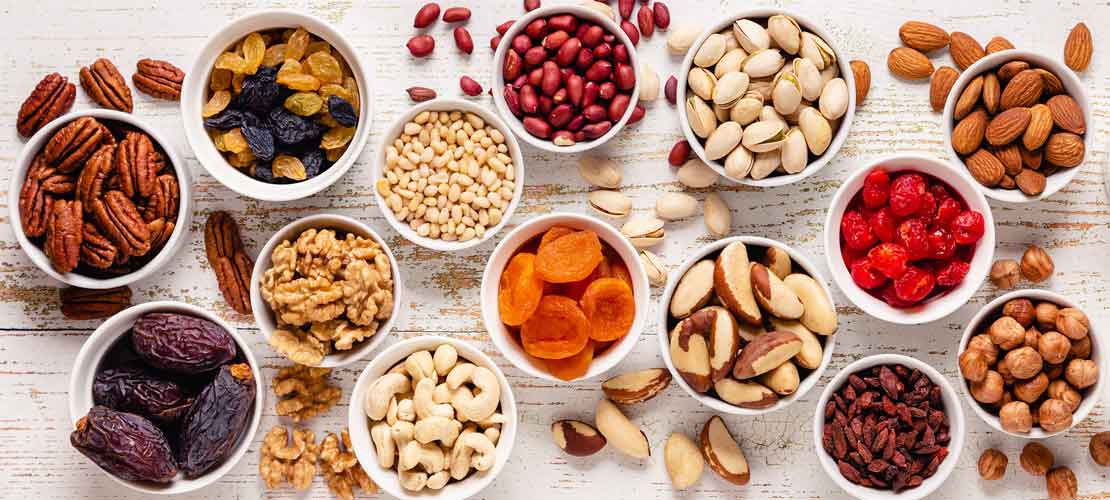
Nuts and dried fruit: what is the difference?
Nuts are tree nuts and oleaginous seeds, dried without any human intervention, other than perhaps roasting or salting them. Dried or dehydrated fruits, on the other hand, are fresh fruits left to dry so that as much water as possible is removed, around 90% in all.
Which nuts and dried fruit should you choose?
First piece of advice: choose organic fruit, to keep the presence of pesticides and toxic fertilisers to a minimum. Next, it is best to vary the fruits you eat, to get the most from the nutrients each one offers. Among nuts, the hazelnut is a first-rate choice, an excellent antioxidant that is rich in fibre. The almond, for its part, helps reduce the risk of cardiovascular problems and cognitive decline (Alzheimer's, Parkinson's) thanks to its high vitamin E content.
As for dried fruit, this trio of healthy, practical fruits is perfect for getting you through the day: dried apricots (vitamins A and B3, iron, magnesium), apple rings (fibre, few calories) and raisins (iron, fibre).
If you have a garden, you can harvest your own fruit and dry it, so that you have your own organic produce and can keep it for longer. Plenty of tutorials on drying fruit are available on YouTube, such as the channel Bien et Bio.
Plenty of benefits
Rather than reaching for processed energy bars, eating nuts and dried fruit before a workout can give you the energy you need for the effort. Raisins are particularly good for this. Natural "sweets" that build up an energy reserve to sustain moderate exercise. Nuts and dried fruit are also rich in fibre, which is ideal for keeping your digestion running smoothly. And for people who are lactose intolerant, nuts can stand in for dairy products thanks to their calcium content, estimated at around 18 mg per 100 g of fruit. They also offer several practical advantages, such as better and longer storage.
Eat in moderation
Nuts and dried fruit are so delicious that eating them can become as addictive as the bag of sweets sitting beside your computer. Enjoy them, by all means, but in moderation. This is largely because of their high sugar content and the excess calories that come with overindulging, both of which are bad news for your figure. Your daily intake should not exceed 30 grams.
Photo Shutterstock.
 Health
 Health
 Health