
Murphy's sign: a warning of gallstones
Does your abdomen hurt, and I mean really hurt, when you press on it? Chances are you will need to see (or see again) your gastroenterologist soon. Doctors know this pain as Murphy's sign. What condition lies behind this sharp pain, which is more common among women?
Translated from French. Original title: “Le signe de Murphy ? Un marqueur de calculs biliaires”
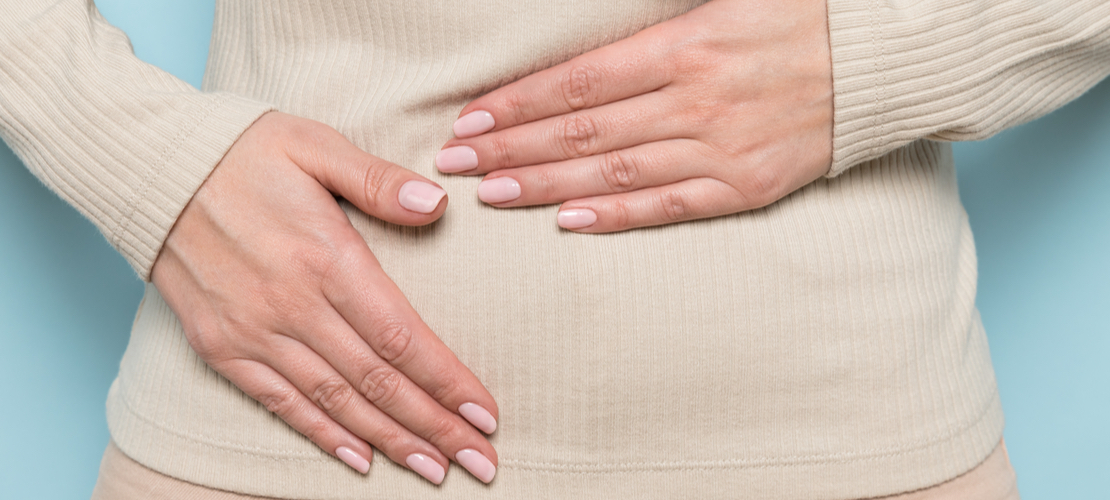
What is Murphy's sign?
Murphy's sign is a painful marker of the probable presence of gallstones in the gallbladder. It is detected when a doctor palpates the abdomen, with intense pain felt in the right hypochondrium, that is, the upper right-hand side of the abdomen. The pain may radiate in an arc round to the back, and is more noticeable after meals, when the gallbladder is hard at work. This organ helps us digest fats thanks to the bile it secretes.
What does Murphy's sign detect?
Without replacing a doctor's diagnosis, Murphy's sign generally points to the probable presence of stones in the gallbladder, known as cholelithiasis. These stones are clusters of cholesterol and calcium, in the form of crystals.
What is the typical patient profile?
Gallstone problems are more common among women, affecting up to 30% of them. Women are mainly affected because of the influence of oestrogen. The condition is also seen among women with diabetes or who are overweight. Some medicines also increase the risk of developing stones. Men are not spared, but to a lesser extent, with some 10% of patients affected.
Troublesome stones
Murphy's sign and gallstones result from a gallbladder that tends to work less well with age. The consequence is less fluid bile and more clusters of cholesterol, which form these infamous stones. Doctors regard them as a common and risky health problem. As for patients, few forget the pain they felt.
What happens next?
When Murphy's sign is confirmed by a positive clinical examination and the presence of stones in the gallbladder, surgery is often recommended, with removal of the gallbladder. Surgeons frequently opt for this radical solution to avoid possible complications, such as biliary pancreatitis, a common bile duct blocked by stones, or a gallbladder abscess. The operation is generally carried out as day surgery, using keyhole surgery (laparoscopy).
Removal of the gallbladder has no serious consequences for health, not least because this organ is not vital to the body. That said, every operation carries risks.
 Health
 Health
 Health