
Menopause consultant Leen on menopause weight: “Better fit and a little heavier than thin and tired”
Translated from Dutch. Original title: “Menopauzeconsulente Leen over menokilo’s: “Beter fit en een beetje zwaarder dan mager en vermoeid””
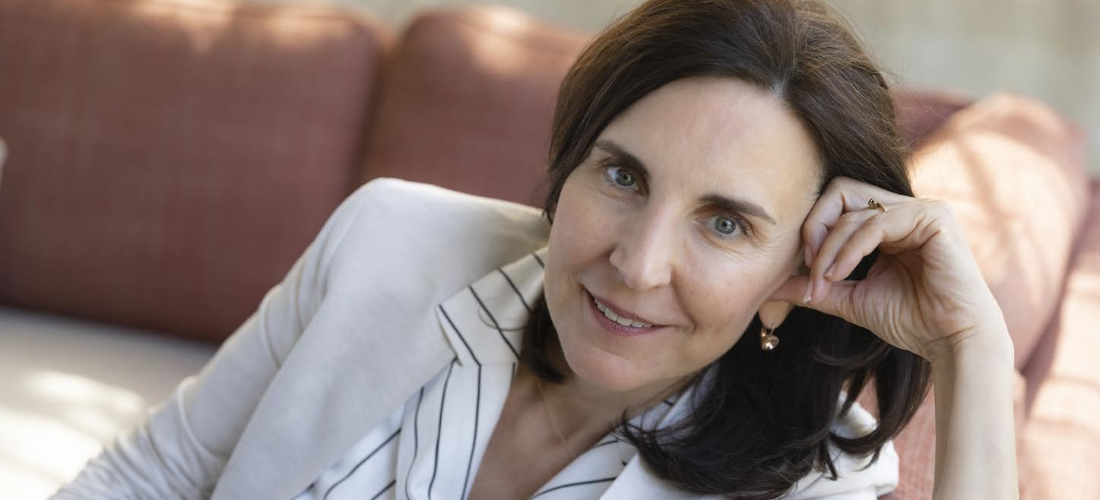
Inner peace about menopause weight
Many women make hopeless attempts to hold on to their weight. They start crash diets, stop eating or take fat burners, only to find, a few weeks later, that the few menopause kilos they had lost have crept back on. Admittedly, that is not exactly in keeping with 'the best and most comfortable time of your life'. Or is it? Leen Steyaert has a clear message in her book: weight gain around the menopause affects 70% of women, is therefore normal, and even has a reason.
“I looked in the mirror and, to my amazement, saw a solid little ‘block’ where my much-praised slim waist used to be. That waist, along with the fact that I had always been able to hide my sturdy thighs well, had meant that at 1.72 metres I came across as ‘tall and slim’,” writes Leen in her latest book, ‘Menokilo’s’. “Now I had to watch helplessly as my body slowly changed shape. Waist gone, 4 to 5 kilos added.” This happened when she was forty-six, but by the time she was sixty she was happy to take those extra kilos on board. A better goal: keeping the menopause kilos under control. And letting go of your ideal image and accepting your new weight. Slimming down is no longer so easy, because the menopause throws many bodily processes into disarray that we took for granted before the change. “Yes, you get older, you get a few wrinkles, your hair gets thinner and greyer and you weigh a few kilos more. So what? What is worse: a few extra kilos, or being unhappy and swinging from one extreme to the other and so damaging your health?”
One of the recurring worries among women is weight gain. You write that it is best to start working on your health early so that you can reap the rewards after 50. I think many people will now be thinking: I'm too late. Can I still catch up?
Leen: “A nice saying is that it is never too late to start something. 50 is the new 30, 60 the new 40. We still have a whole life ahead of us after the menopause. Cells are constantly renewing themselves – although that does slow down as you get older. But your body is still well able to recover and find renewed energy. Start today (now) and not tomorrow! Love yourself and your body and be kind to it by taking good care of it.”
You write that menopausal symptoms are mostly linked to health problems that were already present years before the menopause. What might those be, for example?
“Disruptions in the metabolism, such as blood sugar levels that are not stable and that give you cravings. That can be constipation, caused by poor exchange or elimination of toxins from the gut, so that waste stays put. But also a disruption of the gut microbiome. And a disrupted biorhythm, resulting in poor sleep, for example because you sit in front of screens for too long and too late. You then expose yourself to blue light, which keeps you active for longer. Poor digestion can also cause problems later on, as can taking antacids when what you actually need to look at at that point is your diet and stress. In fact, emotional stress in general is a harbinger of menopausal symptoms.”
Say you eat little and exercise a lot. Your energy intake is therefore lower than what you burn. And yet, frustratingly, the kilos stubbornly stay put. What is usually the reason for this?
“Because of disruptions in your metabolism, muscles that decrease as you get older, hormones that change… This disruption means that fat is stored instead of burned and that you don't get energy from your food. You will be constantly hungry even though you have probably stored quite a lot of fat. As a society we are more sugar burners than fat burners, and burning fat is also a much harder process. There is no one solution, but it is important to bring those processes back into balance, and I have described the methods for doing so in my book.”
How do you think it is best to deal with sugar during the menopause?
“Added and refined sugars are in our food. But we need to be very careful about how much sugar we have and how often we eat it. I always say: cake does not make you fat; it is about how much and how often you eat it. In my book I give plenty of tips for easing sugar addiction and stimulating fat burning.”
You entered the menopause at forty-six and are now happy to accept the 5 kilos and the thicker waist. When did you come to that realisation?
“When I saw that I would have to starve myself to lose 2 or 3 menopause kilos. I was already eating healthily and I was exercising a lot. I now truly know that it is far more important to be fit and healthy than to be slim. I eat healthily and avoid sugar. I embrace growing older and my goal now is to grow older healthy and active.”
Better a little heavier, then?
“Better fit and a little heavier than thin and tired. Being a little heavier is indeed not a problem, provided it doesn't get out of hand. As you get older you are more likely to fall ill, and if you have a little more fat, you also have some ‘reserve’ to fall back on if circumstances were to make you lose a lot of weight. The fat also fills out your lines and camouflages your wrinkles better.”
Do you have a tip for other women on how to embrace their changed bodies more?
“Stop telling yourself that you are not beautiful. Your body unconsciously remembers that kind of thing, so that you really come to believe that thought. Look in the mirror, don't judge yourself, and say the positive things. For example, that you have lovely hair or beautiful eyes. I know women in the menopause who say: ‘I never look in the mirror any more’. I think that's a shame. Do the opposite, and don't be harsh on yourself! And take that good feeling about yourself into a healthy lifestyle, even though there is a chance that a few of those menopause kilos will become part of your body as it is now. If you are well on your way to living more healthily, it will eventually get easier and easier, because you will quickly notice the benefits.”
About Leen Steyaert
Leen Steyaert is a specialist nurse and orthomolecular therapist. She is the first Flemish menopause consultant and breast tissue therapist. She is the author of several health books (Stralend door de menopauze, Jouw menopauzeplan, Oerritme, Stop de rush! and Over borsten) that have inspired tens of thousands of women in Belgium and the Netherlands to take their health into their own hands.
Menokilo’s
Stop the battle with your weight during and after the menopause
Leen Steyaert, 224 pp. €24,50
In bookshops since 8 March 2023
 Health
 Health
 Health