
Is your libido hiding on your plate?
At 20, a single glance was sometimes enough. At 30, a weekend without the children. At 50… let's just say desire can need a little more negotiation. Between so-so nights, packed days, hormones staging a revolution and a brain capable of thinking simultaneously about the dentist's appointment, the report that's due and what's in the fridge, libido isn't always top of the list. It's hard to fancy a romp between the sheets when our body is really asking for… a nap. But there is one avenue we think about less often: our plate.
Translated from French. Original title: “Et si votre libido se cachait… dans votre assiette ?”
Libido and desire
The first thing to know is that libido and sexual desire aren't quite synonyms. Libido has a significant biological and hormonal dimension. Desire is a far more sophisticated cocktail: hormones, emotional state, relationship with our body, stress, quality of sleep, mental availability, relationship with our partner…
In other words, eating walnuts won't miraculously turn a Tuesday evening into a movie scene. However, food contributes to our overall energy, to hormonal function and to the production of certain neurotransmitters involved in mood, motivation and pleasure. And when the body works better, there is sometimes more room left for desire.
The nutrients that do our libido good
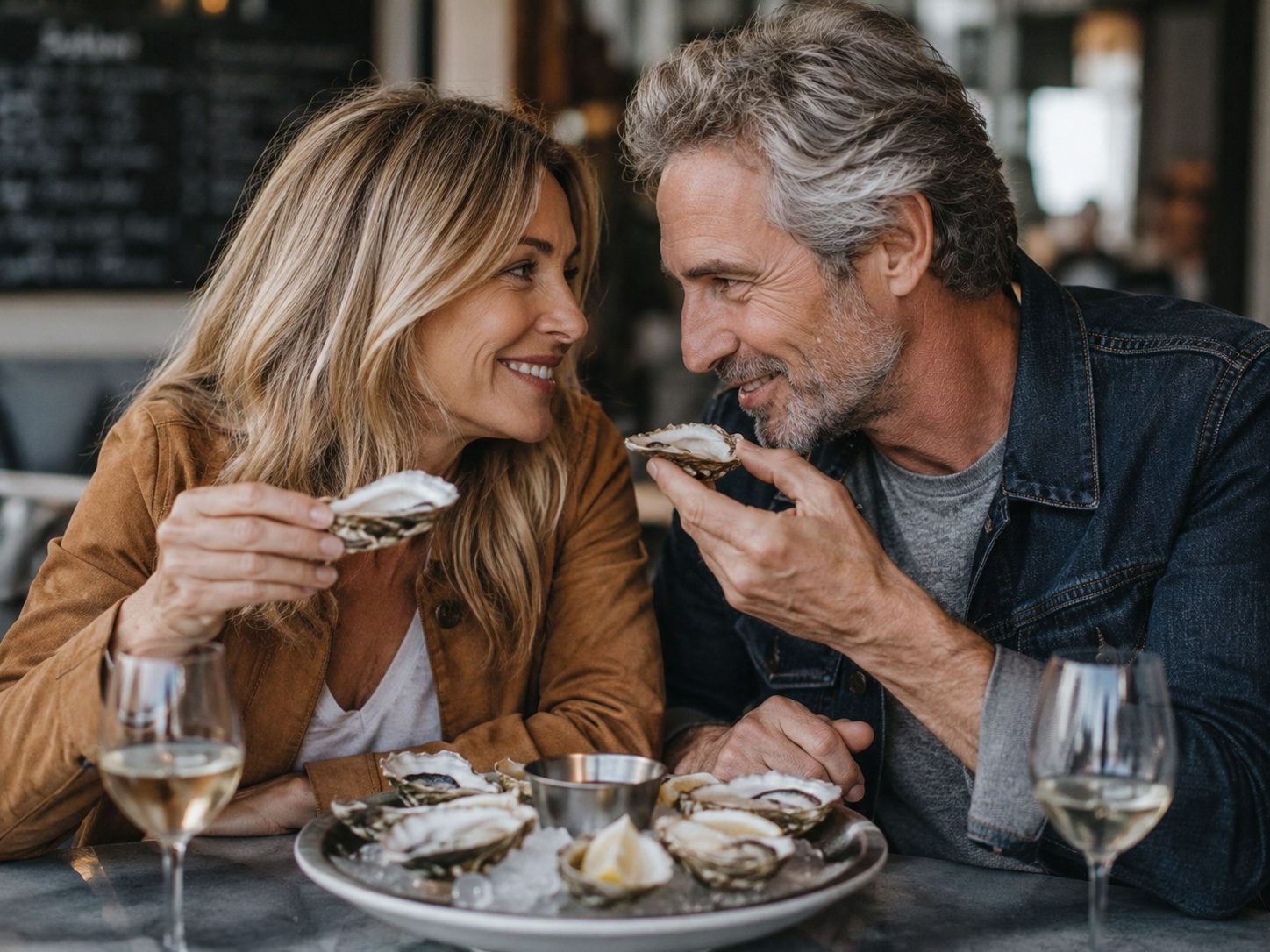
Let's start with the most famous: zinc. It is found in oysters, which explains their racy reputation, but also in pumpkin seeds and certain meats. Zinc contributes to normal hormonal function. It isn't an aphrodisiac in the "three bites and kiss me" sense, but it is a micronutrient our body needs.
Another interesting ally is magnesium, found in almonds, green vegetables, pulses and dark chocolate, among others. It contributes to the normal functioning of the nervous system and helps reduce tiredness. And less tiredness, let's be honest, already makes for much more fertile ground for desire.
Omega-3s, found in oily fish, certain nuts and vegetable oils, also have their place in a balanced diet.
As for the B vitamins, found in pulses, eggs, certain vegetables and wholegrain cereals, among other foods, they play a part in many mechanisms linked to energy metabolism and the nervous system.
In short, nothing very exotic, apart from a ginger and lemon shot to kick-start the day? But before hunting the internet for some improbable aphrodisiac elixir, perhaps we should start by nourishing our body well.
Perimenopause and menopause obviously change the picture. Certain plant foods, notably soya, flaxseed and their derivatives, contain phytoestrogens, plant compounds whose structure resembles that of oestrogens. That doesn't mean a bowl of tofu will replace our vanished hormones, or automatically awaken our libido. But these foods can quite happily fit into a varied diet.
And what about our gut?
Ah, the microbiota. You almost start to wonder whether there's any area of our lives left where it doesn't have its say. Research on the gut–brain axis shows, at any rate, that our microbiota is in close dialogue with our nervous system. Food, mood and well-being are therefore far from separate worlds. The good news? No need for any complicated potion. Fibre, vegetables, fruit, pulses and fermented foods can contribute to the diversity of our microbiota as part of a balanced diet.
Our belly may not hold the key to our sex life. But looking after it certainly does no harm to the rest.
The party poopers
Before adding "libido-boosting" foods to our shopping list, let's also look at what can weigh us down. Alcohol, first of all. A glass can seem to relax us and lower a few inhibitions. But more alcohol can, on the contrary, disturb sleep, sap energy and impair sexual response.
The same caution applies to too much caffeine, especially when it is used to mask chronic tiredness: if it disturbs our sleep or heightens our nervousness, the benefit is likely to be rather relative.
As for very heavy meals and a diet dominated by very sugary or ultra-processed products, they aren't the best allies of our day-to-day energy. The idea, of course, is not to ban chocolate cake in the name of saving our libido. It's rather about (re)finding a balance.
The real aphrodisiac
And what if we sometimes looked too far afield? Because before zinc, omega-3s or flaxseed, there are a few fundamentals that are far less glamorous but fiercely important: sleeping, moving, reducing stress and feeling good in our body.
Regular physical activity, in particular, affects our energy, mood, sleep and the way we perceive our body. There's no need to train for a marathon… Walking, swimming, doing yoga or going back to an activity you love already counts.
And then there's one thing no plate can replace: making room for desire. Because if we keep waiting for it to appear spontaneously between two WhatsApp notifications, we may be waiting a long time. Desire also loves time, imagination, availability, tenderness and curiosity. It likes us to reconnect with our body in ways other than noticing a new ache in the knee. After 50, our sexuality hasn't disappeared. It may simply be speaking a different language.
So, what's for dinner tonight?
There's no need for a "libido menu". A lovely plate with vegetables, wholegrain cereals or pulses, a source of protein and a few good fats; fruit, nuts or seeds throughout the day… and, above all, enough variety and pleasure to want to start again tomorrow. And if you like oysters, eat oysters. For the zinc, of course. Well… officially.
 Health
 Health
 Health