
Is hormone therapy an option for you?
They are invisible, hard to measure and, frankly, rather abstract. Yet hormones have an enormous influence on our bodies. When they are in balance, you glow, you sleep well and you live life to the full. But when they are thrown off balance during the menopause, your thoughts and your body can end up on a kind of rollercoaster. The good news: there are several things you can do to limit the negative effects of the menopause on your wellbeing.
Translated from Dutch. Original title: “Is hormoontherapie een optie voor jou?”
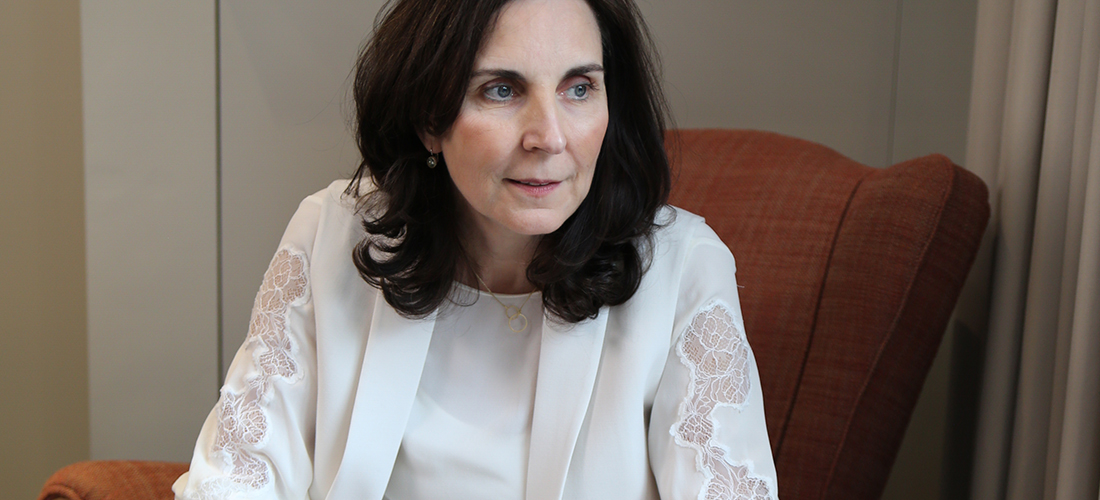
The 'dessert' after a lifetime of periods is sometimes trickier than many had expected. The menopause can cause as many as a hundred different symptoms. Fortunately, nobody gets them all, but even one or two can turn your life upside down. Poor sleep, for instance, is a common complaint: one moment it feels as though you are on fire under the duvet, a minute later you are freezing cold. You may also suffer from severe mood swings, hair loss or fatigue. Does that mean we simply have to give in to it? Far from it. You can also embrace your hormone balance, support it and turn your enemy into your friend.
Hormone replacement therapy
One option to consider is hormone therapy. Or, the other way round, not to consider it at all. Because hormone therapy, also known as hormone replacement therapy, or HRT for short, has a bad reputation. It is dismissed as cancer-causing, addictive and suppressive of your own hormone production. Menopause consultant Leen Steyaert explains: "Before you pass judgement, it is important to know the big difference between classic synthetic hormones, such as the contraceptive pill, and bio-identical hormones." Synthetic hormones are hormones produced by the pharmaceutical industry. Their composition is not the same as the (sex) hormones your body makes itself. Steyaert: "They are harder to detoxify than the body's own hormones and so they linger for longer. They inhibit the positive effects of oestrogen on serotonin and the heart, can cause coronary disease, and protect only the womb against cancer, not the breasts. What's more, their side effects are almost the same as the symptoms of progesterone deficiency: they reduce energy and increase appetite, fluid retention and weight gain. They raise LDL cholesterol and lower HDL cholesterol, and they promote nausea, acne and hair loss. Even so, they are still prescribed, from the pharmaceutical industry's financial point of view. That is why it is important to see a doctor who is skilled in bio-identical hormones," says the menopause consultant. Orthomolecular doctor Rudy Proesmans tries to shed more light on it: "Women who are already prone to breast cancer should indeed not take extra oestrogen, just as men with prostate cancer should not take testosterone. But if that is not the case, it is not true that hormones increase the risk of developing breast cancer. That 'logical reasoning' is wrong, and the supposed link causes a great deal of misunderstanding."
Bio-identical hormones
Bio-identical hormones have the same composition as your own hormones. They are often (a combination of) progesterone and oestradiol, the female sex hormones. But the hormones testosterone, DHEA, pregnenolone, hydrocortisone and aldosterone are also supplied as bio-identical hormones. Leen: "Bio-identical hormones are given to regulate a woman's hormone levels. They behave just like the body's own substances. The benefits are chiefly the woman's comfort (physical and mental), protection against osteoporosis and a reduced risk of cardiovascular disease, fewer vaginal complaints and fewer bladder problems. And bio-identical progesterone actually protects against breast cancer and has a stimulating effect on libido and bone renewal." After about a week, you might already notice a difference. "Bio-identical hormones make night sweats and hot flushes disappear very quickly. The absence of hot flushes is usually a kind of yardstick for whether bio-identical HRT is working. If the hot flushes return after a while, it probably means the dose is too low. You can also have blood tests to monitor whether your hormone levels are where they should be."
Menopause or depression?
Something else the menopause consultant often comes across is doctors misinterpreting the symptoms of women going through the change or the menopause. "Instead of the (pre)menopause being recognised, you sometimes go home with a prescription for an antidepressant rather than advice on what you can do about your hormonal fluctuations." That makes the right diagnosis and the right treatment all the more important. "Women can end up worrying unnecessarily. A depression can hit hard, especially when it goes hand in hand with antidepressants. They will help you shake off the low feelings, but that does not solve the underlying problem."
Proesmans recognises this too: "I see patients taking antidepressants because the menopause is giving them depressive symptoms. The same goes, for example, for sleeping pills for poor sleep, or anti-inflammatories for other menopausal complaints. At that point, these women would indeed benefit more from bio-identical hormones: the symptoms then disappear of their own accord, and the hormones even have anti-ageing effects and protect against disease. They just have to be prescribed in the right way by a doctor who is skilled in hormone therapy."
The right lifestyle
But first and foremost, you can bring your hormones into balance by adopting the right lifestyle. In short, that comes down to five things: eating healthily, getting enough exercise, getting enough sleep, reducing stress, and drinking alcohol in moderation while avoiding nicotine. Eating a lot of meat, fat and sugar actually leads to more menopausal symptoms. "A healthy diet rich in isoflavones and iodine goes hand in hand with fewer menopausal symptoms." That may also be one of the reasons why Japanese women seem to suffer less from the menopause (Japan does not even have a word for 'hot flushes'!): on average, Japanese women eat far more fermented soya (isoflavones) and seaweed (iodine). "In that respect, our Western diet is dreadful. And people in Japan also tend to be much more active." The added bonus of a healthy lifestyle, which goes together with a healthy weight, is of course growing old in good health. A healthy lifestyle also gives women the chance to influence their postmenopausal health from a young age. "With just a few small changes, someone can sail through the menopause on a bicycle, and then you don't need a prescription for hormones at all. Lifestyle always remains the foundation."
If a healthy lifestyle is not enough to make the symptoms go away, and you do not feel comfortable taking, inserting or applying hormones? Or if you are not allowed to for medical reasons? Then, according to Proesmans, there are other options. He considers food supplements, for instance, an excellent aid alongside a healthy, varied diet. "Supplements can make the difference between not being ill and being in optimal health," he adds. "The best results come from plant-based soya isoflavones, because they are similar to the female oestrogen hormones. Lots of women do well on them, and then hormone therapy is certainly not necessary." He also recommends supplementing iodine in combination with tyrosine to support the thyroid, as well as omega-3 fatty acids, vitamin D, B12 and K2. And is that bad for the liver? "No, that is a myth."
Hormone therapy: an option or not?
It is important to discuss its effectiveness together with a doctor who is well acquainted with hormone therapy, and to weigh it against the possibilities of alternative (non-hormonal) therapy. A clear explanation of all the pros and cons of both hormone therapy and non-hormonal therapy allows you to make a well-considered choice for yourself. "Whichever of these solutions works for one woman may do nothing for another. It depends on the individual; there is no one-size-fits-all. Either way, everything stands or falls with a healthy lifestyle," Proesmans concludes. Steyaert agrees wholeheartedly: "There is no point asking your doctor to start hormone therapy if you don't have a healthy lifestyle and are hoping HRT will 'solve' your menopause problems on its own. The responsibility for your health lies entirely with you, just as it is you who chooses whether or not to take bio-identical hormones."
Leen Steyaert is a specialist orthomolecular nurse (KPNI) and breast tissue therapist, specialising in the menopause. She is the author of five health books, including 'Jouw menopauzeplan' and 'Over Borsten'.
Dr Rudy Proesmans is a doctor specialising in orthomolecular medicine. He tries to make people healthy by introducing lifestyle changes. What you eat every day, physical exercise and your mental state determine your health. Functional blood tests form the basis of his therapies. He is the author of the bestsellers 'Optimaal gezond zonder medicijnen' and 'Optimale immuniteit'.
Would you like to receive the best stories from Fifty & Me in your inbox? Then sign up for the newsletter.
 Health
 Health
 Health