
How to Lower Your Risk of Osteoporosis
Feared for the risk of falls and fractures, osteoporosis often accompanies the menopause, a stage of life linked to a natural decline in bone density. To protect your bone health, staying active, getting enough calcium and turning to food supplements can all prove beneficial.
Translated from French. Original title: “Les solutions à adopter pour limiter les risques d’ostéoporose”
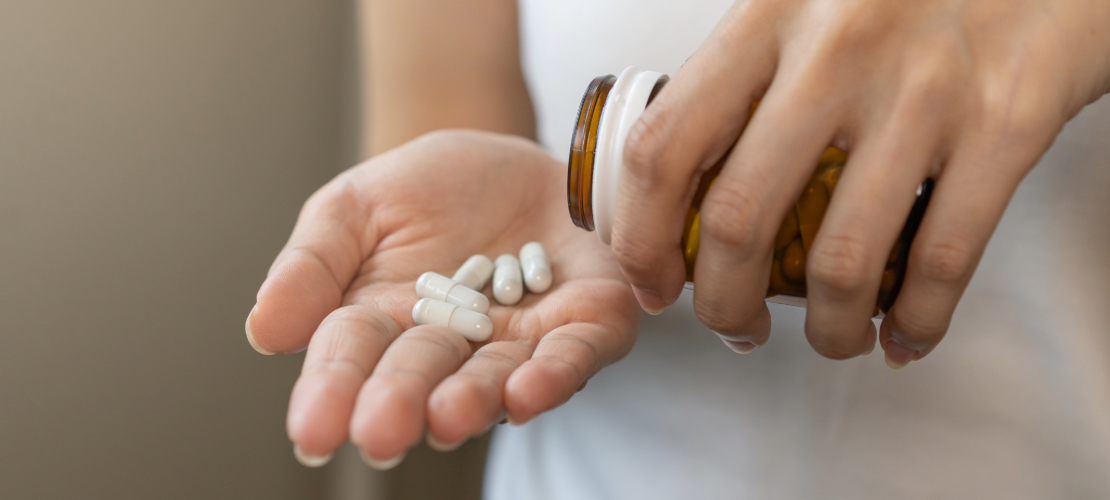
Osteoporosis: what is it?
Osteoporosis is characterised by a decrease in bone density and a deterioration of the microarchitecture of the bone. (1) Among other triggering factors, the menopause increases the risk of osteoporosis because the body's natural production of oestrogen declines. These sex hormones are known to limit the effects of osteoclasts, the cells that break down bone (1).
Keep up regular physical activity
A sedentary lifestyle is another risk factor, and regular physical activity will help to reduce it and prevent the risk of falls. Exercise (2) also works the whole skeleton, thereby reducing bone loss. Which sports are recommended? Walking, of course, but also jogging, low-impact gymnastics or dancing. Sport can be an excellent alternative.
Choose a diet rich in calcium
Even before osteoporosis sets in, a diet rich in calcium (3) can help to reduce the risk of fractures. Foods rich in calcium include dairy products, but also pulses, nuts and certain mineral waters. To limit any potential deficiencies, food supplements (4) can provide a sufficient intake of calcium, but also of vitamin K and, above all, vitamin D. This vitamin is found in few foods and is mainly obtained through exposure to the sun. Vitamin D promotes the absorption of calcium by the digestive tract and stimulates bone formation. Magnesium, for its part, helps the body to fix calcium more effectively. These supplements are best taken as a course.
Vista-Cal D: calcium without the hassle
Calcium supplements often put people off with their unpleasant taste or chalky texture, which makes taking them every day a chore for many. Yet maintaining a sufficient calcium intake is essential for bone health, particularly during the menopause. Vista-Cal D meets this need with an innovative solution: a smooth, easy-to-swallow tablet, free from any bitterness or powdery feeling in the mouth. This swallowable tablet is the ideal solution, without the discomfort so often associated with other supplements. By taking one tablet a day, you ensure a regular intake of calcium and vitamin D, helping to keep your bones strong without the usual drawbacks.
Product available in pharmacies and online pharmacies. Recommended price: 29,95 € for 120 tablets, or 7,5 € per month.
More information at: https://vistalife.be/fr/vista-cal-d/
References:
https://www.saintluc.be/fr/rhumatologie-Clinique-osteoporose#:~:text=Dans%20l’ost%C3%A9oporose%20qui%20survient,des%20trav%C3%A9es%20osseuses%20normalement%20interconnect%C3%A9es.
Exercicing with osteoporosis : stay active https://www.mayoclinic.org/diseases-conditions/osteoporosis/in-depth/osteoporosis/art-20044989#:~:text=If%20you%20have%20osteoporosis%2C%20don,jerky%2C%20rapid%20movements%20in%20general
https://osteoporosecanada.ca/la-nutrition/
Capozzi A, Scambia G, Lello S. Calcium, vitamin D, vitamin K2, and magnesium supplementation and skeletal health. Maturitas. 2020 Oct;140:55-63. doi: 10.1016/j.maturitas.2020.05.020. Epub 2020 May 30. PMID: 32972636.
 Health
 Health
 Health