
How to ease eye strain, that unpleasant tired-eye feeling
A feeling of discomfort in your eyes? It is one of the signs of visual fatigue, which scientists call by the obscure name of asthenopia. A common condition linked to excessive screen use. A few habits can help soothe tired eyes.
Translated from French. Original title: “Comment réduire l’asthénopie, cette fatigue des yeux désagréable ?”
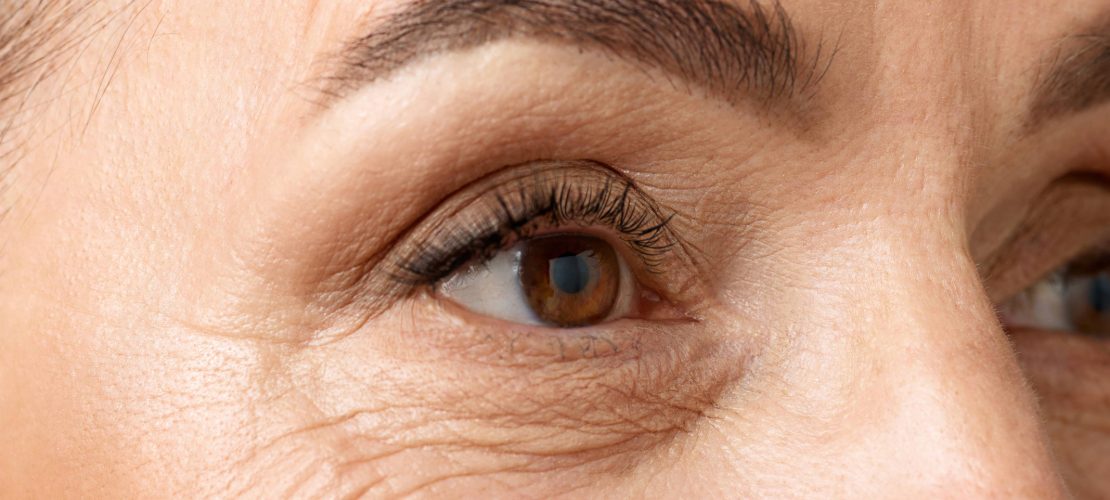
Eye strain with many causes
Asthenopia, or visual fatigue, is a condition, often mild, that is very widespread among the general public. According to the available studies, between 65 and 70% of the population (2) are thought to be affected. A problem often linked to too much screen time. But also to a poorly corrected or uncorrected visual disorder, such as astigmatism, short-sightedness or long-sightedness.
But eye strain can also result from excessive stress and/or chronic fatigue. This state makes it harder for the eyes to coordinate in order to provide clear vision. And, as a consequence, leads to even greater eye strain. This is highlighted by the study published in 2019 on the website of the National Library of Medecine (3).
Eye strain can lead to complications such as AMD (age-related macular degeneration), which is more common after the age of 50. A risk made worse by overexposure to the blue light from screens and to LED lighting.
Well-known symptoms
Certain signals indicate that your eyes need a rest. Blurred or even hazy vision. Red eyes, often dry or watery, with that unpleasant prickling sensation. But also frequent headaches, eye pain, twitching eyelids, or the feeling of seeing dark floaters in your field of vision.
The dryness of the eyes you notice can add to the dryness already experienced during the menopause. The drop in oestrogen production does indeed cause dryness of the skin and vagina, but also of the eyes.
All of these are symptoms to describe to a specialist, so that they can make a proper diagnosis and rule out a possible more serious condition, such as Gougerot-Sjögren syndrome.
How can you soothe your eyes?
Limiting screen use is not enough. A few exercises built into your daily routine can help your eyes relax and reduce the symptoms you notice. If the problem is linked to a change in your vision, wearing suitable glasses or contact lenses is an effective solution. So is using eye drops to reduce dryness. Buying special glasses for working on a screen reduces exposure to blue light.
A few simple exercises prove effective, such as the 20/20/20 rule. Every twenty minutes, take a 20-second break, looking at something about 6 metres (20 feet) away from your screen. Not forgetting the essential gesture of blinking regularly, for 15 to 20 seconds (2).
Sources:
(1) https://www.proximus.be/fr/id_b_cr_screen_time/particuliers/blog/news/bits-and-bytes/temps-ecran-smartphone.html
(2) https://www.laboratoires-thea.com/medias/brochure_syndrome_ecran_visualisation.pdf
https://pmc.ncbi.nlm.nih.gov/articles/PMC6899802/
Would you like to receive the best Fifty & Me articles in your inbox? Sign up for the newsletter!
© Illustration: Shutterstock
 Health
 Health
 Health