
How to deal with insect stings
Along with sunburn and food poisoning, insect stings usually complete the holiday trio of summer ailments. Often harmless in the long run, they are nonetheless far from painless. How can you ease the pain and the itching? Here is some practical advice to put into action.
Translated from French. Original title: “Comment réagir face aux piqûres d’insectes ?”
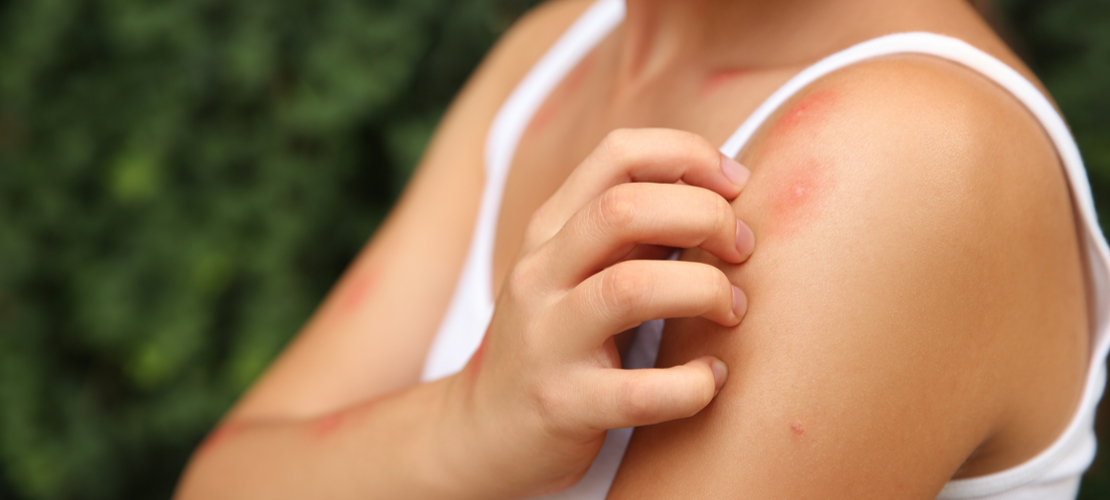
Treating stings from flying insects
A sharp pain, itching of varying intensity, swelling around the area that was stung: these are the symptoms most commonly seen after an insect sting. Harmless but unpleasant. If you are not sensitive, simply disinfecting the area with alcohol and using tweezers to remove any sting left in the skin will be enough. If the pain is sharp and hard to bear, there are special creams for insect stings (often hydrocortisone-based). Two reflexes are best avoided, however: sucking out the venom and rinsing with cold water, which would certainly prolong the effect of the venom.
If you are allergic, keep an antihistamine in your bag. It is useful in the event of a severe reaction.
Jellyfish, another problem
With waters warmer than usual, jellyfish are doing their bit to complicate life for holidaymakers. This slimy creature with its good-natured appearance can cause severe, stinging pain. To calm the itching, a paste made with bicarbonate of soda is an effective soother. It is a product rarely found in a tourist's bag, admittedly. Failing that, it is advisable to rinse the wound with sea water, cover it with sand, then scrape gently to remove the stinging filaments. Then rinse again with sea water. This is an effective but temporary solution before applying an antiseptic. A handy tip: never pour fresh water on the sting, as it may make the itching worse.
Be careful: even when washed up on the sand, a jellyfish can still sting on contact with the skin.
A growing threat: the Asian hornet
Another enemy of a peaceful summer is the formidable Asian hornet, which appeared in our part of the world in the early 2000s and is spreading rapidly. Unlike other flying insects, the Asian hornet does not lose its sting when it attacks and can therefore keep stinging. When stung, the pain is stronger than from a wasp or a bee. The cause is the larger quantity of venom injected. The symptoms and soothing measures are the same as for other hymenoptera.
When should you see a doctor?
A sting in a person who is allergic to hymenoptera venom, or on a vulnerable part of the body, can be a medical emergency not to be neglected. It can lead to anaphylactic shock, a drop in blood pressure or Quincke's oedema (extremely serious). Medical help should be called without delay. If the symptoms and pain from an insect sting have not gone after 48 hours, or if the wound appears to be getting infected, medical advice should be sought without delay.
 Health
 Health
 Health