
High blood pressure: a warning sign for women's hearts
For a long time, this condition was considered a men's problem. Yet after the menopause, it is women's hearts that begin to beat a little too hard, a little too often… in silence. Persistent tiredness, breathlessness, vague feelings of tension: these are all small signals that deserve to be listened to differently.
Translated from French. Original title: “L’hypertension, un signal d’alarme pour le cœur des femmes”
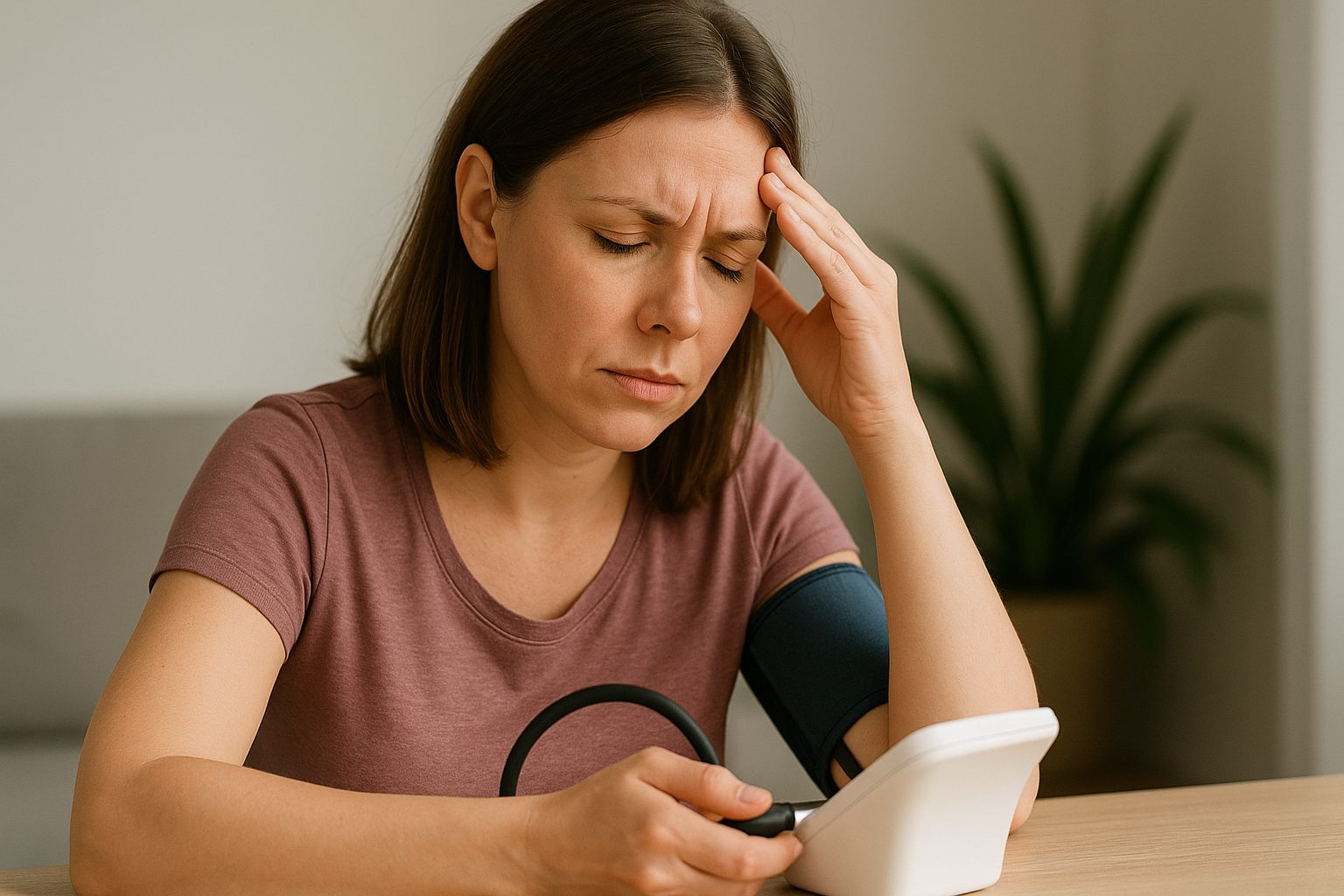
A risk that rises after the menopause
Before the age of 50, oestrogen plays a natural protective role against cardiovascular disease. But with the menopause, that protection fades. The result: the risk of high blood pressure increases sharply, often with no visible symptoms. This is all the more so because other factors come into play, such as weight gain, reduced physical activity, chronic stress and sleep problems…
It is estimated that one woman in two suffers from high blood pressure after the age of 55. And yet the warning signs are often different from those seen in men, and therefore less readily recognised.
Discreet symptoms… but telling ones
In women, high blood pressure does not always show itself through headaches or nosebleeds. It can appear as unexplained tiredness, sleep disturbances, an unusual heartbeat, breathlessness on exertion, or even a feeling of tightness in the neck or chest. These are vague signals, sometimes wrongly put down to the menopause or to anxiety.
This is why many cardiologists are now calling for a gender-specific approach to cardiovascular prevention, in order to avoid misdiagnosis and delayed treatment.
High blood pressure is often silent but progressive. You do not always feel it… until the day it becomes dangerous. The ideal, then, is to have your blood pressure checked at least once a year from the age of fifty, even if you have no symptoms. At the pharmacy, at the doctor's or at home, blood pressure monitors have become simple, reliable and easy to find.
Early screening is all the more important if there is a family history, if you suffered complications during your pregnancies (such as pre-eclampsia), or if you lead a sedentary lifestyle.
Gentle prevention, real results
The good news: there are plenty of natural ways to stabilise blood pressure, either without medication or alongside it. A brisk 30-minute walk every day, cutting back on salt and refined sugars, deep breathing each morning or an olive leaf infusion are all simple habits with far-reaching effects. The idea is not to act in an emergency, but to be consistent.
Knowing yourself also means knowing what your heart is going through — in every sense of the phrase. And if it is beating a little too fast, a little too hard, perhaps it is asking for more than just rest… perhaps it needs a new kind of attention.
Did you know?
High blood pressure is the leading cause of cardiovascular death in women over 50.
A simple treatment or a change in lifestyle can be enough to drastically reduce the risks.
Women's symptoms are less "spectacular", but just as serious.
Studies show that women are often less well diagnosed and treated than men of the same age.
 Health
 Health
 Health