
ENT specialist: “At least 10% of Belgians have hearing loss, yet only a third wear a hearing aid”
Translated from Dutch. Original title: “KNO-arts: “Minstens 10% van de Belgen heeft gehoorverlies, maar slechts een derde draagt een hoortoestel””
Listen to your ears
Withdrawing from social situations is the first warning sign! Think of noisy settings, such as a restaurant or a family gathering, where you can no longer follow the conversation and have to ask people to repeat themselves. It is the high tones that 'drop out' first.
'People generally pay little attention to this. That is probably because, as with any disability, they get used to the discomfort and adapt by opening themselves up less to this kind of 'overwhelming' communication. The result: more loneliness, fewer exchanges and a brain that is less stimulated and therefore unlearns things. This increases the likelihood of developing a neurodegenerative disease sooner. Studies show that the risk of dementia doubles with moderate hearing loss and increases fivefold with severe hearing loss. We also see more falls and more depressive episodes,' says Dr Denis.
Everyone's hearing declines with age
Age is a determining factor in hearing loss. The first signs of presbycusis (Ancient Greek for 'age-related hearing loss', ed.) appear from the age of 50. By the age of 60, 30% of people suffer from hearing problems and reduced hearing. Once past 80, more than half have mild, moderate or severe hearing loss. Men are affected earlier than women.
There are two reasons for this hearing loss. Firstly, each ear contains only 15,000 hair cells. They wear down under the weight of sound from the moment we are born. Secondly, these damaged cells are destroyed. They do not renew themselves.
Healthy hearing also depends on our environment and our genetic make-up. According to Dr Denis, external factors that can worsen hearing loss include: repeated illnesses during life, such as chronic ear infections or tinnitus; working in a noisy environment (certain industries, factories, certain buildings, or the world of nightlife and entertainment); and regular activities involving high sound levels, such as recreational shooting, concerts or listening to music through headphones.
Get tested
A screening is needed to detect hearing loss, which is progressive and insidious. This matters, because research shows that many people take a fatalistic view of increasing deafness and resign themselves to it.
In presbycusis, the inner ear is affected. The ENT specialist (ear, nose and throat) will focus on the cochlea. This 'coiled tube' contains thousands of hair cells that analyse and amplify vibrations and pass them on to the nerve fibres connected to them. These then convert the sound into a nerve signal that the brain can understand. Such a screening is simple, quick and painless.
The person being tested is given headphones and sits in a soundproof booth. There they are asked to indicate which sounds they can hear. The hearing test focuses on the perception of musical tones and word lists (an assessment of social difficulty). The aim is to assess the performance of each ear and to quantify the hearing loss in decibels. With an average loss of 20 to 40 dB (loss of soft sounds, high tones and certain phonetic elements), the hearing loss is described as mild; with a loss of 40 to 70 dB (only loud speech is perceived and a hearing aid is needed), it is classed as 'moderate'; with a loss of 70 to 90 dB, it is described as 'severe'. Ideally, people should have their hearing screened regularly from the age of 50.
Don't wait too long!
Today's technology makes it possible to compensate for hearing loss with high-quality implants or hearing aids. Some of these are not even visible to the naked eye! 'Choosing a hearing aid is an important step. Because every hearing problem is different, lifestyle, the type of hearing loss and budget must all be taken into account,' says Pierre Toussain, hearing aid specialist.
Choosing early makes follow-up simpler. If the device is properly adjusted, it does not damage the hearing system. On the contrary: by stimulating it, it keeps it active. In general, it is preferable to fit both ears in order to preserve stereophony (the sense of where sounds come from). Adjustment is generally fairly smooth, although it always takes a little getting used to at first. Hence the advice to increase wearing time gradually and to be patient.
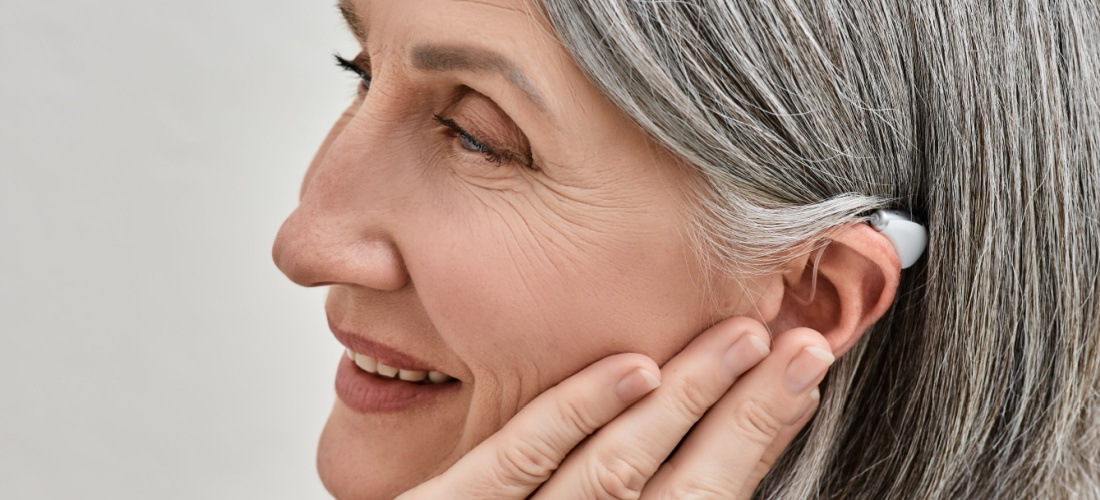
BTE (behind-the-ear) hearing aids sit in a small casing that is placed discreetly behind the ear. Thanks to their ease of use, sturdiness and comfort, they are the most popular. Mini BTE hearing aids are smaller and slimmer than conventional ones. With these devices, the receiver sits in the ear canal. They are ideal for mild to moderate hearing loss. Finally, in-the-ear (ITE) hearing aids contain the latest technologies. They sit in a small, custom-made casing that fits the contours of the ear perfectly. These invisible hearing aids are easy to insert and remove.
'Hearing aids are constantly evolving and becoming more comfortable to use by the day. Whether they are hearing prostheses or hearing aids, they have become everyday items, with a wide variety of models to suit every taste. Countless brands and models exist to meet every need (invisible, connected, rechargeable, and so on). Thanks to digitalisation, they are becoming ever smaller, more efficient (without whistling or background noise) and more attractive (with an endless range of models, colours and sizes),' concludes Pierre Toussaint.
Finally, there are cochlear implants. These small electronic devices are surgically implanted in the inner ear to give children or adults with severe hearing loss or deafness a sense of sound.
'At least 10% of Belgians suffer from hearing loss, but only a third of them wear a hearing aid.'
Need a hearing aid?
Through your health insurance fund, compulsory health insurance contributes to the cost of a hearing aid under certain conditions. Be aware that in Belgium, hearing aids can only be fitted by an officially recognised hearing specialist ('Audicien') on the basis of a prescription from an ENT specialist. The hearing aid must also appear on an official list of devices approved by Riziv. The reimbursement conditions for early-stage hearing loss have been extended. The Insurance Committee approved a measure to improve access to healthcare. For the reimbursement of hearing aids, the hearing loss threshold is being lowered to 35 dB (from the current 40 dB). As a result, more people will be able to benefit from reimbursement. The new rules still need to be adopted by Royal Decree. They are expected to come into force in the second quarter of 2024.
Want to know more? riziv.fgov.be
And there's more! Discover all our cultural tips in the spring edition of Fifty & Me Magazine, which is in the shops now. Pick up a copy or subscribe.
Want the best stories from Fifty & Me delivered to your inbox? Then sign up for the newsletter.
Image © Shutterstock
 Health
 Health
 Health