
Endocrine disruptors: a proven threat to your skin
Our skin: a reflection of our good health and the focus of every attention when it comes to enhancing femininity. But also the victim of many assaults. Endocrine disruptors are one of them. They are a major health issue for dermatologists, given the serious effects observed on the skin, the main route of entry for these EDs, which are omnipresent in our daily lives. What are their effects on the skin, and how can we protect ourselves? Here is what you need to know.
Translated from French. Original title: “Les perturbateurs endocriniens, cette menace avérée pour la santé de la peau”
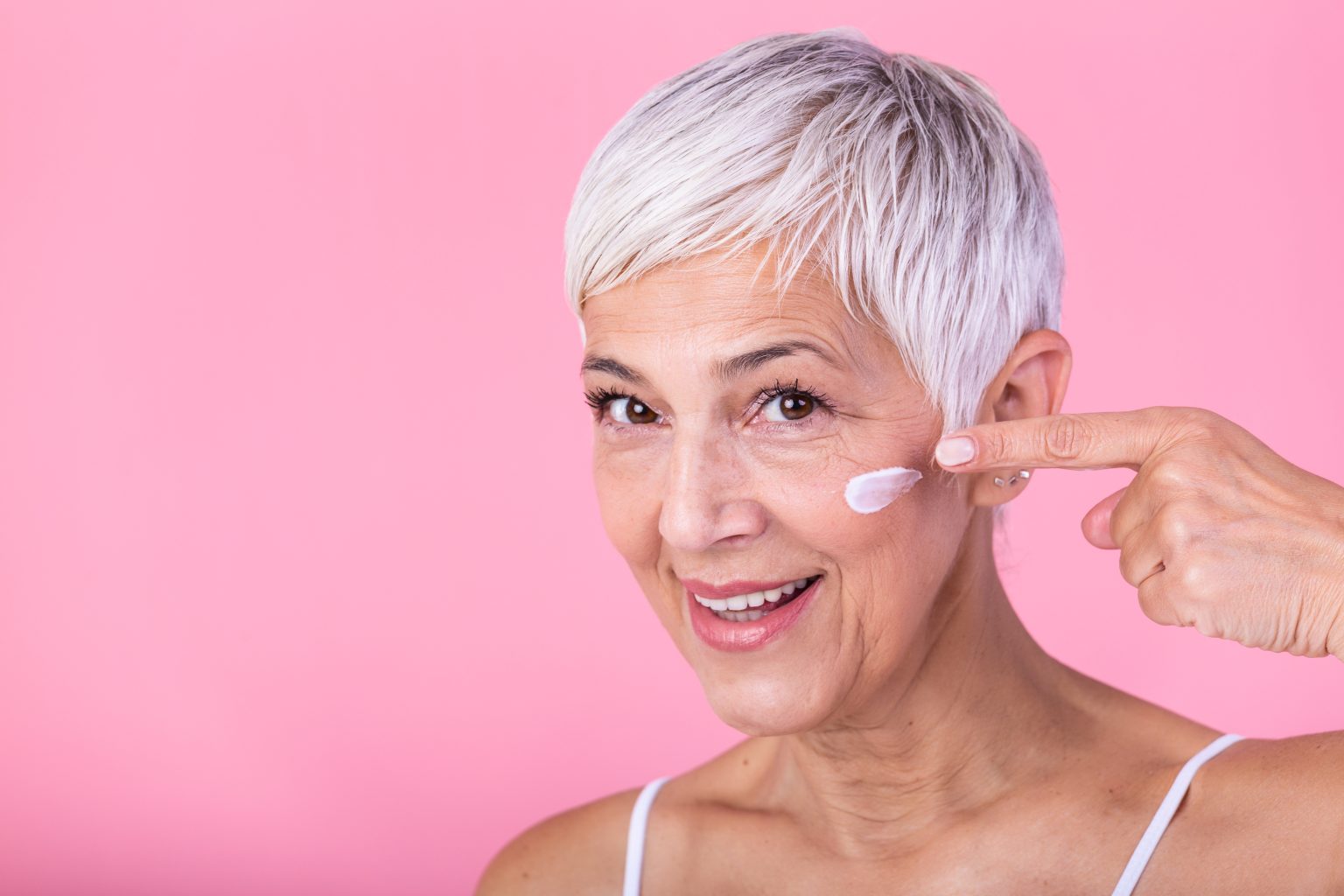
Endocrine disruptors (EDs): what are they?
Endocrine disruptors (EDs)… A threat well known to the medical and scientific community. But what about the general public? And women in particular, who are affected in more ways than one, not least through the frequent and sometimes intensive use of cosmetics. Without lapsing into abstruse scientific jargon, endocrine disruptors (EDs), estimated at more than 10,000, can be defined as exogenous substances liable to interfere with our hormonal system by altering the action of natural hormones. By mimicry, blocking or modification. With the skin, these endocrine disruptors find an accessible point of entry, one weakened by the frequent use of cosmetics and other contact with plastics.
Where do we find these EDs? The answer is in a few words: everywhere in our daily lives. Whether it is plastics, pesticides, food packaging… but also, and above all, cosmetic products, whose ingredients are often harmful to the health of the skin. Such as bisphenol A, triclosan, phthalates or parabens. To name only the most common.
The harmful effects of EDs are heightened by chronic or combined exposure (such as plastics and cosmetics). Among the groups most sensitive to the effects of EDs are pregnant women, infants and adolescents who are still developing. Not forgetting people with a history of hormone-dependent cancers or those undergoing medical treatments, such as hormone therapy or chemotherapy. Women as a whole are also part of the target group. Why? For an obvious physiological reason. Women, generally speaking, have a higher body fat percentage than men. As many EDs are stored in fatty tissue, this makes women de facto more vulnerable to their effects.
What are the possible effects of EDs on the skin?
The impact of EDs on the skin is not trivial and can lead to severe effects. They are numerous, and one of the most frequently encountered is chloracne. This is a severe form of acne characterised by cysts and large numbers of blackheads. Other skin manifestations may also occur, such as the development of atopic or contact dermatitis, the latter being associated with allergies. EDs can also accelerate skin ageing through oxidative stress and the breakdown of collagen. They can also aggravate other existing skin infections linked to the hormonal imbalance that occurs at the menopause. From an aesthetic point of view, exposure to endocrine disruptors can cause hyperpigmentation or hypopigmentation of the skin, as well as a form of hypertrichosis (excessive hair growth). All of these are undesirable effects that can affect a woman's confidence and the image she wishes to project to others. A cancer risk is also among the possible effects caused by the presence of EDs.
What are the useful recommendations for protecting your skin?
In the face of this threat posed by endocrine disruptors, you should contact your dermatologist for personalised advice, particularly regarding your skin type and condition. No two cases are alike. According to the medical community, settling for a one-size-fits-all approach to the problem is not the right solution. Most scientific studies carried out on EDs nonetheless favour a few common recommendations. Such as the need to choose natural cosmetics, certified free of parabens, phthalates, triclosan or other filters whose effects dermatologists consider controversial. A necessary choice, accompanied by a recommended reduction in the use of all scented and plastic-based products. Such as dishes designed for use in the microwave, which release particles during cooking. These should be replaced with glass dishes.
Protection against the effects of endocrine disruptors also relies on a few small, simple actions to build into your daily routine. Such as airing your home for 15 minutes at least twice a day. But also the need to wash new linen, towels and sheets before using them for the first time. These are all tips put forward by the SPF Santé on its page dedicated to EDs. The challenges posed by endocrine disruptors are now being taken into account by the authorities because of their major impact on public health. At European level, a directive adopted in 2019 through the Cosmetics Regulation banned or reduced the use of certain EDs. At national level, Belgium is not lagging behind, having taken administrative measures. Such as the inclusion, since 2023, of endocrine disruptors in the Belgian Code of Well-being at Work. But also the introduction of preventive measures as part of the overall Plan d'Action National sur les Perturbateurs Endocriniens (NAPED).
Note: This article is intended to be informative and cannot replace the advice of a dermatologist.
 Health
 Health
 Health