
Eat well, live well: put more asparagus on the table
When choosing your daily portions of vegetables, don't forget asparagus. It deserves a place on every woman's menu. A true wonder vegetable with many positive qualities.
Translated from Dutch. Original title: “Gezonder leven? Het is dan slim om wat vaker asperges op tafel te zetten”
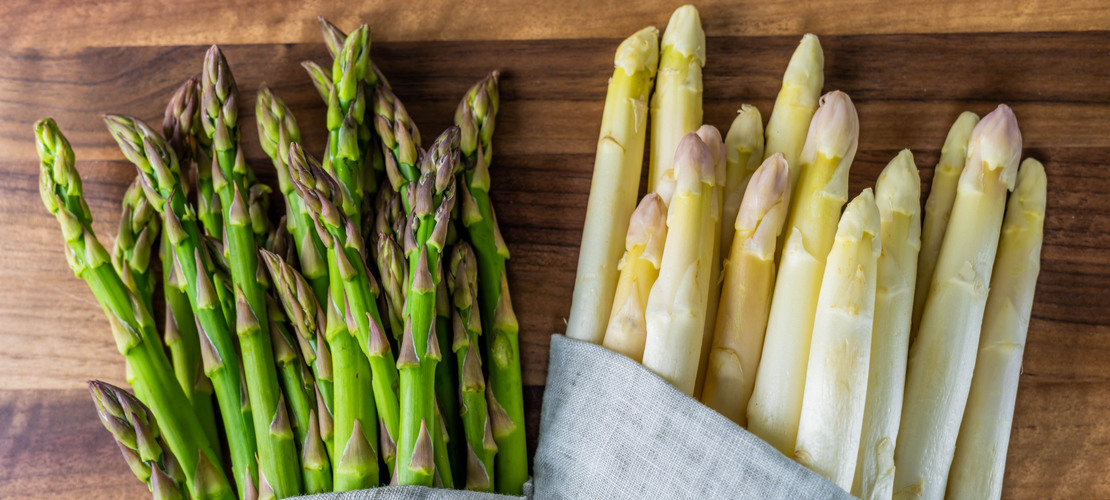
Asparagus: your ally when slimming
If you still have a few kilos to lose before summer, go for asparagus. It leaves you feeling full for a long time, thanks to its high fibre content. It is also a low-calorie vegetable (25kcal/100g) that is rich in water.
Let's make the most of the benefits of asparagus
- Detox effect: asparagus absorbs water as it cooks.
- Excellent bowel transit, helped by the many fibres it contains.
- Contains vitamins E and C.
- Super vitamins with beneficial effects on the skin: antioxidants and anti-ageing.
- Low sodium content: ideal for fighting high blood pressure.
- Slows the absorption of fats and sugars.
- Contains beta-carotene: an important antioxidant for maintaining eyesight and fighting cell ageing.
- Diuretic effect.
White asparagus has just as many benefits as green.
A few contraindications
Despite all the benefits listed above, asparagus is not recommended for everyone. This is the case for people taking blood-thinning medication. The vitamin K in asparagus is incompatible with the prescribed treatment. People suffering from gout (a form of rheumatism) or kidney problems should also keep their consumption of asparagus to a minimum. Eating a lot of white and green asparagus can also lead to the formation of kidney stones, because of the purines it contains. In these cases, medical advice may be useful. Another temporary and harmless problem caused by eating asparagus is smelly urine. This is due to a sulphur compound with an obscure name: methyl mercaptan.
How do you eat asparagus?
If you are eating fresh asparagus (from March to the end of June), wash it thoroughly beforehand to remove as many pesticide residues as possible. Asparagus should not be eaten raw. It must be cooked, either in water or steamed (preferable to water, as it retains the maximum amount of nutrients). When it comes to recipes, your imagination is the only limit. But the best way to enjoy asparagus is to eat it warm or cold, simply with a little melted butter sauce, a vinaigrette or a spoonful of homemade mayonnaise. To choose well, pick asparagus with tightly closed buds and undamaged stalks.
Finally, asparagus can be juiced for maximum detox. Simply put it through a juicer. The only drawback is the loss of fibre, but the vitamins and antioxidants are still there.
Would you like the best stories from Fifty & Me delivered to your inbox? Then sign up for the newsletter.
Image © Shutterstock
 Health
 Health
 Health