
Cutting down on alcohol: why and how?
The anti-alcohol lecture. Who could forget that Bourvil sketch? A good moment of comedy, certainly, but one that cannot hide the danger of drinking alcohol, whose effects are sometimes unsuspected. Such as the worsening of certain menopause-related symptoms.
Translated from French. Original title: “Pourquoi et comment réduire sa consommation d’alcool ?”
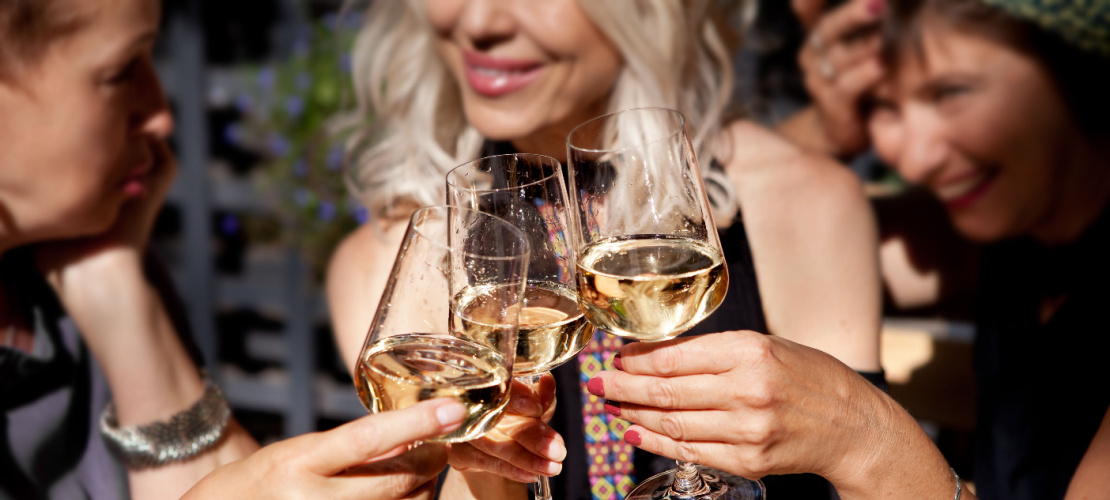
Women and alcohol: a bad cocktail
While there is no doubt about the toxicity of alcohol, it has even more damaging effects on women. The reasons lie in differences in body composition compared with men, but also in differences in the way the alcohol we drink is metabolised. As a result, women become intoxicated more quickly than men.
And as the website aide-alcool.be explains, "the risk of mortality is multiplied by 1.5 for a woman who drinks 75 g of alcohol every day, compared with a man who drinks the same amount." This danger of alcohol consumption among women has been highlighted by several studies, including one published by a team of American doctors on the website of the National Library of Medecine. Its findings underline the possible consequences of alcohol for women's health, such as the risk of breast cancer, high blood pressure or heart attacks.
And for post-menopausal women, alcohol can worsen certain symptoms such as hot flushes, sleep problems and those linked to depression. This threat is at the heart of the study led by gynaecologist Robert Goldfarb and published in December 2003 on the Henry Ford Health website.
A few tips for cutting down on alcohol
While it is no substitute for a doctor's advice, adopting a routine can reduce the place alcohol takes up in everyday life. "What better idea than to set yourself a challenge with others? Among friends, colleagues or even between partners, to motivate one another and avoid together the many temptations found in social situations. With a set limit not to be exceeded, or even a period of abstinence to be prolonged for as long as possible," explains Christiane Razen, a behavioural coach.
There are many alternatives to alcoholic drinks for taking back control of your health. "And if alcohol is being used to mask a sense of unhappiness, seeking help from a specialist can help you replace it with a far more effective and lasting solution," the coach stresses.
Cutting down is all very well, but by how many drinks? According to Sciensano, "the limit is set at 10 drinks a week, and not every day."
When should you ask for help?
All of this is practical advice that may not be enough when consumption becomes excessive and addiction is severe. Medical follow-up is then necessary, but it is sometimes feared or refused for fear of what people might say. Alcoholism remains a taboo that still has to be overcome. There are also many non-profit organisations (asbl) that support people struggling with alcohol addiction. Le Pélican in Brussels, but also SSM Alpha in Liège or, in Flanders, VAD.be. Not forgetting Alcoholics Anonymous, which covers the whole of Belgium.
Photo Shutterstock.
 Health
 Health
 Health