
Are eggs bad for your cholesterol?
Fried, baked into recipes, whipped up into a delicious omelette or served soft-boiled… eggs tend to be a hit with the whole family. How should you choose them, and how many should you eat? Are they safe for your health in general, and for your cholesterol in particular? These are questions that won't go unanswered. Although we still can't tell you which came first, the chicken or the egg.
Translated from French. Original title: “Les œufs sont-ils mauvais pour le cholestérol ?”
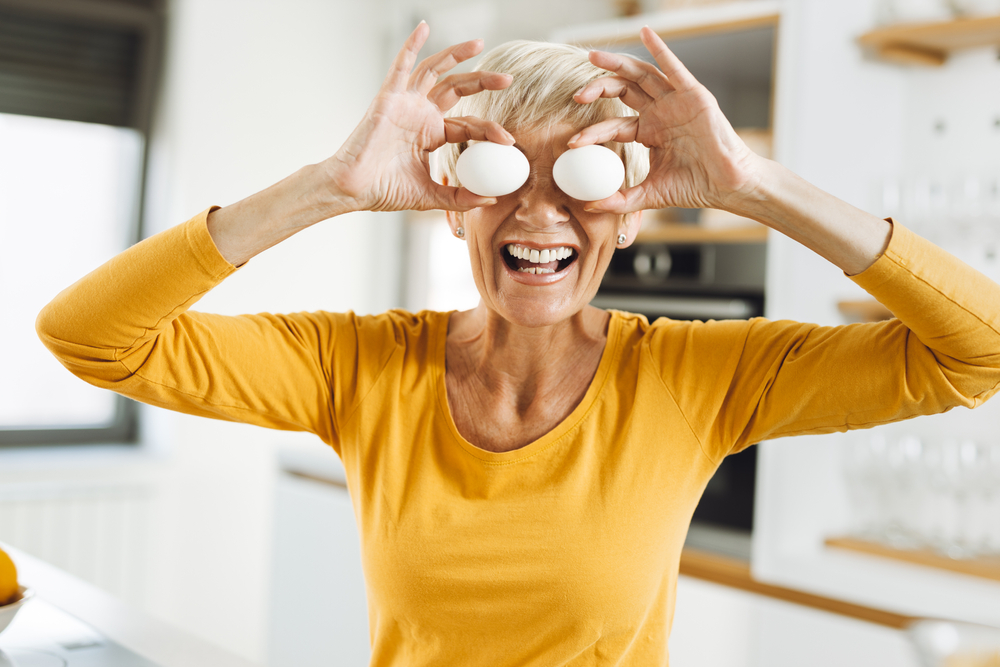
Eggs: a cholesterol risk?
For decades, people have been advised against eating eggs on the unfounded grounds that they raise cholesterol levels. Yet one egg contains 200 mg of cholesterol. That is less than the recommended daily limit of 300 mg. Moderate egg consumption does not cause high cholesterol in a healthy person, as most of the latest studies have found. These include one carried out by the American Heart Association in 2019, which draws a clear distinction between dietary cholesterol and blood cholesterol.
As for the supposed harmful effects linked to diabetes, opinions remain divided. People with kidney failure, on the other hand, should limit their egg consumption because of the high protein content of eggs (13g/100 gr).
How many eggs a week?
One answer might be: in moderation. As with everything we eat. When it comes to eggs, a healthy person can eat around 5 or 6 a week. Ideally, vary the way you prepare them and spread them throughout the week. Eggs fit well into a balanced diet and are a healthy alternative to meat or fish, notably thanks to their richness in protein, omega 3, vitamins (A, D, B2 and B12), iron, zinc and selenium (that powerful antioxidant).
For people with diabetes or high cholesterol (an excess of LDL cholesterol), however, consumption should be limited to 2 or 3 eggs a week. As for cooking, it is best to avoid fried eggs, to steer clear of the melted fat in which they sit.
Choosing your eggs well
To make the most of the benefits of eggs, it pays to choose them carefully at the supermarket, unless you can enjoy the produce of your own hens or those of the farm next door. Faced with eggs that all look alike, quality is best checked using the code printed on the shell. It is a kind of identity card. The first digit, between 0 and 3, begins this cryptic string of numbers and letters, and it is the most important one. 0 stands for an organic egg, 1 for free-range, 2 for barn-laid and 3 for caged hens. The first two categories are the ones to favour. The two letters that follow indicate the country: BE for Belgium, FR for France, and so on. And to find out whether an egg is fresh, simply place it in a bowl of salted water. If it floats, it goes straight in the bin.
Photo Shuttesrtock.
 Health
 Health
 Health