
Aquagenic urticaria: the rare allergy to water
Imagine that the long shower you take after an exhausting day doesn't soothe you but makes you cry out in pain. Impossible, you think? And yet this is the daily reality for women living with aquagenic urticaria. A medical rarity, but one that is very much present among women.
Translated from French. Original title: “L’urticaire aquagénique, cette rare allergie à l’eau”
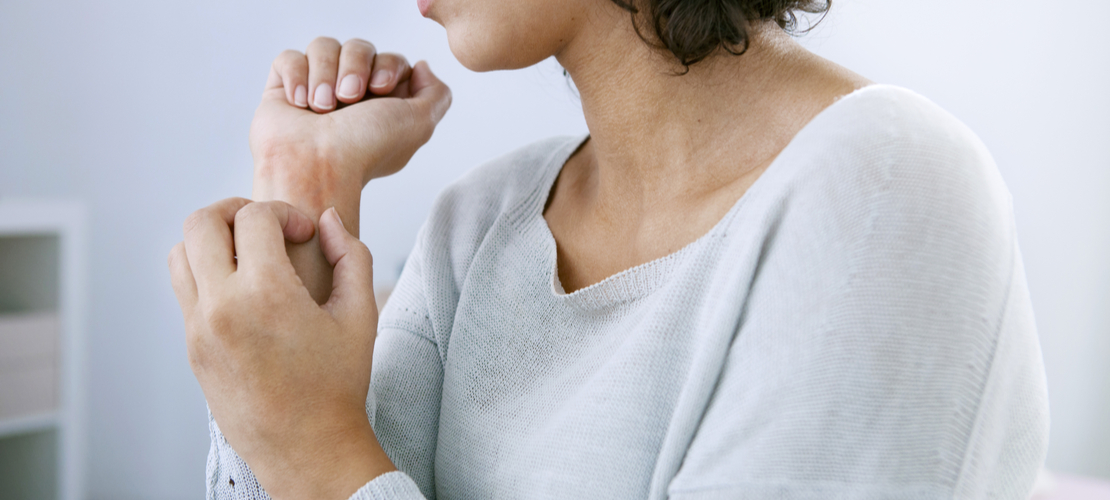
Aquagenic urticaria: what is it?
Barely mentioned in the medical literature and even less in the media, the condition known as aquagenic urticaria is something of a curiosity. How, after all, can one make sense of suffering from simple contact with the very thing to which we owe life itself: water? And yet that is the reality of this debilitating allergy. Fresh water or salt water, cold or hot, it makes no difference. The reaction will occur, triggered by the body's own defence system.
It is an allergy not to be confused with aquagenic pruritus, another water-related condition. To this day, the scientific community cannot offer any definitive explanation for this condition, which concerns only water in contact with the skin, not the water inside the body.
While aquagenic urticaria is spectacular and painful, the condition is fortunately quite rare (around one case in 230 million people). And it has a female profile.
What are the symptoms?
- Spots and itching
- Burning sensation
- Hives
- Pus-filled blisters
- Difficulty swallowing and breathing
- Possible loss of consciousness
All of these symptoms disappear after a few hours, once the skin has dried.
An allergy with no treatment
For anyone suffering from aquagenic urticaria, no specific treatment can eliminate the associated symptoms. To relieve those affected by this allergy, the only options are antihistamines (H1 type) or even phototherapy sessions (ultraviolet light), with effects that vary from one person to another.
This rare condition has been little studied, given the small percentage of people affected. Its (only) merit is to put the spotlight on rare diseases for which research is not a priority, leaving patients in pain.
If this problem affects you, you can find a urticaria specialist near you on the Belgian website www.stopurticaire.be. The doctor will first carry out a test to check whether the urticaria is genuinely linked to water and not to external factors, such as water pollution when swimming in the wild or the chlorine found in swimming pools.
 Health
 Health
 Health