
Walking backwards to build better balance
There is little we wouldn't do to strengthen our body and mind. Walking backwards, for instance? The practice may raise a smile, but its potential benefits for mental and physical health are being taken seriously by the medical world. Opinions differ on how effective it really is, admittedly, but no one advises against this rather… demanding form of walking. It is also proving popular with sporty types in search of new sensations.
Translated from French. Original title: “La marche à reculons pour renforcer son équilibre”
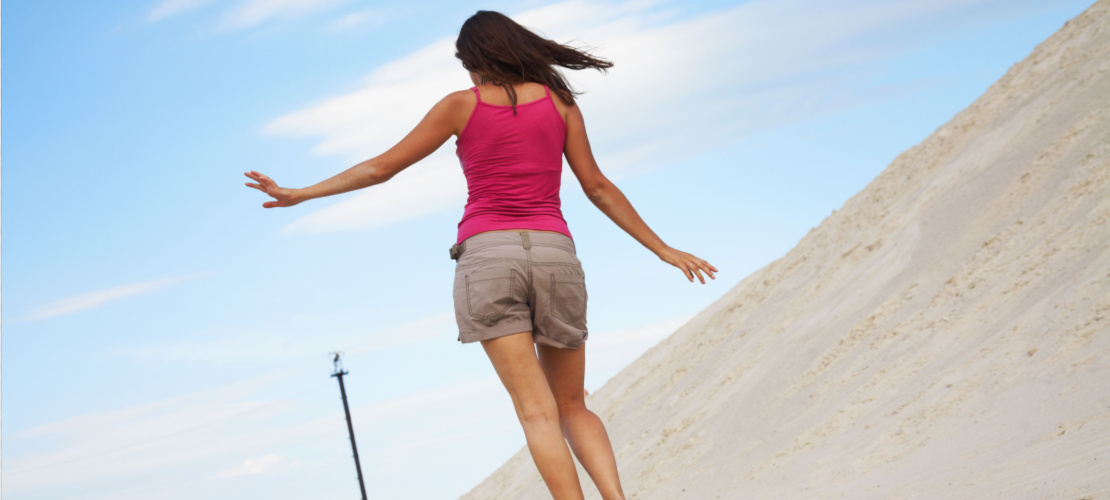
Some very specific benefits
What are the advantages claimed for walking backwards, also known by the English term retro walking? The first benefit is said to come from the fact that the brain needs more concentration and coordination to respond to the situation. It makes for an excellent mental workout, strengthening two faculties that gradually decline with age. Taking up backwards walking would also make it possible to enjoy proven weight loss, thanks to an energy expenditure around 40% higher than with ordinary walking. As you gain experience over the course of your sessions, this type of walking also builds endurance, since it requires you to take more small steps. And that's not all when it comes to the associated benefits. For those with a stooped back, around twenty minutes of backwards walking two to three times a week can help maintain a straight back and an attractive, toned silhouette. It is also a ready-made way of putting less strain on the knee joints, and an ideal complement to the treatment of pain linked to osteoarthritis. Finally, accepting the challenge of walking backwards strengthens the muscles of the thighs and buttocks – a goal pursued by more than one sportswoman.
How to get started with backwards walking
The first steps may feel hesitant. It's all a question of self-confidence when faced with this unusual way of walking. In practice, you should keep your head and chest upright, with your gaze directed far ahead. Then take small, regular steps to build up your assurance. The exercise should be done while paying attention to what you can hear around you and to your panoramic vision. Naturally, the lack of visibility behind you calls for certain precautions, explained by sports coach David Moens: « I advise beginners to choose a clear space to train, such as a gym or a flat piece of ground. An athletics track is perfect, because you can let yourself be guided by the markings on the ground. Avoid practising in the street, which is far too dangerous. At home, a garden path or a hallway lets you train in a reassuring setting. » As for contraindications, they mainly concern people who are prone to dizziness and balance problems.
Plenty of tutorials are available online to teach you the basics of walking backwards, such as the one on the platform fr.physitrack.com, with a very well-explained video here.
Photo Shutterstock.
 Travel
 Beauty
 Beauty