
Walking: the most underrated health habit after 50
Physiologically, the effects of walking are well established. Practised regularly, it helps maintain bone density – a central concern after the menopause – improves cardiovascular function and contributes to the regulation of blood sugar.
Translated from French. Original title: “Marcher : le geste santé le plus sous-estimé après 50 ans”
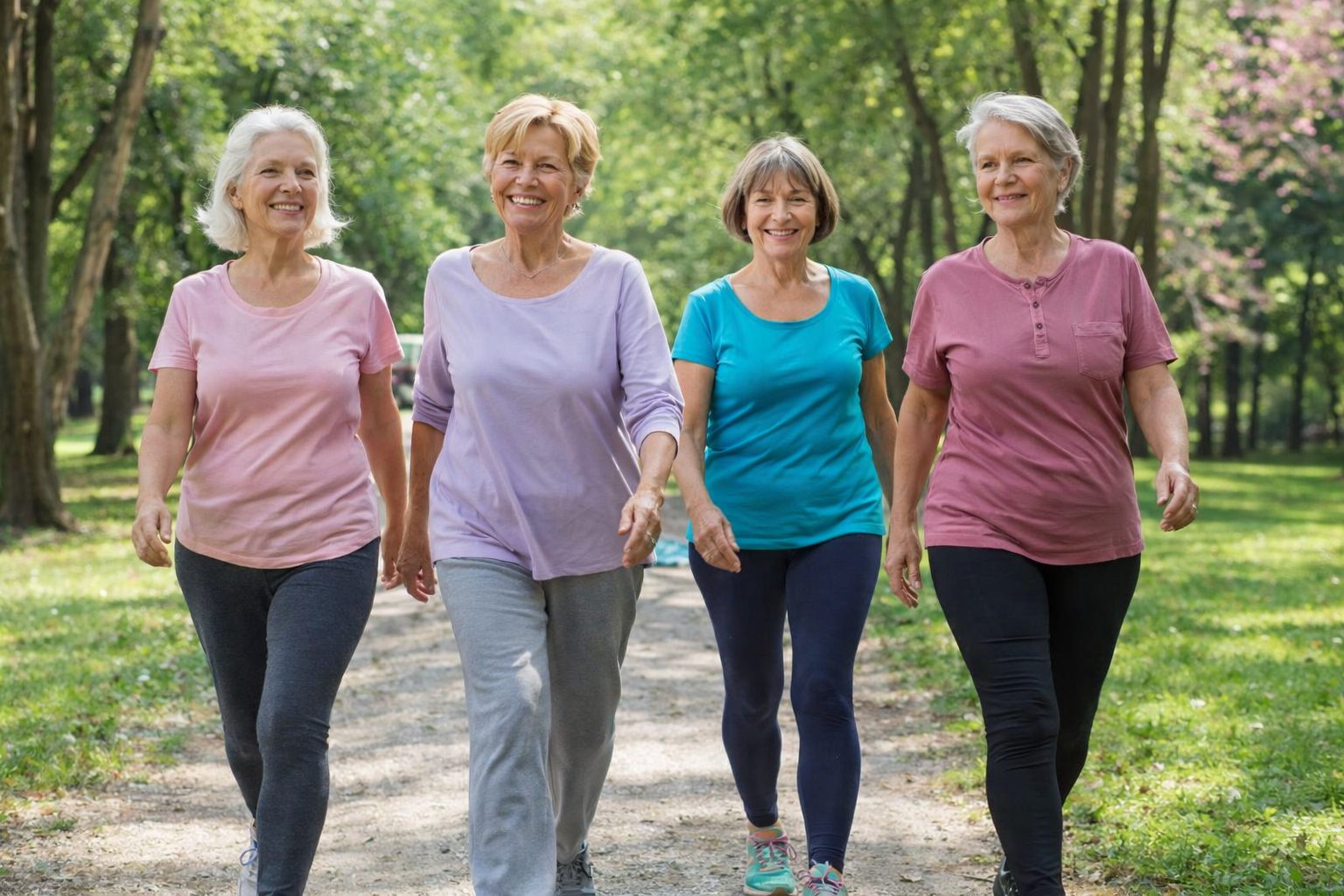
But its benefits don't stop there. Walking also acts on the nervous system. It stimulates the production of neurotransmitters involved in regulating mood and lowers levels of cortisol, the chronic stress hormone, which is often elevated in women over 50.
Why spring amplifies its effects
Walking in spring is not the same as walking at other times of the year. Increased exposure to natural light improves the regulation of circadian rhythms, which directly influences daytime energy, concentration and sleep quality. Neuroscience research also shows that walking outdoors improves certain cognitive functions, notably attention and decision-making. Several studies point to a positive effect on mental clarity and a reduction in rumination.
In everyday life, this translates into a feeling of a clearer mind, less mental fatigue and a better ability to organise one's thoughts.
A mental health tool
From our fifties onwards, the mental load doesn't disappear. It changes shape. Family responsibilities, career transitions, concerns about health or the future: all these factors feed a diffuse stress. Walking acts as a regulator. It creates a space of transition between indoors and outdoors, between mental activity and the body. And it requires no training and no equipment.
An effective practice with no strings attached
One of walking's greatest strengths lies in its simplicity. It demands neither performance nor numerical targets. Twenty minutes is enough to produce a physiological and cognitive effect. Specialists stress regularity rather than intensity. Walking several times a week, at your own pace and outdoors if possible, brings more benefits than an occasional, more demanding activity.
A direct impact on sleep
Walking during the day helps you fall asleep more quickly and improves the quality of your sleep cycles, which are often disrupted after the menopause. By helping to regulate biological rhythms, it indirectly aids overnight recovery. A virtuous circle sets in: sleeping better makes it easier to move more, and vice versa.
After 50, walking offers a simple answer to several major concerns: bone maintenance, cardiovascular health, emotional balance and mental clarity. In spring, its effects are reinforced by the light and the favourable weather.
With no exaggerated promises and no constraints, walking offers a simple answer to several major concerns (bone maintenance, cardiovascular health, emotional balance and mental clarity): it stands out as an obvious public health measure! Just goes to show that sometimes the most effective solutions are also the most discreet.
 Beauty
 Beauty
 People