
Rope flow: the fun way to stay fit
Admittedly, skipping isn't quite as easy in your fifties as it was in your teens, with the fear of falling compounded by the fear of looking silly. But don't throw away your skipping rope just yet. It will come in very handy for rope flow, a fun discipline with plenty of health benefits.
Translated from French. Original title: “Le rope flow, le sport idéal pour maintenir la forme”
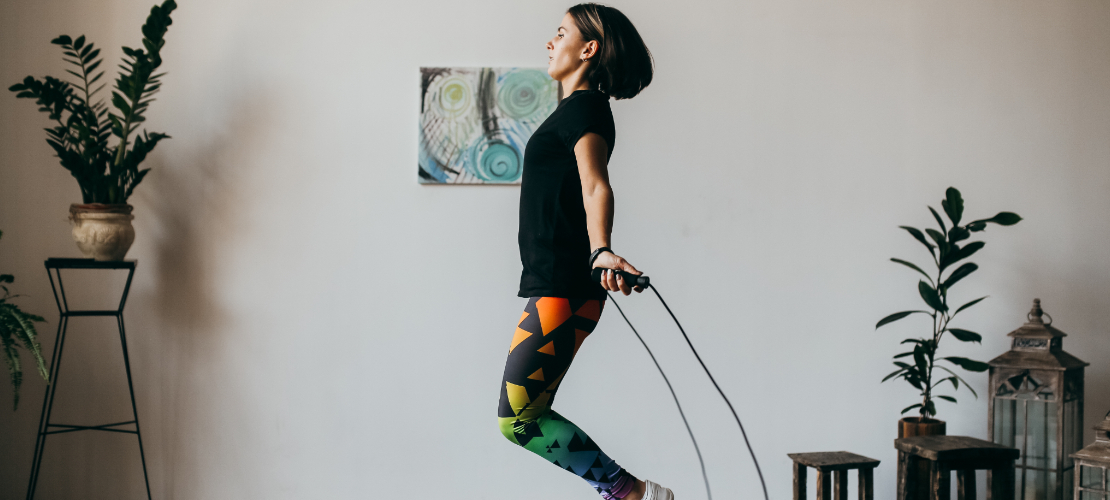
Rope flow, made in the USA
Like other new fitness trends, rope flow was born in the United States. It was devised in 2004 by David Weck, a Californian coach. Originally, the discipline was meant to serve as a training programme before becoming a sport in its own right. Rope flow has found its followers among sportswomen, who use it as a warm-up before other endurance sports such as tennis, cycling or running.
Rope flow in practice
The exercises resemble the movements of cowgirls with their lassos twirling around them. With your body well balanced and your feet firmly planted on the ground, the skipping rope is used for sweeping, airy movements, performed on one side of the body, then the other. But you never actually jump, as you would when using a skipping rope in the usual way. Sessions last about 15 minutes and can be repeated over several sessions.
And since nothing beats a picture for explaining a concept, there are plenty of tutorials on YouTube to help you learn the movements. One example is the channel Rope Flow Philippines, which offers commentated exercises (in English with subtitles) to get you off to an effective start:
A sport with many benefits
The discipline can be practised anywhere, at any time, and requires no expensive equipment. All you need is a rope (a light one, weighing around 500 g) and fitted sportswear. Easy to learn, rope flow can also be practised at any age.
"Rope flow is, above all, meant to be fun," explains Marc Rochas, a sports coach. "You start with clumsy movements, but you soon learn the right ones and forget your worries, thanks to the sense of letting go that drives the session. With proper instruction, practitioners develop their coordination, because they have to learn to manage several movements at once. With rope flow, your whole body is engaged: arms, shoulders, legs and buttocks. The result is calories burned and improved endurance and cardiovascular health."
However, despite these positives, don't expect to build muscle. That isn't the aim. What you can expect instead is a toned body and a more shapely silhouette.
A few precautions
As with any cardio sport, it is advisable to consult your doctor and get the go-ahead before taking up rope flow, particularly if you suffer from back, muscle or joint problems. "For rope flow, I always advise my pupils to start gently and build up gradually over the sessions. And after a few classes where we demonstrate and practise the moves together to reach their goals and reduce the risk of poor movements and accidents," concludes Marc Rochas.
 Travel
 Beauty
 Beauty