
Recovery: the key to staying motivated and feeling good
A packed diary isn't the only thing that can sap our motivation. Body and mind may also struggle to adjust to a sporting routine. Moving is essential, of course, but so is… resting. It is a ritual in itself, one that obliges you to take time for yourself and listen to your body, and that, in the long run, helps you anchor your sporting habits.
Translated from French. Original title: “Récupération : L’étape essentielle pour votre motivation et votre bien-être”
RECOVERY
© Florent Rivault
"What you do after your workout is just as important for your wellbeing and your performance as the willpower you put into your exercises."
FLORENT RIVAULT,
SENIOR WELLBEING MANAGER, ASPRIA
Florent explains: "Recovery is much more than simply resting after a training session. It is a complete process of physical, mental and emotional repair."
Recovery is a routine with many benefits:
- allowing your muscles to relax and rest,
- restoring energy,
- reducing stress,
- improving performance,
- strengthening immunity and
- promoting general wellbeing.
If we don't take the time to recover, we increase the risk of injury and even overtraining (excessive fatigue, loss of muscle mass, joint pain, sleep problems, etc.), which undoes all the effort put into establishing this sporting routine.
Active or passive recovery?
Active recovery involves maintaining a certain level of muscular activity and stimulating circulation, whereas passive recovery means complete rest to allow the body to repair and regenerate.
"The approach you choose often depends on the context, your personal goals and how tired or tense your muscles feel," explains Florent. "In many cases, a combination of the two methods can be more effective for complete, optimal recovery."
ACTIVITIES FOR ACTIVE RECOVERY
© Aspria
Stretching
"Take an elastic band. If you don't look after it, when you pull on it, it stops stretching or it snaps," says Florent. "It's a bit like what we do with a muscle: we stretch it regularly so that it keeps its length, or gains some, in order to protect it."
Florent recommends: "Before any sporting activity, dynamic stretching prepares the muscles and joints to support physical effort and avoids the risk of injury. Straight after a workout, recovery stretching works on each movement for a few seconds, to ease certain muscle and joint pain. Twenty-four hours after a session, once the muscle has fully relaxed, passive stretching will help you gain length and range of movement."
Variety
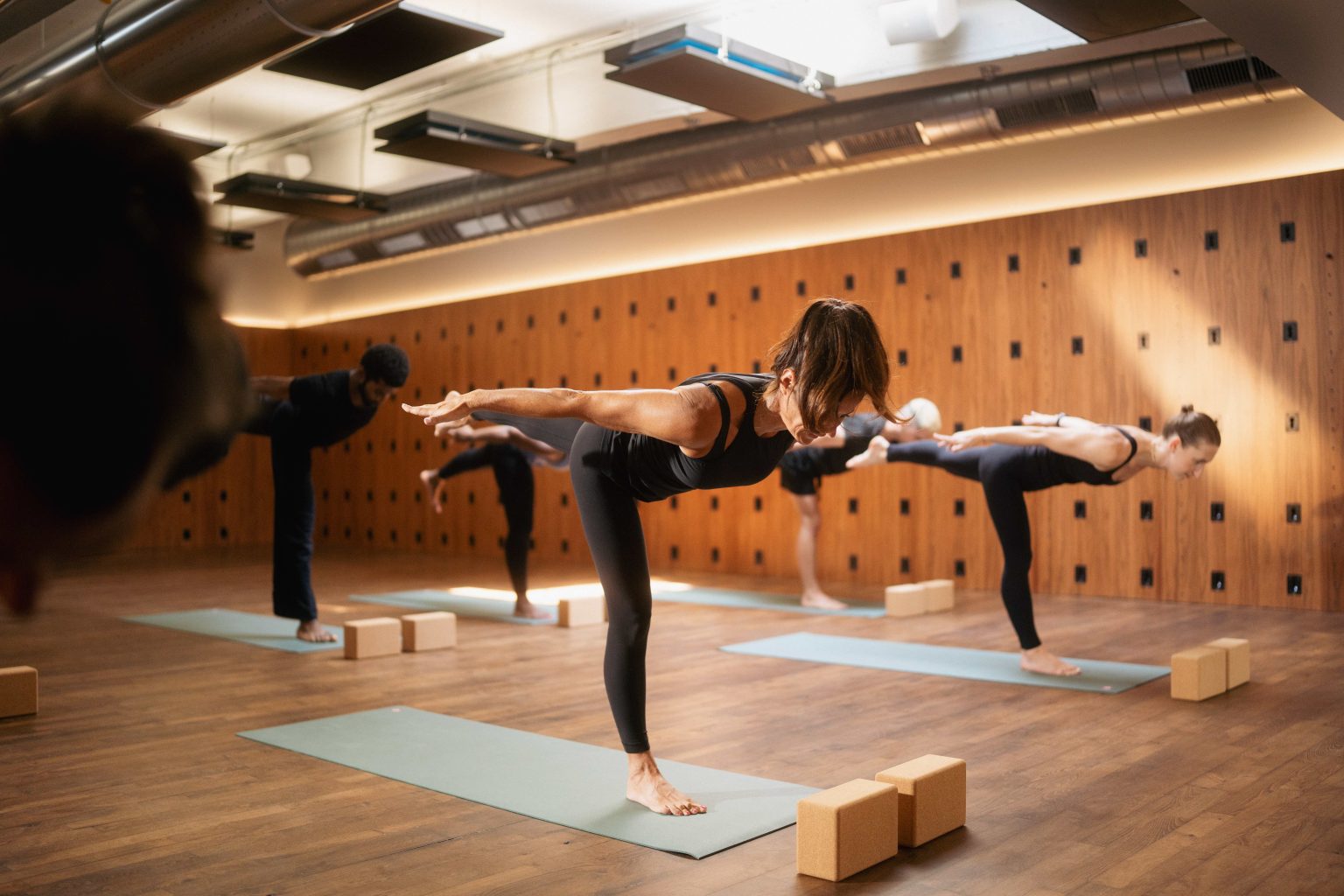
Choose a low-intensity activity. It's a chance to vary your workouts, discover new disciplines and restore your body and mind: swimming, walking and cycling, yoga or even meditation.
You can choose to practise these activities on your own or enjoy the motivating effect of the group in classes.
SOLUTIONS FOR PASSIVE RECOVERY
© Aspria
Massage
In our 3 Brussels clubs, we have set up dedicated spaces to encourage you to make this routine part of your life. A wide range of Hyperice equipment is at your disposal: massage guns, compression boots, vibration spheres and foam rollers.
The therapists at the Institutes can also offer you sports massages, providing targeted recovery according to your needs.
Wellness
The benefits of water, heat and cold can also make a real contribution to recovery. Jacuzzi, sauna, hammam and ice fountain are indispensable rituals for relaxation.
To reduce inflammation, Florent strongly advises taking a cold shower after your time in the sauna, or rubbing your body with ice.
Technology
One last way to encourage yourself to recover is to use a smartwatch, which provides plenty of statistics and nudges you to look after yourself.
HEALTHY LIVING
As well as active and/or passive recovery, lifestyle also plays its part in the recovery process. Staying hydrated and eating a varied, good-quality diet are essential, as are regular, good-quality sleep.
Find plenty of advice on looking after your health and wellbeing at www.aspria.com
 Travel
 Beauty
 Beauty