
Coastal walking: a holiday sport worth trying
In summer, holidaymakers by the sea have two options: lounging on the sand or getting active. So why not try an increasingly popular discipline: longe-côte, or coastal walking? It is an ideal way to stay in shape in your fifties.
Translated from French. Original title: “Le longe-côte, un sport à découvrir en vacances”
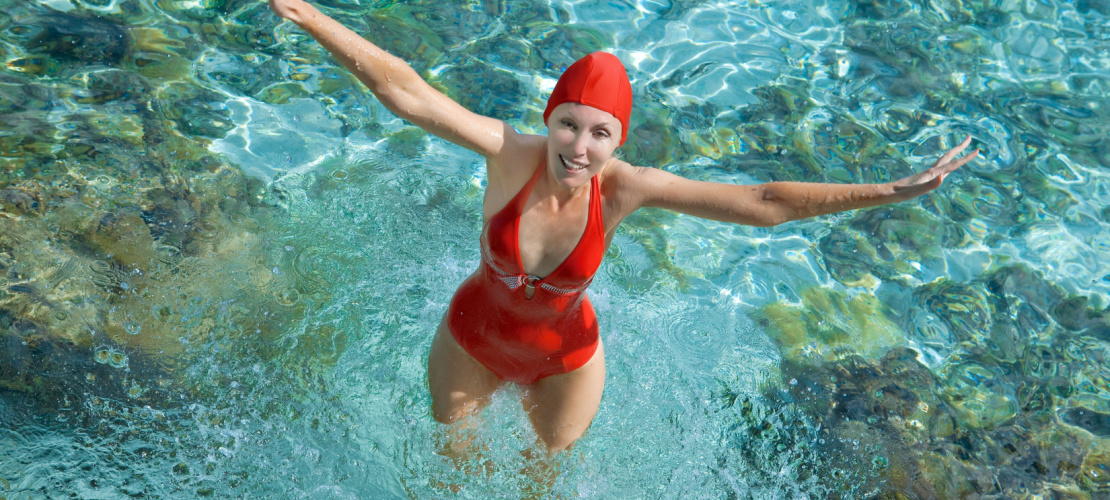
Longe-côte: what is it?
As the name suggests, longe-côte involves walking in a group along the coast (of a sea, an ocean or even a lake), with the water reaching your waist or armpits. The activity was born in the north of France in 2005, devised by sports coach Thomas Wallyn. A supervised session generally lasts between 40 minutes and 1 hour 30, depending on the level of the "longeurs" (coastal walkers).
A pursuit with multiple benefits
The many virtues of longe-côte explain the sport's growing popularity:
- Easy to learn. No sporting background is needed. Sessions are adapted to the age and physical condition of the "longeurs".
- Muscle strengthening and cardiovascular benefits
- Guaranteed relaxation
- A sport with no risk of joint trauma
- Improved endurance and balance
- Sociability
- Improved blood circulation.
A few recommendations to follow
"No, longe-côte is not a leisurely dip in the sea. It is a genuine sport, and it requires a certain amount of preparation," explains sports coach David Moens. "Accidents can happen if you are not physically prepared or if you do not know the coastline, the winds and the tides. I always advise against setting off alone on a stretch of coast you do not know. Deep holes or dangerous currents can pose major risks. Likewise, it is out of the question for (grand)parents to go out with very young children, who may lose their footing and drown. It is better to go with an experienced instructor." David Moens also insists that you should never practise longe-côte outside the hours when lifeguards are on duty. One last useful recommendation: check with your doctor that your heart is in good health, as it is put under considerable strain.
How to kit yourself out for longe-côte
For water sports, a swimsuit and a towel are generally enough. But what about longe-côte? David Moens replies: "While it does not require a big budget, the equipment for longe-côte is fairly extensive. Even if it is sunny and the temperatures are pleasant, spending a lot of time in the water will make you cold. A good-quality wetsuit is essential. You can hire one, but I recommend having your own, for reasons of hygiene. It should be complemented by protective booties, ideally made of neoprene. You do not do longe-côte barefoot, otherwise you risk injuries and infections caused by whatever is on the seabed: rocks, assorted debris…" Besides these essentials, you should also buy suitable gloves and a swimming cap to protect your hair from the effects of salt water and sun. For those who cannot swim, armbands can be reassuring. And do not forget sunglasses and the highest-factor sun cream (SPF 50+) to protect your eyes and the skin on your face from UV rays.
Photo Shutterstock.
 Travel
 Beauty
 Beauty