
Why meditation matters after 50
Translated from French. Original title: “Les bienfaits de la méditation après 50 ans”
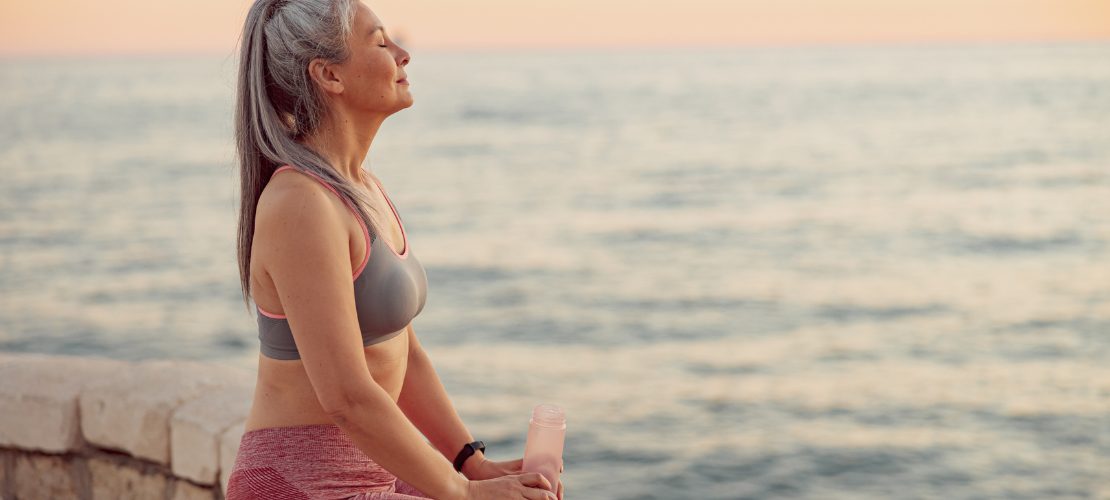
Close your eyes to open up
Our needs change. The body slows down, while the mind sometimes races. The heart longs for meaning, clarity, calm. Meditation doesn't promise to fix everything. But it offers something precious: a space. A place within yourself, that is yours alone. A place you can come back to, to breathe, to let go. A place of presence.
A practice backed by science
Long regarded as spiritual or "alternative", meditation is now being studied by neuroscientists. The results are clear, numerous and reproducible.
Reduced stress: meditation lowers the production of cortisol, the stress hormone, and rebalances the hypothalamic-pituitary-adrenal axis, which is put under severe strain during the menopause.
Better sleep: regular practice (mindfulness meditation in particular) reduces insomnia and improves the quality of deep sleep.
Support for cardiovascular health: meditating slows the heart rate, lowers blood pressure and improves heart rate variability, an indicator of resilience in the face of stress.
A stronger immune system: studies have shown an increase in antibodies (notably against flu) in people who meditate regularly.
Prevention of brain ageing: regular meditation increases the density of grey matter in the areas linked to attention, memory and emotional regulation. It may even slow the shortening of telomeres, a marker of biological age.
Meditating is coming home to yourself
But beyond the figures, it is the personal accounts that speak loudest. Women say they sleep again, find hot flushes easier to bear and cope better with mood swings. Others describe a feeling of freedom, a newfound ability to say no, to set boundaries, to feel what they truly want.
Meditation doesn't transform us. It reveals us. Every day, it brings us back to what is here: a breath, a sensation, an emotion... without judgement.
And at this stage of life, when so many women find themselves caught between generations, supporting others (children, parents, partners, colleagues), meditating means reclaiming vital space. It means moving from automatic reaction to conscious response. It means becoming the centre of your own life again.
How do you get started?
Choose a quiet moment: morning or evening, 5 to 10 minutes is enough to begin with. What matters most is regularity, not length.
Sit comfortably: on a chair, a cushion, a mat. The important thing is to keep your back straight, but relaxed.
Close your eyes and focus on your breath. Let thoughts come. Observe them without following them. Return to your breath.
You can also use an app (such as Petit Bambou, Insight Timer or Headspace) or follow a guided audio meditation.
Don't strive for perfection: the mind wanders, and that's perfectly normal. The exercise is in coming back. Again and again. Gently.
Meditating is living more fully
Meditation is not a retreat from the world. It is a clear-eyed return to yourself, so that you can live in the world more fully. More rooted. More aligned. More free.
It asks for nothing, costs nothing and promises nothing spectacular. But it transforms, gently, from the inside. It offers presence. And at 50, isn't that what we are all looking for a little more? To be here. Truly here. With ourselves, with others, with life.
So tonight, before you close the day, give it a try. One breath. One moment of silence. One moment of presence. And see what opens up.
Would you like to receive the best Fifty & Me articles in your inbox? Sign up for the newsletter!
© Illustration: Shutterstock
 Health
 Travel
 Beauty