
What if you became a mentor?
Translated from French. Original title: “Et si on devenait mentore ?”
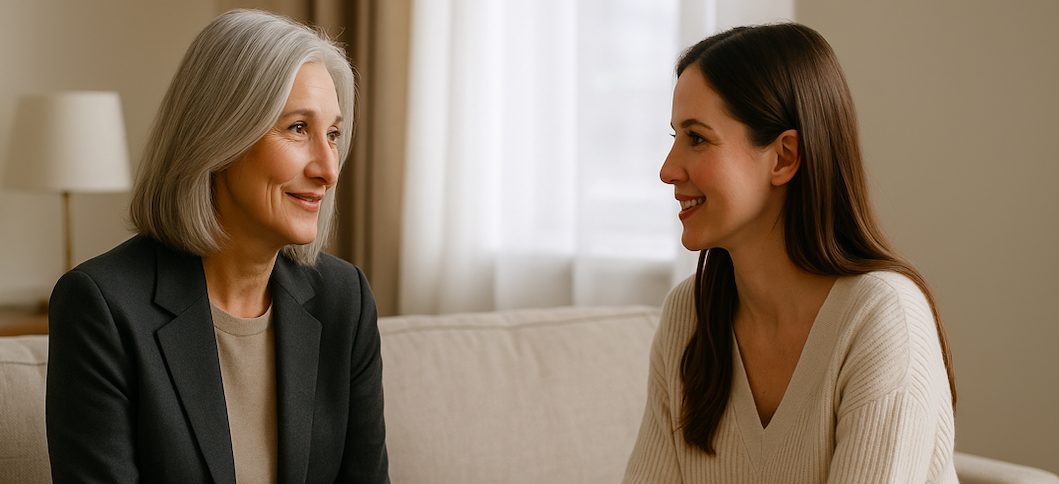
The quiet strength of experience
For a long time, the role of mentor was reserved for male authority figures, the corporate world and the corridors of power. Yet in the intimacy of women's circles, the passing on of wisdom has always existed: between sisters, mothers, friends, colleagues and neighbours.
As women aged 50 and over reposition themselves in their lives, mentoring is emerging as a gentle but powerful way of contributing. It is not about holding knowledge, but about offering a quality of listening, of attention, of encouragement.
"A mentor is someone who sees you before you see yourself."
Why now?
At this stage of life, we often have something precious: perspective.
We are no longer racing for recognition. We have been through things. We have learned lessons. We know about false starts, doubts and fresh beginnings. That does not make us experts, but it does make us valuable allies.
In a world where younger women face constant pressure (to succeed quickly, to juggle everything, to fulfil themselves without a stable role model), the simple act of showing that it is possible to change, to doubt, to start again... is a powerful one.
Many forms, one intention
Mentoring between women is not limited to formal programmes. It takes countless forms:
- an experienced entrepreneur who supports a newcomer
- a retired woman who looks after an isolated student
- an older friend who encourages a young mum
- a woman changing careers who shares her experience of daring to take the leap
What matters is not expertise, but the relationship. Regularity. Kindness. And above all, the ability to listen without projecting, to support without directing.
What it changes: for the mentor too
Mentoring is a two-way street. Women who practise it often speak of a sense of rebirth: renewed usefulness, strengthened self-esteem, the joy of passing things on without being judged.
It is an attitude that makes peace with age: we do not look back, we simply light the way for those who are following.
Wisdom is not handed down, it is shared
Being a mentor does not mean placing yourself above others. It means walking alongside them. With confidence. With gentleness. With the hope that other women, in their turn, will feel capable, legitimate and inspired.
At 50, we have far more to offer than we think. And what we give in this relationship of the heart is also what nourishes us in return.
How to get started
1. Identify what you want to do: in which area would you like to pass on your knowledge (professional, creative, personal)? Which type of person would you like to reach out to (a young woman, a single mother, a woman changing careers...)?
2. Join a programme or create your own: many associations, networks and community initiatives are looking for women ready to offer guidance. But you can also simply make an offer to a younger colleague or neighbour: "If you ever need to talk, I'm here."
3. Accept that you don't have all the answers: you are not there to teach a truth, but to offer a safe space. Simply being available, attentive and present is enough.
 Health
 Travel
 Beauty