
Watsu massage: pure, floating bliss
Do you have a swimsuit? Do you enjoy massages and a good soak? Then you need nothing else to discover watsu massage, an anti-stress practice that comes to us from the United States.
Translated from French. Original title: “Découvrir le massage watsu, pur moment de détente”
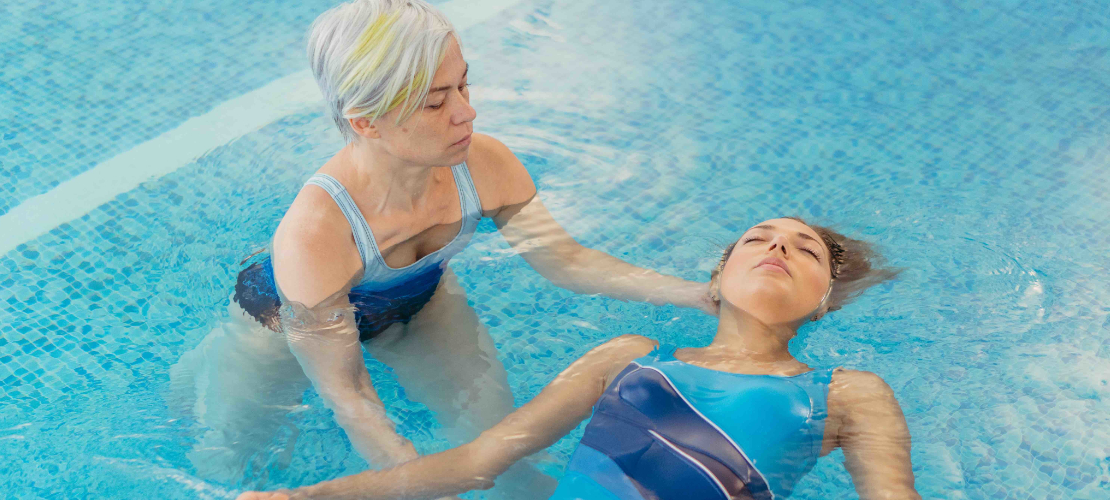
Watsu massage in brief
The story of watsu goes back to 1980 and the launch of this practice, created by Harold Dull, a poet and bodyworker who specialised in Zen shiatsu (a Japanese acupressure therapy). In essence, it is shiatsu adapted to the water by Harold Dull. A contraction of water and shiatsu, watsu, now popular in thalassotherapy centres, combines stretching with pressure movements on certain acupuncture points, as used in shiatsu.
Watsu massage in practice
A nod to anyone who is a little shy: watsu massage is performed in a swimsuit, in a pool of warm water heated to around 35 degrees, which is roughly body temperature. You lie on your back in the water, with your head immersed up to your ears. The practitioner supports the back of your neck and invites you to let go and close your eyes to get into the right frame of mind. The sensation of your body floating in the water, supported by buoys fixed around your ankles, is delicious, and it is heightened by the precise movements applied by the masseur. It is a blend of pressure on certain points of the body, but also of gentle rocking and muscle stretching. The person receiving the massage, completely passive, stops thinking about anything and quickly loses all sense of time and space, with the body feeling almost weightless. Under the practitioner's touch, stress melts away and the body seems lighter. For an hour of well-being, expect to pay around 80 euros in a spa.
A massage with many benefits
The main appeal of this massage lies in the sense of well-being it brings, with a liberating feeling of fulfilment for body and mind. Stress is released effortlessly. Letting go is essential to benefit from this loss of bearings, which drives away anxiety. Watsu massage is also recommended for people who struggle to sleep or who feel knots in their muscles. The pleasure of warm water is enhanced by the masseur's pressure movements on tight, painful muscles. The water itself also helps to ease joints and muscles that are often overworked in daily life.
As far as vascular health is concerned, the stretching and pressure movements of watsu massage improve venous and lymphatic circulation and lower the heart rate.
Watsu massage is also often used to tame a fear of water, and with success: neither your body nor your head is ever fully immersed, and the masseur holds you throughout the movements.
Few contraindications
Unlike other types of massage that involve oils, which can sometimes cause allergies, or painful movements, watsu massage can be enjoyed by everyone, regardless of age. The only obstacles are ear problems or certain conditions that rule out swimming pools (heart problems or epileptic seizures, in particular).
 Health
 Travel
 Beauty