
The benefits of a cold shower
Taking a cold shower, or plunging into the icy waters of a lake or pond. Some will no doubt see it as a form of heresy, especially with winter on its way and our habit of long, piping-hot baths. And yet cold water has plenty to offer when it comes to good health. What are the benefits, and how can you make the most of them? Fifty & Me tells you everything.
Translated from French. Original title: “Les bienfaits de la douche froide”
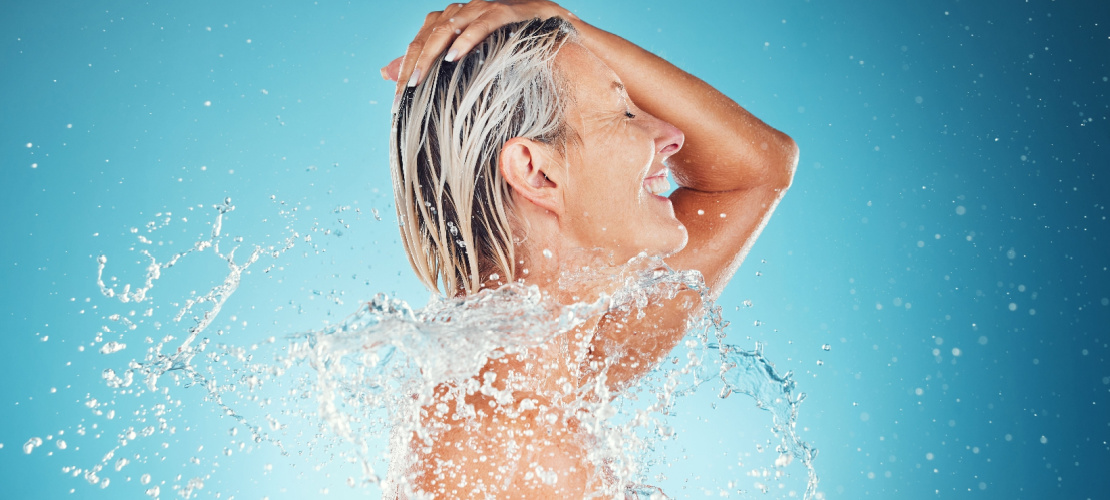
What are the benefits of a cold shower?
After the short transition period that is needed, a cold shower will become a habit. Here are the reasons to give it a try:
Toned skin. Cold water tightens the pores and stimulates blood circulation. The skin is also firmed up by the contraction of the muscles beneath it.
Shinier hair. A mirror-like finish, caused by the cold water closing the cuticle scales of the hair.
An antidepressant effect prompted by regular exposure to cold water. A theory set out in 2007 on the website of the National Library of Medecine.
Less weight gain. Cold water forces the body to burn fat in order to maintain its temperature.
An anti-inflammatory action. Ideal for easing muscle pain.
A stronger immune system. A feeling of increased resistance brought about by regular cold showers. A Dutch study published in 2016 points to 29% fewer days off work among fans of the cold shower.
A sense of well-being. The reason: cold water boosts the production of endorphins.
Help with falling asleep, thanks to the drop in body temperature.
A restorative effect after exercise. "As long as you allow the time needed for your body temperature to come back down after exertion, which is about 15 minutes," explains David Moens, sports coach.
How to ease yourself in gently
And in practice? "It is better to start with the easiest and gentlest method: gradually lower the temperature of the shower, going from lukewarm to increasingly cold, until the water is between 15 and 20 degrees. The body should be showered first on the lower parts and then on the upper parts, starting with those furthest from the heart. Unlike a regular shower, exposure to cold water should not last more than 2 to 3 minutes," says David Moens.
A few contraindications
Before making cold showers part of your daily routine, it is wise to ask your GP for a quick check-up to rule out any potential risk. This is all the more important if you have high blood pressure or heart disease. In some fairly rare cases, a cold shower can also trigger cold urticaria, with itching, redness and swelling. Another potential risk to bear in mind is hypothermic shock, also known as hydrocution, which can sometimes have fatal consequences.
Photo Shutterstock.
 Health
 Travel
 Beauty