
Scent scaping: the scent trick for switching off from work
When you work from home, it is tricky to draw a clear line between your job and your private life. Two worlds share a single space, with a boundary that is far from watertight. The answer may lie in scent scaping, a trend that began on TikTok.
Translated from French. Original title: “Le scent scaping pour se déconnecter du travail”
What is scent scaping?
Born during the Covid crisis and its repeated lockdowns, scent scaping has grown in popularity thanks to social media, TikTok among them. It has been taken up by home workers, who are the first to struggle with switching off at the end of the working day. How does the method work? "Picture your home-cum-workplace and each of its rooms. Scent scaping consists of giving each of them its own particular smell. It is a stimulus that allows your emotional brain to tell the difference between the rooms set aside for work and those devoted to family life. Each room, then, has its own scent: a soft, soothing one for the living areas and a more stimulating fragrance for the room dedicated to your working day. It is an olfactory boundary designed to make it easier to switch off once the working day is over, as if you were closing your office door behind you to go home," explains Samantha Romeins, a life coach specialising in well-being.
Which scents should you use for your workspace?
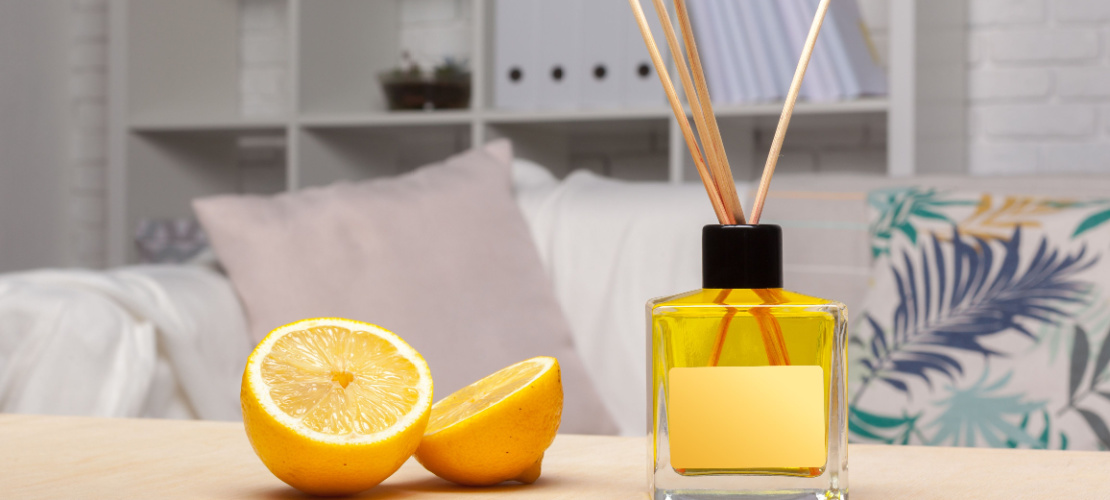
Once you have grasped the principle, the temptation to try scent scaping is great, if only to convince yourself that it is not just one more gimmick hyped on TikTok. The real challenge will be choosing the right products. Which ones should be avoided? "Generally speaking, all the incense sticks you find just about everywhere and which are sold as generating well-being. They are a product that contributes to indoor pollution, releasing carbon monoxide, but also benzene, formaldehyde and naphthalene. Incense is advised against by the Belgian Foundation against Cancer because of its harmful effects on health. The same caution applies to a good many scented candles with artificial fragrances," replies Samantha Romeins. So what are the alternatives for putting scent scaping into practice? "Studies have established a proven link between certain smells and better concentration at work, such as lemon, and also lavender, with its anti-stress power. Rosemary is known for helping concentration and improving memory. A cinnamon room fragrance in the room where you work, meanwhile, is ideal for boosting alertness. Think about essential oils too. And finally, for some people, the smell of a cup of coffee alone is enough to mark the work room with its own scent," explains the coach.
The great difficulty with scent scaping will be finding the scent that satisfies the sense of smell of everyone in the household. If tempers fray, burning a simple sheet of papier d'Arménie should be enough to neutralise odours thanks to its strong deodorising power.
Photo Shutterstock.
 Health
 Travel
 Beauty