
Optimists live longer: how to look on the bright side
Optimism does not mean seeing life through rose-tinted spectacles, and it has nothing to do with 'magical thinking'. It is simply a way of thinking that brings all kinds of benefits for our physical and mental health. Optimism means allowing yourself to count on a favourable outcome to the events in your life, and acting accordingly. After all, what matters to our brains is not so much what happens to us, but the way in which we react to it.
Translated from Dutch. Original title: “Optimisten leven langer: zó sta ook jij positiever in het leven”
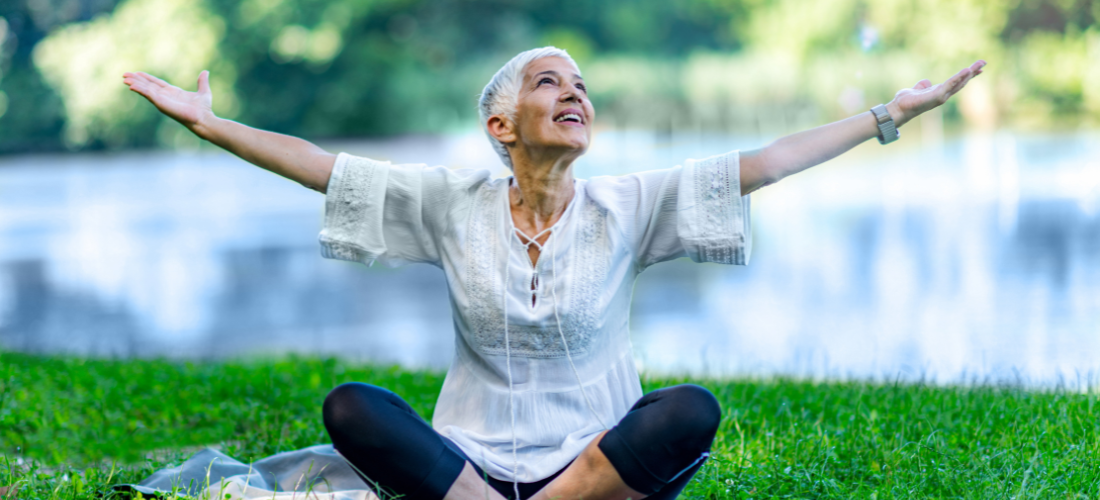
The benefits of optimism
In the 1990s, neuroscientists began to look into exactly how optimism works. They examined the extent to which optimism played a part in the spontaneous recovery from illness, and studied the positive psychological influence of laughter, the effect of mental wellbeing on ageing, and the placebo effect too. The results showed that pleasant emotions play a positive role in health. A positive outlook brings the following benefits, among others:
- a longer life expectancy;
- a lower risk of depression;
- a better ability to cope with stress;
- more self-confidence;
- greater physical resistance;
- mental wellbeing;
- a natural aptitude for forging strong bonds;
- greater fulfilment in life;
- more success in every area;
- more peace of mind and more confidence…
What you can learn from positive psychology
When you take a more positive view of life, your body and mind develop differently: they work together to make you stronger and more capable. Optimism is a positive attitude towards the future, but it is more than that. It is a hopeful emotion that helps you to face life's challenges better and to overcome problems. Positive psychology draws on people's inner strengths and dynamism to develop what is good in their lives (strengths, talents, qualities).
The principle is that you should not waste your life worrying about problems, but make it lighter by seeing the good side of things. The aim is to develop the ability to give meaning to your actions and to take responsibility for the things you can change. By seeing life as a miracle at every moment of the day, by celebrating the beauty and intelligence of the nature around you, and by letting yourself be moved by music, you feel that you are alive!
You can learn to be an optimist
The word optimism comes from the Latin 'optimus', a superlative of 'bonus', meaning good. According to the dictionary, optimism from a psychological point of view is a doctrine that 'sees the world as beautiful and as happy as possible'. So there are as many definitions of optimism as there are people on earth, and each of us can form our own picture of it. Struggling to do so? If you believed in Santa Claus for five years, surely you can believe for five minutes that life is beautiful? Still not working? Then follow your dreams anyway. Who knows what will come of it…
Optimism in 10 steps
In her book 'Osez l'optimisme!', Catherine Testa, founder of loptimisme.com, offers 10 keys to a happier outlook on life. With a touch of humour and practical exercises, this little guide encourages you to love more, to be creative, to think positively, to breathe, to give, to move, to say thank you and, not to be forgotten, to smile. Here are ten steps on the road to greater optimism.
One of the main characteristics of optimism is being able to dream of a different future and knowing that it really can (and will) come true. To avoid focusing on what you don't want, Catherine Testa invites you to listen to what you do want and to describe your desires clearly.
Create. In other words: step out of your comfort zone to explore another world. Start with a creative activity, whether it is painting or cooking, because it will put you into a 'flow' (and that is one of the three elements of happiness).
Think positively. How do you learn to see things differently? You can do so with the 'three good things' technique that Martin Seligman introduced in positive psychology. You can change your mood and your outlook on daily life for good by adding a small routine
Breathe. Our breathing says a great deal about our emotions… 'Good breathing' has all kinds of benefits: it detoxes the body, reduces stress, improves your concentration, helps you sleep better, aids your digestion and gives you energy. With a few practical exercises, you can go a long way.
Move. In theory, we all know it: exercise is good for body and mind (dopamine and serotonin are released, you feel pleased with your achievements…). So it is time to get started – and to keep it up.
Give. Giving is all about generosity, and it has been scientifically proven that doing good for others is a fast track to happiness. A small gesture can sometimes make a big difference. Give your time, your talent, a listening ear, do someone a favour… we all have a lot to offer.
Smile. A smile can work wonders. It costs nothing, yet it opens so many doors and hearts… And there is also the 'mirror effect': it is an excellent way of making both you and the people around you feel better. So keep smiling!
Say thank you. Happiness is not about having everything you want, but about being grateful for what you have. By being grateful every day, you change the way you see the world.
Live in the present. We are often so busy that we rush from one thing to the next without ever pressing the pause button. How can you change that? Start right away. Do things with pleasure, organise yourself better and limit the number of appointments so that you have more time and space to do what you enjoy.
Love. When you live in harmony with who you are, you can spread love around you. Try to boost your self-confidence through autosuggestion or positive Post-its stuck up all over the place. For Catherine Testa, love is the secret ingredient for making everything in your life succeed.
Want to know more? The book 'Word Optimist' by Flemish Ambassador of Happiness and Quality of Life Leo Bormans gives you nine touchstones for a positive life.
Would you like the best stories from Fifty & Me delivered to your inbox? Then sign up for the newsletter.
Image © Shutterstock
 Health
 Travel
 Beauty