
How to Get Over Heartbreak
Break-up after break-up, and so much pain, now tinged with darkness: you are over 50 and it feels as though your love life amounts to nothing but a string of failures. How do you get past this heartbreak, these negative emotions and the pessimism that has taken hold of you completely and is wearing you down? How do you find your way out of the tunnel?
Translated from French. Original title: “Comment dépasser les chagrins d’amour ?”
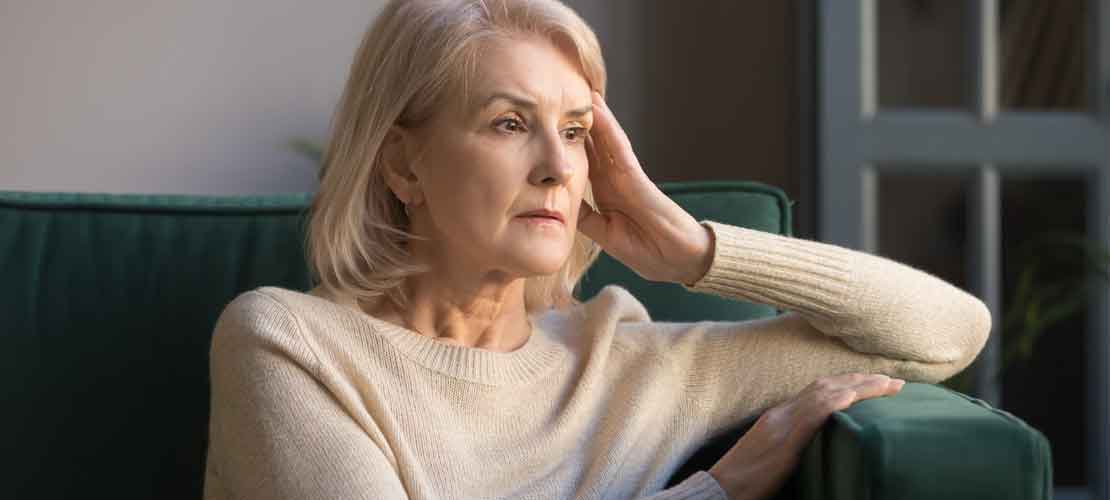
We put the question to Christophe Leys, who has just co-authored the richly documented Science de la résilience (published by Odile Jacob) with psychiatrist Pierre Fossion. A doctor of psychology, biologist, psychotherapist and professor at the Faculty of Psychology and Educational Sciences at the ULB, he explains in the book the various factors (individual, biological, genetic, epigenetic, emotional, social, behavioural and more) that underpin resilience, our capacity to move beyond trauma. But beyond the scientific analysis, he also gives us keys to getting back on our feet after life's heavy trials. They may well help us to move past any sense of romantic emptiness we might feel, even if that cannot be compared to a profound trauma.
Heartbreak: building your resilience
Is resilience a character trait, or a skill that can be developed (or can deteriorate)?
In the book, I put forward several arguments pointing in both directions (that of a personality trait, or on the contrary, a skill). But we should not forget that what we call "resilience" is a complex concept that may bring together many different psychological processes. I would answer much as one might for intelligence: people start out with a foundation (which we can imagine to be genetic) and then either that endowment is trained, or it deteriorates (in the case of multiple traumas, for example). So part of it would probably be innate, and part acquired. In any case, it is certain, and fortunately for therapists and patients alike, that resilience can be developed.
You explain that the key to resilience, or to feeling well, does not lie in experiencing only positive emotions and suppressing the negative ones…
Happiness is not what is left once you have avoided unhappiness; of that I am convinced. It is something you move towards, something that is built. Paul-Loup Sulitzer used to say in his books, "everyone who became very rich had a burning desire to do so; it is never by chance." I think happiness is the same, except for a few lucky people. If I had to give one piece of advice to a woman of 50, it would be about positioning. What does she want? What has meaning for her in terms of who she is or wants to be, in terms of her values? Romantic feeling fits in alongside other considerations: family life, children, the extended family, the circle of friends, financial security, where she lives, her lifestyle, and so on. When everything is no longer compatible, what are the priorities? What does she also want to show her children as a role model? The answers to all these questions can vary depending on the person's age, the children's ages, and a whole series of other factors. But it is a positioning that can only be reached in relation to oneself.
Therapy is not a cure-all
Can you work on this alone? Or do you need to see a therapist?
I really do not think a therapist is a cure-all for everyone. We do help, that is certain, but there are many other resources that can help just as effectively: friends, family, a priest, a witch doctor (why not, if he is kind and non-judgemental)… What makes therapy effective, in my view, is the relationship with the patient, far more than theoretical knowledge or tools and exercises. So anyone who can build a relationship of trust with a person in distress, one that is supportive and non-judgemental, can help them effectively. The advantage of a therapist is that you pay them to focus only on you. You do not have to ask whether you can do something for them in return, you can stop seeing them if they are not right for you, you have set appointments, confidentiality is guaranteed, and so on. It is a framework that avoids many pitfalls, but ultimately it is the quality of the relationship that counts.
How can we make sense of romantic break-ups?
A romantic relationship is often transactional, like any relationship. A couple can function very well in one situation and then cope very badly with a transition. For example, many struggle with the move from student life to working life, or from life as a couple to family life, or, later on, from family life to the next stage, when the children are grown up and independent and the couple and their love life can take up more space again. Every transition requires the couple to have the skills to adapt to change. Sometimes certain skills are missing. Either you acquire them, or it may no longer work. That said, we can also see a romantic relationship as something that can have a beginning, a middle and an end without it being a tragedy. A break-up can be painful, and then you can recover and carry on with your life. I believe what we must not lose is the ability to trust people and to let ourselves love. In fact I say "trust people", but if you dig a little, it always ends up meaning "trust yourself".
You explain that an accumulation of traumas reduces our capacity for resilience. Can this be applied to a succession of heartbreaks?
Technically, a romantic break-up is not a trauma. But if you have read the book, you will know that we pay little attention to that distinction; break-ups work perfectly well at knocking you flat all the same. But we are equipped for bereavement, in principle. If we cannot manage it, the problem often lies elsewhere than in the break-up itself. Patients who have been through many heartbreaks rarely regret the many people they have lost; rather, they ask themselves anxious questions about themselves. And so yes, there can be sensitisation. For example, one of the dimensions of certain models of resilience is self-perception. If that perception is eroded by successive failures, it can in theory damage resilience.
You talk about humour! When it is kind towards oneself, it contributes to resilience!
Yes, it is quite clear that people who can use humour as a way of creating distance from a sense of powerlessness, and as a tool for acceptance, can genuinely be helped by it.
You practise ACT (Acceptance and Commitment Therapy) in your consultations. How can it help a single woman of 50 who feels crushed by repeated heartbreak?
Very clearly in connection with the positioning I described above. Identifying one's own values (that is, who we want to be, how we could be described, which values make us who we are), identifying the life path that matches our values, identifying the emotions that stop us following that path, and learning to accept those emotions without fighting them, while being aware that it is normal to experience them on the path we have decided to take: it really is a process that leads to positioning. The example I often use is this: ask someone to go to the airport at 6 a.m., check in luggage, go through security, wait two hours and then go home, and they will be convinced they have had a rotten morning. Ask them to do exactly the same thing in order to spend a month in the Samoan Islands and they will be perfectly happy (these sentences work just as well for women). The negative emotions are the same, but with or without meaning, it changes everything.
Photo: Shutterstock.
 Health
 Travel
 Beauty