
Hodophobia: when travel sparks fear
Freud himself admitted to a certain anxiety at the thought of travelling, but for some people the mere mention of a possible trip triggers a genuine phobia. It is known as hodophobia. This condition affects women and men alike, and may come as a surprise in a society where travel is so often seen as a vital need.
Translated from French. Original title: “Hodophobie, quand le voyage génère la peur”
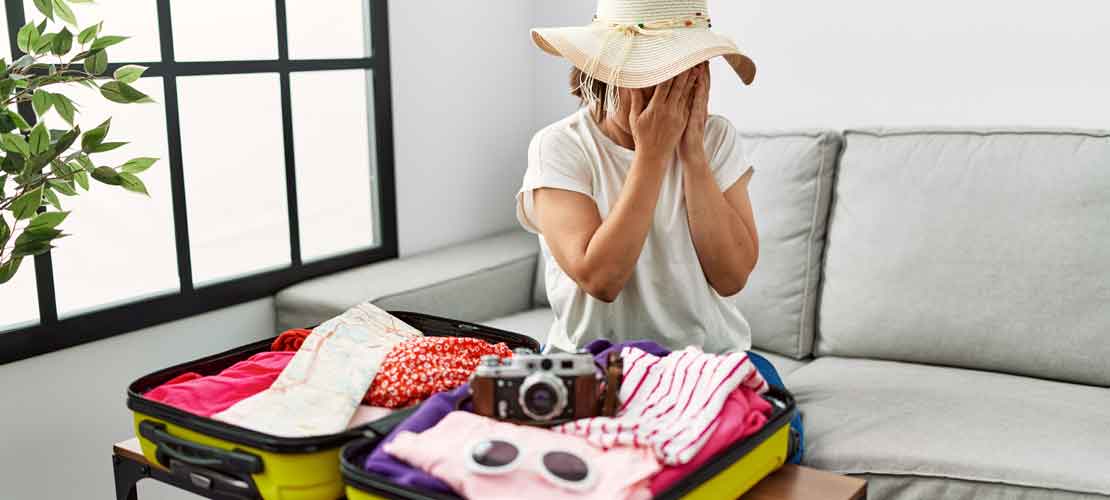
Hodophobia: what is it?
Rarely talked about in the media yet fairly common, hodophobia is defined as an intense, irrational fear of travel. It should not be confused with aviophobia, the fear of flying. Hodophobia is often caused by a traumatic event experienced in the past. It can also be passed down by parents or family, through an unconscious process of imitation. In psychology, hodophobia is studied as a reassuring need to stay within the protective cocoon of one's own home. This is something the philosopher Pascal Bruckner explores in his latest essay, Le sacre des pantoufles. Du renoncement au monde (published by Grasset).
What are the symptoms of hodophobia?
Hodophobia shows itself through psychological and physical symptoms alike:
- A fear of what might happen
- Confusion when it comes to making decisions
- A fear of leaving one's home and loved ones
- Stomach aches and bowel problems
- A racing heart
- Severe panic attacks
- Dark thoughts that go round and round in the mind
"The word holiday fills me with dread"
Anne-Marie, in her early fifties, is a librarian. Yet being surrounded by books does not make her long to escape to faraway lands. As she explains in a Facebook group, she suffers from hodophobia. "While my colleagues dream of white sandy beaches, talk of far-off trips among us brings on anxiety attacks for me. As a child, my parents never travelled. Is that why I'm like this? I don't know. Some destinations don't trigger attacks because they are familiar to me. Every year, I go to the same high-mountain resort in France. To the same hotel. And that is enough to calm my anxiety."
Possible ways to ease the effects
A personalised treatment plan, followed with a healthcare professional, can and should be put in place to reduce the effects of hodophobia and improve quality of life. This may include cognitive behavioural therapy (CBT) to recreate and work through the phobic triggers, known as exposure therapy. "But some simple tricks can also help overcome the phobia, depending on its severity. For example, you don't need to plan a faraway destination to enjoy travelling. Once confidence has returned, it becomes possible to push the boundaries little by little. You can also ask neighbours or loved ones to look after the house while you are away, or even travel with people who reassure you. My last piece of advice would be to learn to let go. But in any case, I would advise against putting up with this paralysing phobia without trying anything," explains Laurent Marlin, a behaviour specialist.
Photo Shutterstock.
 Health
 Travel
 Beauty