
Gerascophobia: when growing old becomes a fear
"Dying, what a fuss. But growing old, oh, oh, growing old," sang Jacques Brel in 1977. A song that already captured all of humankind's dismay at this inevitable process. Today, in a society that glorifies youth to excess, ageing remains hard to accept. So much so that it can trigger a genuine phobia in more vulnerable people: gerascophobia. Far from being inevitable, there are ways to ease this anxiety and make the most of the passing years.
Translated from French. Original title: “Gérascophobie, quand vieillir fait peur”
Gerascophobia explained
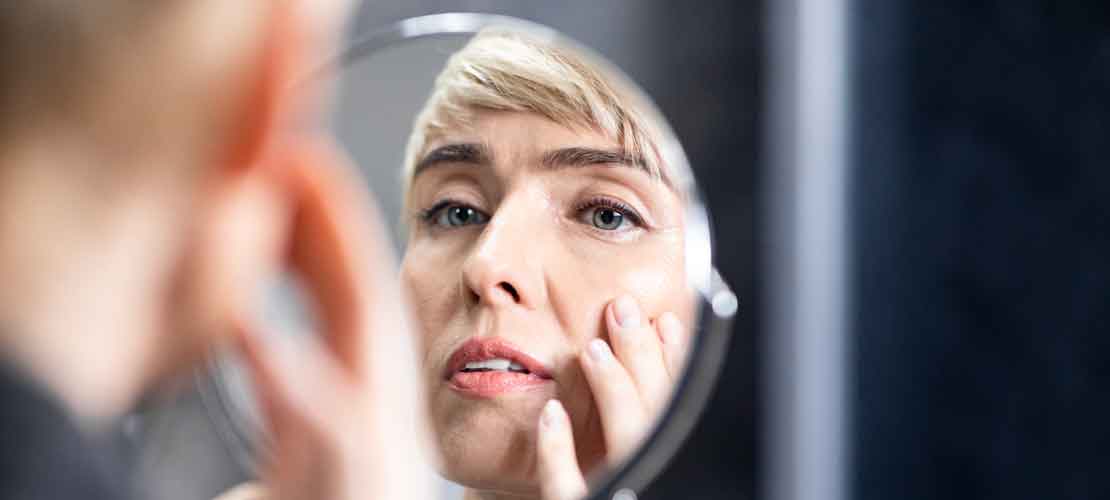
Little known to the general public, gerascophobia is defined as the fear of growing old. "For the person who suffers from it, ageing is associated with the fear of becoming dependent. It is an obsessive phobia often seen in people who have elderly relatives or acquaintances with debilitating or degenerative diseases, such as Alzheimer's or Parkinson's. The phobia can also be triggered by the menopause, when the body changes and gives back an image different from the one we have of ourselves. It is fuelled by the vision of the ideal body, conveyed almost everywhere. For those with gerascophobia, the mirror becomes their worst enemy," explains Sophie Delsalle, a psychologist specialising in behaviour.
What are the signs of gerascophobia?
Gerascophobia can trigger a number of symptoms, generally related to appearance:
- Refusing to look at one's reflection in the mirror
- Covering up wrinkles and white hair
- Feeling less energetic
- Fear of being seen by others, on a beach or elsewhere
- Constant anxiety
- Difficulty mourning one's youth
- Loss of self-esteem
- Fear of illness
- A form of social isolation
- Low mood or even depression
- Negative, nostalgic thoughts
A few tips for accepting growing older
Above all, it is important to step back and realise that ageing is not all bad. Quite the opposite. It can be a source of many different pleasures: sharing and passing on your experience to your children and grandchildren, or discovering new activities together. Why not follow the example of friends and acquaintances who are enjoying their age to the full? It is an example worth following. As is removing toxic people from your circle, so that you keep only the positive friends who will lift you up. The key is to stay active but also connected with others, across all generations. Finally, forgetting your age also means, above all, making plans for the future. At 50, anything is possible.
Which treatments should you consider?
"A first consultation with a psychologist will identify the negative thoughts to work on over the course of the sessions. With the professional, the patient will examine their thoughts about ageing objectively, labelled as dysfunctional thoughts, and come to see the futility of their mistaken beliefs. The aim of this therapy is to move ageing further down the patient's list of worries. It is a useful treatment when the phobia genuinely affects well-being," explains Sophie Delsalle.
As with other phobias, cognitive behavioural therapy (CBT) will be used, as its effectiveness is well established.
Photo Shutterstock.
 Health
 Travel
 Beauty