
Female friendship: the pillar of mental health we too often neglect
Translated from French. Original title: “L’amitié féminine, ce pilier de santé mentale qu’on néglige trop souvent”
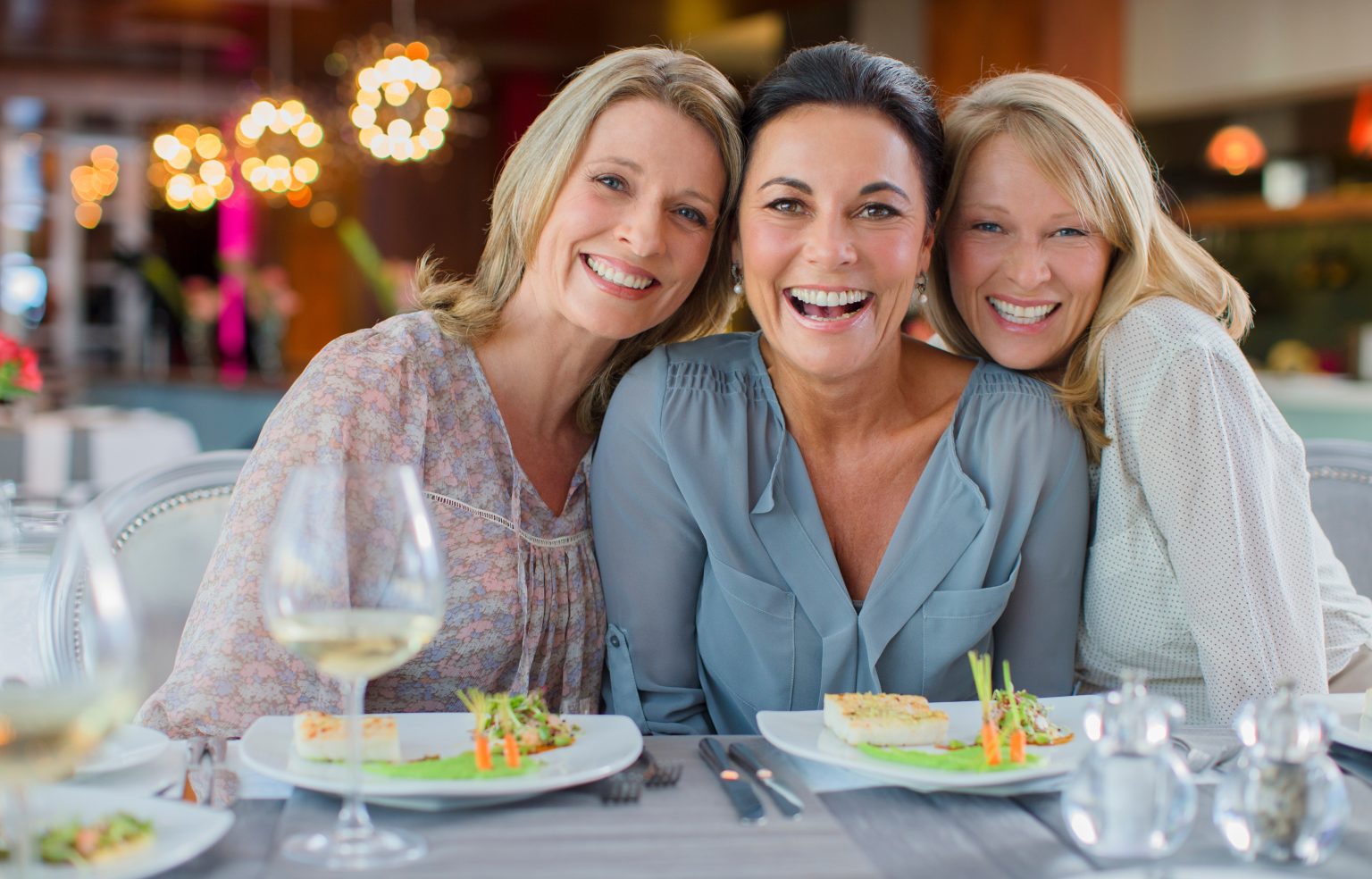
What science says about friendship after 50
The studies on the subject all point the same way: strong friendships are associated with better cardiovascular health, a lower risk of depression and even a longer life expectancy. For women in particular, friendship acts as a unique stress regulator: talking to a close friend is thought to lower cortisol levels and boost the release of oxytocin, the bonding hormone that soothes as much as it reassures. In other words, a coffee with the girls is not a waste of time – it is a prescription in disguise. This phenomenon even has a name among psychology researchers: tend-and-befriend, the biological tendency of women to respond to stress not only with fight or flight, but by turning to their social network. At 50, when stress takes on a new face (menopause, caring for relatives, career transitions), this reflex becomes more precious than ever.
From a purely psychological point of view, female friendship fulfils a function that neither a partner nor family can quite cover: that of a mirror with nothing at stake. With a friend, you don’t have to negotiate, to educate, or to uphold the image of an impeccable mother or partner. You can complain without being judged, doubt without being reassured at all costs, change your mind without consequences. Psychologists speak of a space of “horizontal emotional regulation”: unlike hierarchical relationships (parent-child, boss-employee), friendship between peers allows mutual validation that eases anxiety and strengthens self-esteem, with no power dynamic to manage.
It is also a bulwark against a phenomenon that is still too taboo: relational loneliness, which affects many women over 50 even though they are surrounded – in a relationship, with grown-up children still at home, socially active. You can be “accompanied” without being “seen”. A close friend is precisely the one who sees beyond the role you play everywhere else.
Nurturing this kind of bond contributes directly to preventing depression, by providing a regular space for authentic expression that is far more protective over time than a one-off appointment with a professional.
Why friendships fade (and why it isn’t inevitable)
Many women notice, once past fifty, that their circle of friends has shrunk without their ever really deciding it should. Friends from work scattered with retirement, those from the early years of motherhood followed the pace of children who have now grown up, and house moves did the rest. This gradual erosion is not a sign of any lack of love for friendship – it is simply that sustaining it, like a couple’s relationship, takes regular intention.
The good news? Your fifties are also the age when you finally know how to choose your friendships with discernment. Gone is the social padding done out of obligation: make room for the bonds that truly nourish you.
Three ways to reinvest in your friendships
1. Reactivate rather than multiply. Before looking for new friends, a simple message to an old acquaintance you’ve lost touch with is sometimes enough to revive a precious bond. “When shall we meet?” is worth more than a thousand good intentions.
2. Set up recurring dates. A fixed monthly dinner, a Sunday walk, a theatre subscription for two: turning friendship into a ritual protects it from being diluted by everyday life.
3. Dare to try something new. A painting class, a book club, a walking group: shared activities remain the most natural breeding ground for new friendships, at any age.
When sport becomes a pretext for friendship
There is something particularly effective about a friendship forged on a sports court. Perhaps because shared effort dispels shyness, or because the score provides a ready-made topic of conversation when you don’t yet know each other well enough to open up. Padel, which is booming in Belgium, is the perfect example: it is played in doubles, almost always among friends, in a session of one hour on the dot – the sporting equivalent of the Sunday coffee, with a bonus of endorphins.
A reader recently told us how four women from her neighbourhood, who had only known each other by sight at the school gates fifteen years ago, found themselves on a padel court one Wednesday evening “just to give it a go”. The date has been fixed ever since, for three years now. Between rallies, they share the story of a divorce in progress, a mother losing her memory, a child anxious about exams. “On the court, we don’t have time to judge each other, we just have to return the ball. It’s almost easier to confide in each other than face to face around a table,” sums up one of them.
Golf plays a similar role, at a different tempo: four hours of walking and silence punctuated by conversation, with no screens and no notifications. Many golfers over 50 describe their weekly round as their true group therapy, a space where you move at your own pace, surrounded by friends, without the pressure of social performance. Tennis offers the same mix of camaraderie and physical exertion, with the advantage of being available in almost every Belgian municipality, often at very affordable rates for seniors.
What these sports have in common is not so much the discipline as the format: a recurring appointment, set in advance, that leaves no room for last-minute cancellations, unlike a dinner that is easily postponed. This regular framework is precisely what adult friendships most often lack, and sport has the advantage of providing it almost in spite of yourself.
Could friendship take shape at an easel, too?
Sport doesn’t have a monopoly on the fixed date: municipal academies of fine arts play exactly the same role, at a more contemplative tempo. Painting, drawing, ceramics, engraving, photography… almost every Belgian town and municipality has its own academy, open to adults, at very affordable rates (often around a hundred euros a year, with possible reductions). The Académie des Arts de la Ville de Bruxelles, and those of Namur, Ixelles or Wavre, to name just a few, offer weekly small-group workshops every year, an ideal setting for building lasting bonds.
Unlike sport, the art studio brings another ingredient to friendship: shared silence. Two hours side by side in front of a canvas or a potter’s wheel, with no pressure to perform, create a special closeness: you chat in snatches, between brushstrokes, and it is often in these disjointed conversations that the most sincere confidences slip out. Many women who sign up “to learn to draw” come away above all with a small group of regulars with whom they have coffee after class, week after week. Registration generally takes place at the end of summer (often from late August): a chance to plan your autumn differently.
Belgian ideas for widening your circle
For those who want to build new connections or simply join a welcoming women’s collective, several Belgian community organisations run local activities, discussion groups and friendly get-togethers, often free or at a modest price:
- Soralia (formerly Femmes Prévoyantes Socialistes): a feminist movement active throughout Wallonia and Brussels, with more than 200 local groups offering activities, workshops and opportunities for women to meet.
- Vie Féminine: an association running local groups across French-speaking Belgium, centred on conviviality, exchange and women’s emancipation.
- The cultural centres and “Maisons de quartier” in your municipality: often underused, they offer creative workshops, gentle gym classes and book clubs, perfect for meeting other women in your area who share your daily rhythm.
Friendship, the gift you give yourself
Investing in your friendships at 50 is not nostalgic, it is strategic. It means securing an emotional safety net for the decades ahead, a space where you can be fully yourself without having to justify anything. So this week, rather than putting off that coffee with the girls yet again, send the message. Your mood will thank you.
 Health
 Travel
 Beauty