
Could You Be a Hoarder?
In life, there are those who refuse to turn their homes into museums filled with knick-knacks and other objects deemed useless. And there are others who turn every room into a warehouse of the pointless, without realising what they are doing. Where does this urge to accumulate come from, a disorder known as syllogomania? And how can it be remedied? We attempt to explain.
Translated from French. Original title: “Souffrez-vous de syllogomanie ?”
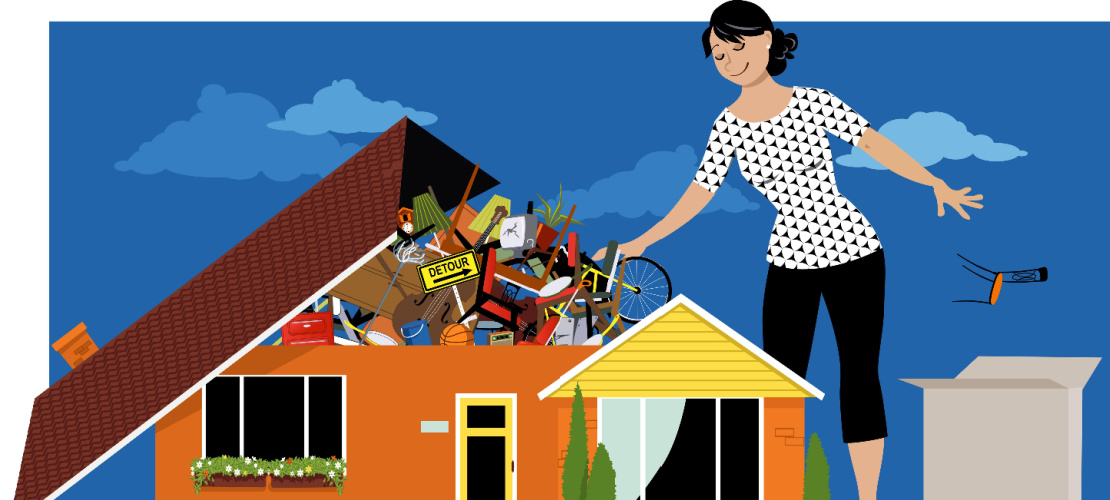
Syllogomania: what exactly is it?
With an estimated prevalence of between 2 and 6% of the general population, syllogomania is a disorder defined by the scientific community as "a difficulty in throwing away or parting with possessions, often worthless, to the point that these objects clutter living spaces and make them almost unliveable". This applies just as much to old adverts as to packaging or piles of clothes that are no longer worn. This obsessive-compulsive disorder (OCD) is also known as pathological hoarding. It is quite different from the activity of the collector, who also piles things up at times, but with a defined purpose: to feed their interest or interests.
Who is affected?
Can we draw up a typical profile of those affected? "Yes, in part. This disorder seems to affect mainly the 50 to 60 age group, with the condition tending to worsen over the years. While both men and women are affected, it seems that women make up the majority of reported cases," explains Christiane Razen, behavioural coach. Several theories offer avenues of research to explain what triggers syllogomania. It may be a symptom linked to a form of social phobia, severe anxiety or even depression, but also to other personality problems such as schizophrenia. All of these situations prevent a person from responding appropriately. The direct route to uncontrolled accumulation. Syllogomania can also be a response to bereavement. Or a symptom linked to the presence of Alzheimer's disease, which makes managing daily life difficult. Finally, studies point to a percentage of cases with a genetic origin, with a recognised hereditary component.
Why and how should we react?
A person with syllogomania is rarely aware of their condition, so it falls to those close to them to take steps to help them overcome it. This help is necessary because the waste and other objects kept for months or even years pose a health hazard. There is a risk of allergies and even illnesses linked to poor hygiene and to infestations of pests attracted by food waste. What treatment should be given? Christiane Razen replies: "There is no single solution for syllogomania. First of all, you have to manage to convince the person concerned to seek help. The medical approach then consists of investigating and treating any associated condition, very often with the prescription of antidepressants or antipsychotics. If Alzheimer's disease is diagnosed in an older person, moving them into care will probably be advised." And if it is "only" a matter of treating the OCD, cognitive behavioural therapy will make it possible to work on the underlying causes.
Photo Shutterstock.
 Health
 Travel
 Beauty