
Cherophobia: when the idea of happiness makes us sad
In your circle of friends, you almost certainly have that good friend with the infectious laugh, who sees everything through rose-tinted glasses. But there is probably also another friend who always has a good excuse not to come out for a girls' night. If so, you have a cherophobe among you.
Translated from French. Original title: “Chérophobie, quand l’idée de bonheur rend triste”
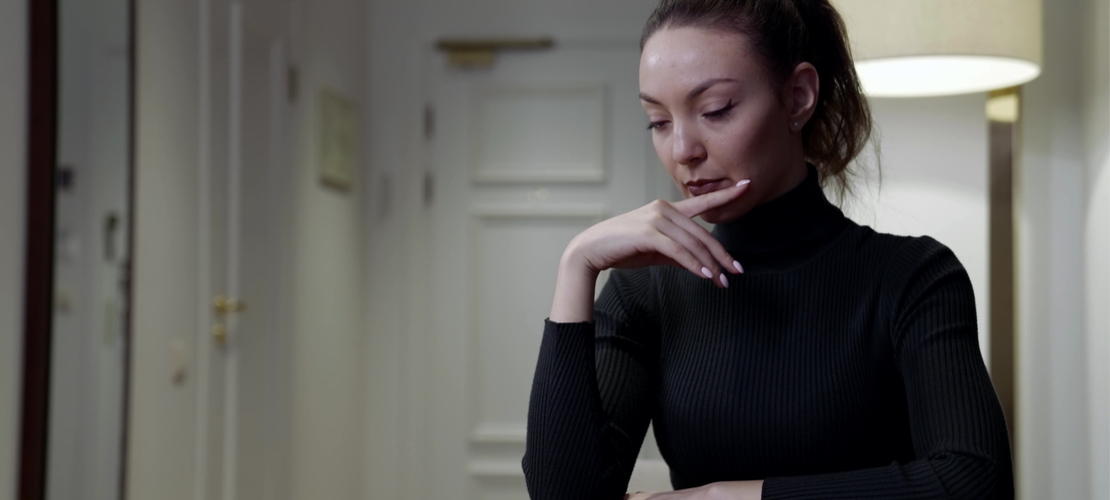
Cherophobia: what is it?
Cherophobia could be described as the fear of those moments of happiness that fill everyday life. There is no real scientific definition, because cherophobia is not recognised as a genuine mental disorder. The cherophobic person is afraid of happiness because they fear paying for it later, with unhappy times as the consequence. "For him (or her), the reasoning is simple: if I experience this moment of happiness today, something bad will happen to me afterwards. It is a phobia often linked to a trauma experienced in the past. For fear of reliving that moment, the cherophobe tries to avoid everything connected with happiness," explains Claudia Callewaert, psychologist.
What are the most common symptoms?
For the cherophobic patient, the priority is to reject anything that might be considered a happy moment. They will therefore avoid taking part in any public or family event, such as a festive party, a birthday or even a work meeting. These are all occasions for which the cherophobic person will invent excuses to stay away and avoid feeling uncomfortable. This attitude earns them the label of misanthrope. Not without some justification, as the cherophobe likes to be alone, withdrawing into a world of melancholy tinged with fatalism. Leaving their comfort zone is their idea of horror. Even though happiness is a notion they accept for others, they imagine that it cannot last. And so they seek to avoid it. At all costs.
What solutions are there?
"Cherophobia is a condition for which there is no specific treatment, as there is for depression. That does not mean, however, that nothing can be done. It simply takes time, a great deal of time, to achieve a result. Cherophobia is not irreversible," says Claudia Callewaert.
Is the help of a psychologist necessary to break out of this vicious circle? "Yes, with one goal to achieve: to help the cherophobic patient realise that every moment of happiness is not necessarily followed by unhappiness. This goal involves relaxation exercises, but also accompanying the person through moments of sharing with family or outings with friends. The aim is for moments of happiness in company to be seen as something positive to seek out, without fearing that the sky will fall on their head. Even if it is not much fun to invite a cherophobe, it remains important not to leave them alone. The support of friends and family remains crucial," Claudia Callewaert stresses. She also adds cognitive behavioural therapy (CBT) to the list of effective treatments, to break the vicious circles in which the cherophobe all too often tends to trap themselves.
 Health
 Travel
 Beauty