
La Mamounia: a waking dream
At the gates of the medina, behind terracotta-coloured ramparts, a world opens up where time melts away. Avenues lined with centuries-old olive trees lead to secret gardens where water, stone and sunlight weave a silent poem. Every corner invites you to slow down, every reflection to daydream.
Translated from French. Original title: “La Mamounia, un rêve éveillé”
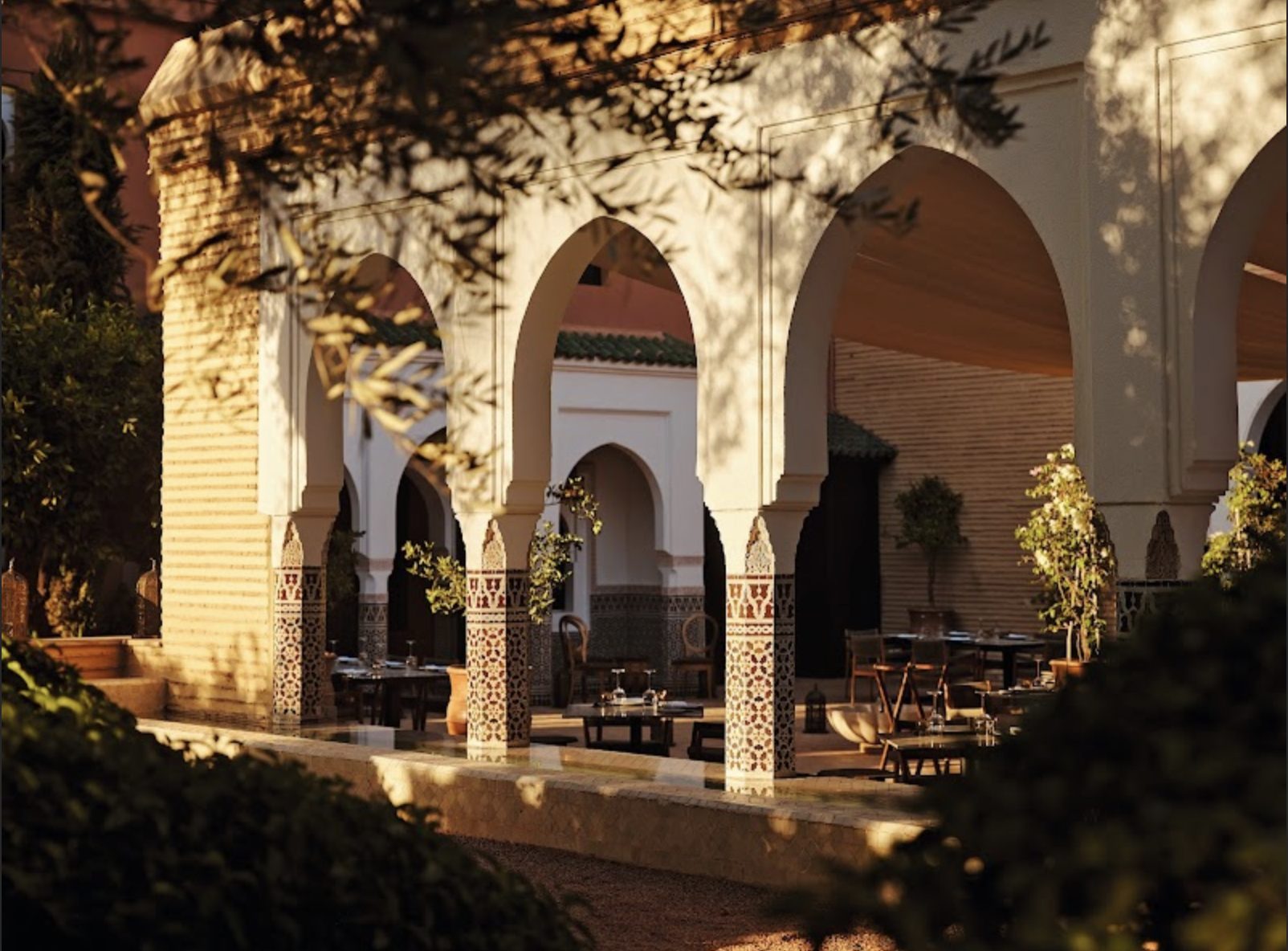
La Mamounia has always celebrated the art of detail and the nobility of gesture. Its elegance is hushed, almost whispered, like a confidence shared between two breaths. Laurence Benaïm describes it as "a tangible mirage, a soul inhabited by time. A promise of elsewhere, kept in the beating heart of Morocco." That is perhaps its secret: absolute beauty, without ostentation.
La Mamounia
Some places have known every kind of glory without ever losing their grace. La Mamounia belongs to that rare family: palaces inhabited by the spirit of those who loved them. Here, artists from all over the world have found refuge, inspiration or rebirth.
Churchill painted the trembling light of the setting sun here. Jacques Brel saw in it "that civilised dream we would like to encounter more often". Charles Aznavour praised "the perfect blend of sunshine, kindness, good taste and calm". From Nicole Kidman to Martin Scorsese, from Isabelle Huppert to Valentino, each has rediscovered the luxury of intimacy here.
The marble corridors, the hushed salons and the gold-bathed terraces have witnessed decades of love stories, film shoots and confidences murmured at dusk. As Laurence Benaïm writes once more: "La Mamounia is not visited, it is lived in. It is a place of awakening, an inner chamber." And that is no doubt why celebrities return, discreetly, the way one returns to oneself.
Alan Kehoane
At the blue hour, when the muezzin's call mingles with birdsong, time holds its breath. Marrakech breathes out, La Mamounia breathes in.
Few places in the world embody the union of art and life so naturally. At La Mamounia, every object, every motif, every shadow forms part of an aesthetic score. The zellige tilework, the stucco and the carved woodwork tell of centuries of Moroccan craftsmanship.
Works by Jacques Majorelle, Hassan Hajjaj, Chaïbia Talal and El Glaoui punctuate the spaces like flashes of light. The monumental chandelier designed by the duo Jouin Manku, inspired by Berber necklaces handed down from mother to daughter, hangs in the lobby like a jewel of glass and metal, a discreet tribute to Moroccan women and their legacy of elegance.
The Bar Majorelle, hushed yet vibrant, evokes the 1930s; the Moroccan salon, with its hand-painted ceilings, invites quiet contemplation. And outside, the gardens extend the human touch: olive trees, palms, old roses and bougainvillea compose a living painting. Every stone, every flower, every reflection in the water bears witness to the same respect: for time and for beauty.
Alan Kehoane
A hundred years of splendour, and nothing has faded. La Mamounia does not drift off into nostalgia. It moves forward, true to its soul. Its secret? A rare balance between the glitter of the world and the peace of intimacy, between the Morocco of origins and the Morocco of today.
Assouline's La Mamounia is more than a book: it is a journey. To leaf through its pages is to listen to the murmur of fountains, feel the warmth of marble beneath your hand, and live the slowness of an afternoon in Marrakech.
As evening falls over the gardens, the lanterns light up one by one, like stars. The air fills with incense and a gentle breeze. You can barely hear the whisper of the olive trees, the footsteps on the mosaics, the laughter fading into the distance. And suddenly, you understand: this place belongs neither to the past nor to the present. It belongs to those who dream.
La Mamounia – text by Laurence Benaïm, Éditions Assouline, €120
www.assouline.com
Cover photo, copyright: Anson Smart
 Travel
 Health
 Beauty