
Hannelore Caspers (58) swapped Flemish Gooik for a stay in rural Morocco
In the months that followed, successful interior stylist Hannelore Caspers renovated the property into the colourful Tifawine, a beautiful place to stay where you can lodge ethically and connect with Berber culture. She didn't do it alone: she was helped by 38 Berber men who lived on site and worked with her seven days a week, using centuries-old techniques. For the interiors, she was assisted by local artisans. On 5 September 2022, she opened the Tifawine kasbah.
Translated from Dutch. Original title: “Hannelore Caspers (58) verruilde het Vlaamse Gooik voor een verblijf op het Marokkaanse platteland”
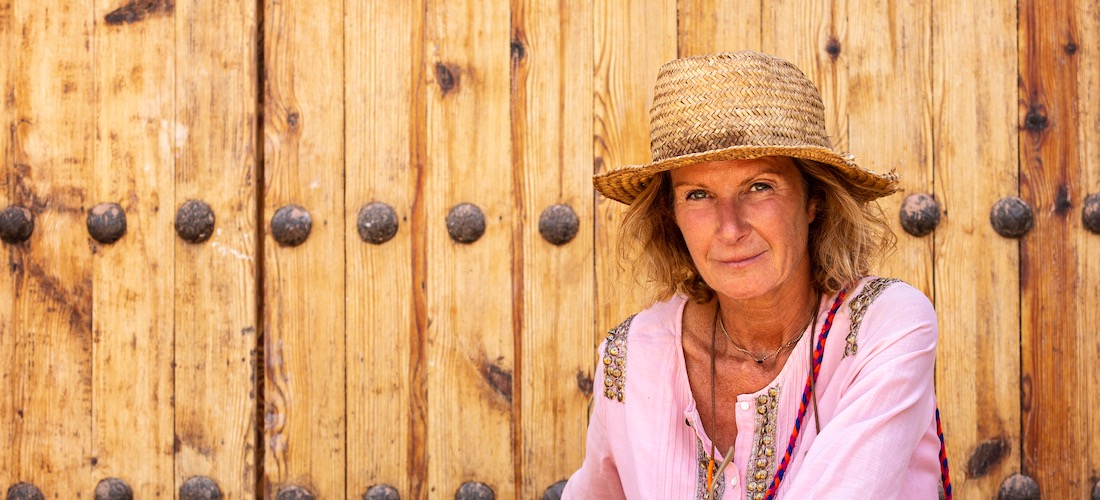
The warm colours of Morocco
Swapping the calm of Gooik for the chaos of Morocco was not exactly on Hannelore's agenda. Yet 15 years ago she lost her heart to the country's warm colours, culture and people. Hannelore and her husband Kris were reminded that life is all about 'giving' by the hospitable people around her. "People here have nothing, and yet they are incredibly generous. They have just enough food to feed their whole family, and even then they share it." That is how she found the inspiration to set up her current social project: with the renovation, she not only gave the men work and a future, but the result also offers a platform to the Berber women, who make clothing, rugs and other decorative items that visitors to Tifawine can buy. With that money, she can in turn buy new pieces from them. "They are often at home doing the housework. By making the decorative pieces the kasbah is furnished with, they can still work from home or from a workshop and earn some extra money." And what about the money she earns from the overnight stays and the activities on offer? She pays none of it out to herself. All profits go to local Berber initiatives, such as the village school, teaching agricultural techniques or supporting Berber women's cooperatives. "The aim is not to make big money here. We simply want to cover our costs, have good occupancy and make sure people are well. Take Mohammed, the gardener. He has a child studying medicine in Marrakech, but that costs a lot of money. By working here, he can afford it. Or the other gardener, Abdel. His father died when he was 15, which meant he had to give up his studies to support his family. He now has to keep them afloat, and the whole family gets by on his wages."
Finding this kasbah was quite a quest. "From the age of 50, I said I wanted to move to a country with beautiful light, lots of colour and lovely people. I found that in Marrakech. The kasbah is about 19 kilometres from the medina, the oldest part of North African cities. Even though it's barely a half-hour drive from the hustle and bustle, here you feel as if you're at the end of the world. It's an oasis of calm with a phenomenal view over the Atlas Mountains. It took three years to find a place that was authentic and met our requirements. My husband still has his job in Belgium, but the plan is for me to manage everything here and for him to move here one day too. For now, he comes over from time to time. I did the renovation on my own. In Belgium I did that as part of my work as an interior stylist too, but doing it in North Africa is very different from doing it in Belgium. Here everything is done by hand: even the swimming pool was dug by hand. Everything happens at a different pace here, and nobody complains."
A day in the kasbah
"After you wake up in the kasbah, the sporty types can go for a walk or a morning run in the desert. I like to join my guests. Then breakfast is served anywhere on the two-hectare estate that people like: on the terrace, the rooftop, the covered terrace, the sun terrace, by the swimming pool or in the olive grove. Or if you'd rather have breakfast under the palm tree, that's of course possible too. Everything is freshly made: raib (local yoghurt) with granola and seasonal fruit, Moroccan pancakes, homemade bread from the clay oven and more." After breakfast, guests can do whatever they like: relax by the pool or in the hammam, enjoy the countryside, visit the Yves Saint Laurent Museum, play golf, shop or while away time in one of Marrakesh's trendy bars and terraces. She also hopes people will be open to new experiences and to contact with authentic Berber culture. Prefer something more active? Hannelore is happy to give her guests tips on the best cycling, running and hiking routes in the Atlas Mountains, where they also organise excursions with local guides. "For example, we work with a mountain guide who leads wonderful hikes. You are out for a whole day. There are also people who want to visit the medina with a guide to lead them through it. We do this in our own village, Tamesloht, too. On Fridays there is a big market there with endless spices and vegetables. A real sight to see." The day ends with a sunset apéro. "Then we go to a unique spot in the middle of nowhere to have a drink together and enjoy the unforgettable view. Afterwards we return to the kasbah to create a cosy atmosphere with, for example, a Berber musician, and we lay the table with hundreds of little candles. We cook fresh every evening and eat typical local dishes. Or people take an organised transfer to the medina to try other local food. The evenings here are very peaceful; you only hear the sounds of nature. Candles twinkle on and around the swimming pool, by the rooms, on the terraces. Part of the garden has no electricity but authentic wrought-iron lanterns, which we put candles in every day." The name Tifawine is no coincidence: it is Berber for 'place of many little lights', referring to the lights that illuminate the kasbah in the evening. "That's typical of Marrakech: there's a real One Thousand and One Nights atmosphere here. It's utterly enchanting."
Practical information
- Garden View room: € 155/night, breakfast included
- Atlas View room: € 175/night, breakfast included
- Suite with private pool: € 250/night, breakfast included
*Prices are based on a stay for two people. Each extra person in a room costs an additional €30 per night. Each extra person in the suite costs an additional €40 per night.
Tifawine is a traditionally restored kasbah with six rooms and a suite, half an hour's drive from Marrakesh, both from the centre and from the airport. It was set up by interior stylist Hannelore Caspers using traditional techniques and furnished with local materials. As well as being a wonderful place to stay, Tifawine is also a socially engaged project. All profits go back to the Berber community.
More info: tifawine.ma
This interview with Hannelore Caspers appeared in the winter edition of Fifty & Me Magazine, which is in the shops now. Want more tips like this or beautiful stories? Pick up a copy now or subscribe.
 Travel
 Health
 Beauty