
Colourful rhythms in Havana
To soak up the atmosphere of Havana is to discover its legendary landmarks, wander its colourful streets where vintage cars are proudly displayed, and learn about its unique culture.
Translated from French. Original title: “Rythmes colorés à La Havane”
Havana: a wealth of history
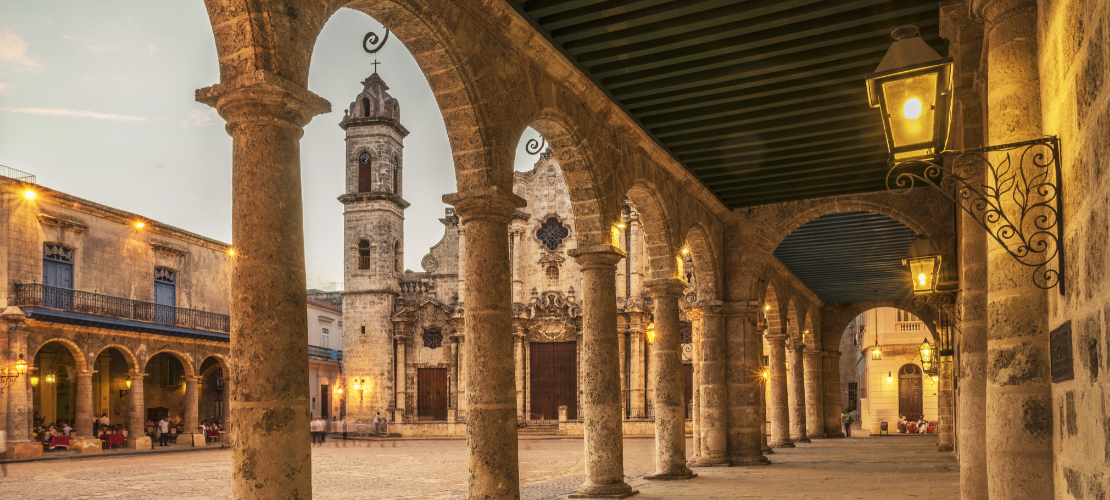
Cuba has lived through very hard times, notably dictatorships and the stranglehold of certain countries over its affairs, but it has emerged all the stronger for it. With its blend of cultures stemming from successive colonisations, Havana benefits from a multitude of influences, which can be felt in its architecture and its culture. Today, you can still see the Havana Riviera, a magnificently preserved hotel that was once a casino-nightclub where gangsters did business. Opened in 1959 by the American Meyer Lansky, it was a mafia hideout. This came to an end with Fidel Castro's revolution. The Tropicana, meanwhile, was the only place of entertainment not owned by the American mafia. Known since the 1930s as a casino-cabaret, it was entirely Cuban and served as a showcase for local artists. It is still open today.
Old Havana (La Habana Vieja) has been a UNESCO World Heritage Site since 1982. Some buildings have had to be renovated, and so well that it is hard to tell which are original and which have been restored. The old town is rich in history, while the rest of Havana is relatively new. Built mainly at the beginning of the 20th century, it quickly became the most modern city in Latin America. The Malecón, for example, is an eight-kilometre promenade that begins at the port of Habana Vieja, runs through the city centre and ends in Vedado. In summer, it serves as a refuge for Cubans who live in the overcrowded city centre. On one side, you can enjoy the view and the fresh air of the ocean; on the other, treasures in a variety of architectural styles: colonial, Art Deco, Art Nouveau, fifties… People also stroll here simply to enjoy the spectacle, or for a romantic rendezvous – it is a meeting place in its own right.
© Brent Winebrenner
Another must-see is La Guarida, the city's most famous restaurant. Opened in 1996, it served as a backdrop for the film "Strawberry and Chocolate", which accelerated its renown. It serves Cuban cuisine given a contemporary twist. Since then, the restaurant has grown from 12 covers to being able to serve more than a hundred, with a rooftop where Madonna celebrated her 58th birthday!
Music as the driving force
What would Cuba be without its music? You cannot walk down the street without hearing a lively rumba, salsa or mambo tune! Originally, Cuban music came from the African slaves who arrived on the island with their instruments. One of the only rights they had was to sing, dance and make music. Perhaps that is why Cuba has so many different musical rhythms. Before the revolution, Cubans taught themselves music, until the conservatoire opened. For them, music and dance are vital – an expression of who they are. Besides Latin dances, ballet plays an important part in Havana. The ballet school is in the old town and has trained some of the country's greatest stars. Even today, the capital's residents regularly go to the ballet, and every performance is still sold out.
© AC Productions - Getty Images
There is so much to see and experience in Havana, and in the country as a whole. This tiny summary of Cuban culture makes you want to see it with your own eyes. Shall we pack our bags?
Havana Blues, Assouline Editions, 95 € – Assouline.com
Cover photo credit: © Buena Vista Images - Getty Images
 Travel
 Health
 Beauty