
Bed bugs: a holiday souvenir you didn't want
The boom in tourism has made pest infestations worse. Bed bugs, for instance, have become a global health concern once again. Without knowing it, you may have brought some home in your holiday luggage.
Translated from French. Original title: “Les punaises de lit, un fléau qui peut gâcher le retour de vacances”
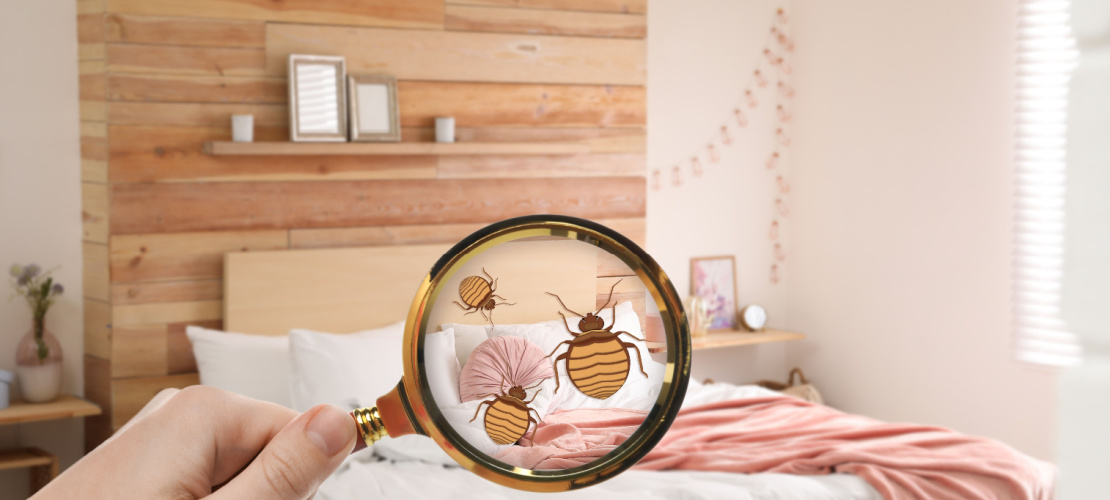
Bed bugs: what are they?
Belonging to the Cimicidae family, bed bugs are nocturnal, blood-feeding insects (they feed exclusively on blood). Almost wiped out in our part of the world since the 1940s, they are now back with a vengeance. Tiny, at 5 to 8 millimetres long, these insects favour any room where human activity is concentrated, with a particular liking for bedrooms, though not exclusively. A bed bug can live for up to 18 months, almost twice as long if food is available. As with flies, having bed bugs at home is not the result of poor hygiene. It is down to their resistance to today's insecticides and to the popularity of travel.
What are the health effects of bed bugs?
The presence of bed bugs is often discovered simply by examining your skin. You may find bites accompanied by (intense) itching, which can resemble mosquito bites, except that the marks seem to form a line. Unlike mosquitoes, bed bugs do not transmit diseases, but their bites can cause allergic reactions in some sensitive people. The real risk lies in a secondary infection caused by scratching the bitten areas. The lesions clear up on their own after about ten days, without complications.
What are the tips for keeping bed bugs out of your home?
The following advice in no way guarantees that you will avoid bringing bed bugs home, but it can help reduce the risk. "During the holiday season, make sure you inspect the bedding as soon as you arrive at your hotel, even if it is a five-star establishment. Two other pieces of advice are just as important: do not put your clothes away in the wardrobes or drawers of the room, as furniture is a place where bed bugs like to hide, as are rugs. Be careful with flea markets too, where the origin of the clothes and furniture is unknown. And of course, forget about buying a second-hand mattress," stresses Henri Dumont, a druggist used to advising his customers.
How do you get rid of them?
Henri Dumont explains: "Fighting a bed bug infestation calls for swift action and is far from a simple task, with no guarantee of success. Insecticides, apart from being hazardous in a living space, prove to be of little use." So what advice can be given? "A few tricks do work, such as washing suspect laundry at 60°, especially anything bought second-hand. Then vacuum the bedding, rugs and curtains in the bedroom. For bedding, there are also special protective covers to guard against bed bugs. And if the infestation is serious, don't try to tackle it on your own. It is better to contact a specialist company quickly, as it has the experience and the suitable products to deal with the problem," he concludes.
Photo Shutterstock.
 Beauty
 Beauty
 People