
Mussels: why they're so good for you (and for the planet!)
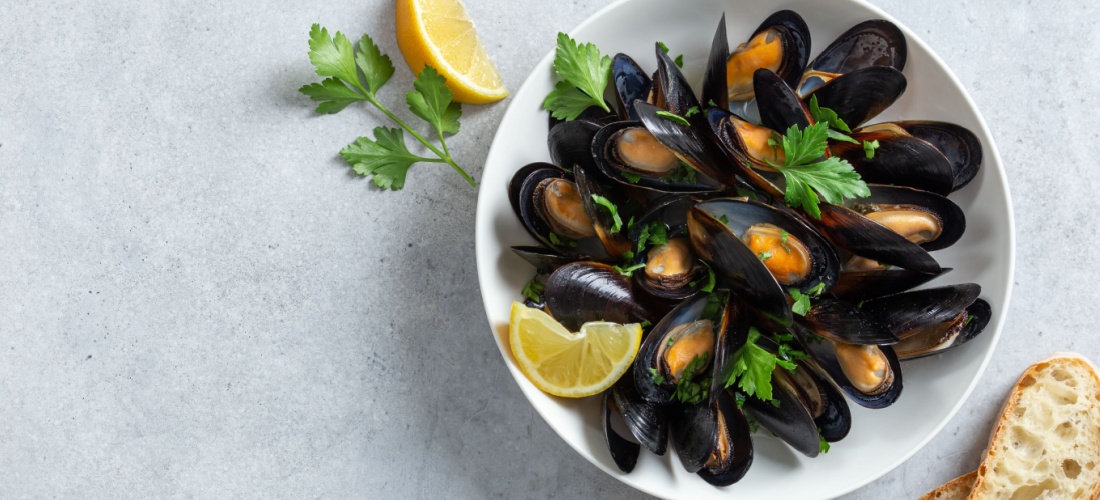
A steaming pot of fresh mussels in a fragrant white wine sauce… It's a classic Belgian dish that still delights us today. The black shellfish are generally harvested from early July, with the season running until early April the following year. That means you can enjoy mussels for nine months of the year. A handy rule of thumb is to check whether the letter 'R' appears in the name of the month: in summer, autumn and winter there are mussels, but in spring there usually aren't.
Translated from Dutch. Original title: “Mosselen: waarom ze zo gezond zijn (en ook nog duurzaam!)”
You're glowing!
That also means nine months of enjoying this healthy delicacy at its very best. Mussels contain an incredible amount of polyunsaturated omega-3 fatty acids, vitamin B12, iron, zinc, selenium and iodine. And did you know that all these healthy vitamins and minerals even have an anti-ageing effect? Omega-3 fatty acids help keep skin cells supple and hydrated, reduce inflammation and protect against premature ageing. Vitamin B12 promotes cell renewal and a fresh complexion, while iron ensures well-oxygenated skin, which is essential for a radiant look. Zinc supports the production of collagen, which keeps the skin firm and elastic, and helps regulate sebum production to prevent acne. Selenium offers protection against damage from free radicals and UV radiation, which reduces wrinkles and fine lines. Iodine, essential for healthy thyroid function, promotes the regeneration of skin cells and contributes to a hydrated, glowing complexion. Could a pan of mussels actually be the best kept beauty secret?
Mussels are bursting with minerals
Mussels are rich in iodine, iron, phosphorus and magnesium. The magnesium content of mussels is in fact much higher than that of meat and other types of fish. This is beneficial, because magnesium is crucial for building your bones and helps relax your muscles. Feeling stressed or tired? A delicious meal of mussels can work wonders then too.
Low in calories
Mussels are also a fantastic source of lean protein. A protein-rich meal leaves you feeling full, so you are less likely to overeat. With just around 86 calories per 100 grams, mussels are an excellent choice if you are watching your weight.
Good for you, good for the oceans
Have you decided yet what will be on the table tonight? When buying mussels, look out for the MSC label. It is a reliable indication that the mussels come from sustainable fisheries. MSC-certified mussel fisheries are regularly inspected by independent experts and scientists, and must make their catch data and stock figures available for scientific evaluation.
The MSC (Marine Stewardship Council) stresses that mussels play a crucial role in the marine ecosystem. A single small mussel can filter up to 15 litres of seawater a day, which means that large mussel beds act as a huge filtration system for our oceans. What's more, mussel beds are an important habitat for other marine animals and an important food source. This contributes to cleaner water and a healthier marine environment.
How to prepare them
Before you start preparing your MSC-certified mussels, it is important to inspect them carefully. Open mussels should be discarded, unless they close when you tap them, which shows they are still fresh. Then rinse them thoroughly under running water and store them in a cool place at between 2 and 7°C. This avoids breaking the cold chain and keeps the mussels nice and fresh.
They then only need to be cooked for about five minutes, followed by another 5 minutes' soaking in hot water. After that, they can be processed further or eaten straight away.
Our favourite recipes
Classic mussels in white wine: Heat a little olive oil in a large pan, add chopped onion, garlic and celery, and fry until soft. Add a generous splash of white wine and bring to the boil. Put the cleaned mussels in the pan, cover and cook over a high heat until the mussels have opened (about 5-7 minutes). Sprinkle with chopped parsley and serve with crusty bread.
Mussels in tomato sauce: Make a simple tomato sauce by frying onion, garlic and tomatoes and letting them simmer. Add the mussels and cook until they have opened. Serve with pasta or rice.
Mussels with fennel, lemon and samphire dip: Cook the mussels and make a dip with samphire, fresh basil leaves, extra virgin olive oil, and the juice and zest of the lemon, plus a little salt and pepper. If you like, put the mussels in the oven for a moment before serving them with the dip.
Steamed mussels with herbs: Steam the mussels with a little water, lemon juice and your favourite herbs such as thyme, bay leaf and parsley. Enjoy your meal!
Want to know more? msc.org
Would you like the best stories from Fifty & Me delivered to your inbox? Then sign up for our newsletter.
 Health
 Travel
 Beauty