
Éric Boschman's Top 5 Wines from Roussillon
Translated from French. Original title: “Le top 5 des vins du Roussillon par Éric Boschman”
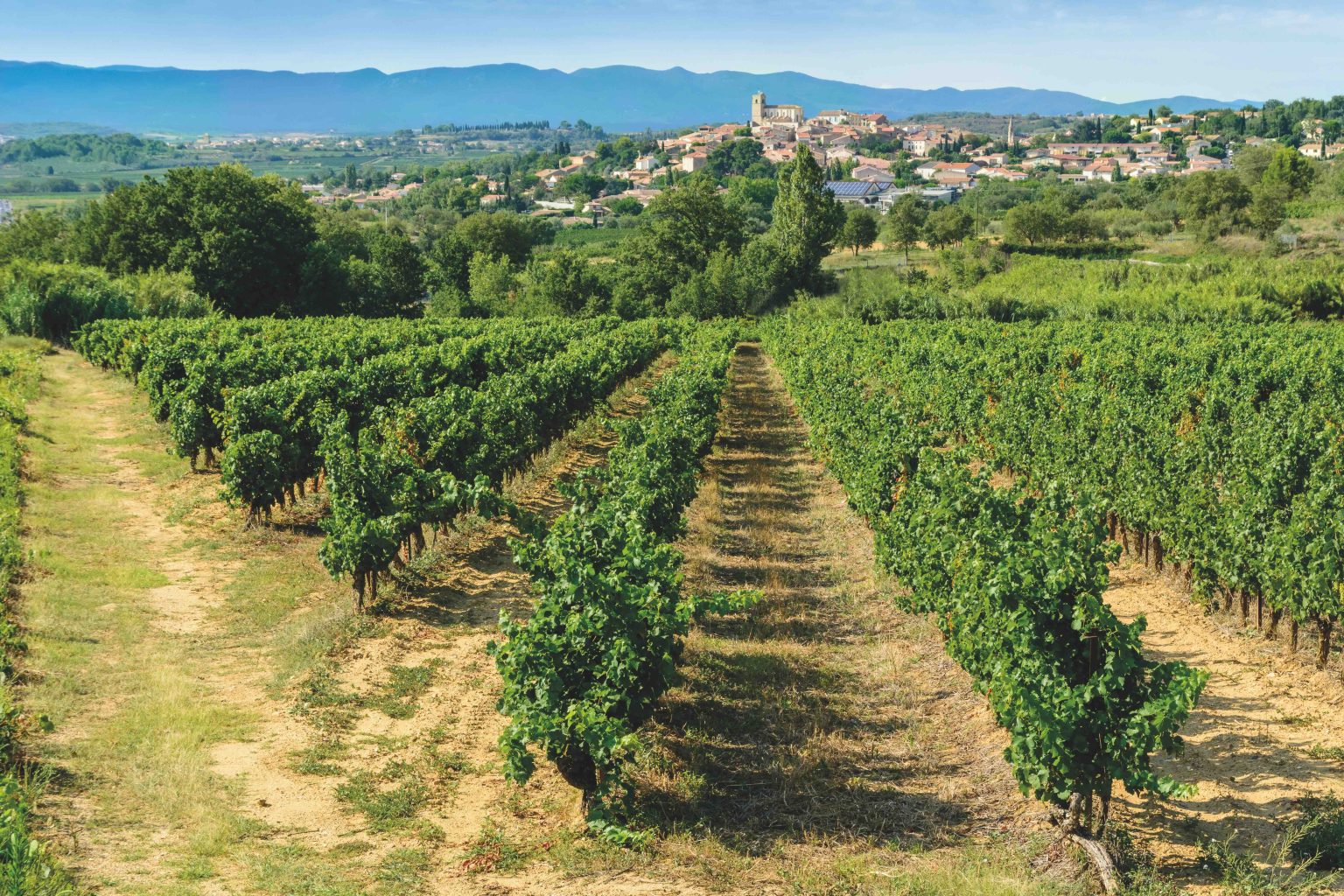
©Lydie Nesvadba
It is time to rediscover the regions dear to our hearts, such as Roussillon, those places we love to hate because they are lovelier, sunnier, more this or that, yet where our chauvinistic streak will always find something to grumble about. After all, if paradise isn't on our doorstep, why ever come home… And yet there are so many paradises within easy reach. There is no need to cross the globe to find exceptional landscapes and unforgettable flavours.
Happiness is just around the corner – run, before it slips away
When the plane touches down on the runway at Perpignan airport, or when I cross the little rise near the Taux lagoons if I'm driving there, it is the same emotion every time. The Canigou rising on the horizon like a lighthouse, a strange vibration that gradually takes hold of me; in the heat of summer, the scent of warm sap flooding my senses, rock rose, hot thyme, broom, and the wind, be it the autan or the sea breeze, that ceaselessly whips the landscape. All of it makes up the opening credits of that magical moment when I come home to a home I happened upon by chance.
Roussillon is a region that combines mountains and sea, seaside resorts with names that make the eyes sparkle and austere Cathar citadels, churros sellers on the sand and the traditional Catalan dishes of the villages inland.
A mosaic of sensations, emotions and characters
The people here were forged on the Pyrenean foothills, along the three coastal rivers, squeezed between Montpellier and Barcelona and buffeted by the history of this shifting border, in this northern fringe of Catalonia. They have strong characters and a rough way of speaking, with an accent as rocky as a mountain torrent. Perpignan is the centre of the world, or so Dalí said, and even if that isn't quite true, there is no harm in believing it.
In a word, Roussillon is a piece of my roots
It is where I wore out the seat of my trousers as a young sommelier, where I developed concepts, "hikes from vineyard to cellar", and where I fell in love too. And I still adore it. Especially when I am deep inland, far from the colourful, sun-seeking crowds, in the welcome shade of a cellar, a wine store or a village inn. I drink Roussillon and I eat Roussillon.
Curiously, there is hardly any trace of my visits and stays in the area beyond my memory, beyond some warm embraces with a few viticultural dinosaurs hidden away at the back of a cool cellar. Things seem to keep well there. Unless it is the wine.
So I had left no mark on the sky, the waters of the rivers or the rocks of the hills. It's crazy. Perhaps that is why I fell in love with this region of Roussillon almost half a century ago – I exaggerate a little. When I wander through the countryside, I am a Cathar, a lunar mountebank, a winegrower marching to the Narbonne rally, a snail hunter, or simply a tourist who barely skims the landscape with his eyes.
I have also tasted a host of cuvées in the area. Over the years I have tasted the evolution of the wines: changes of style, the emergence of a new trend, the rise of a few natural winemakers, the slow shift from vins doux naturels towards dry wines, triumphant syrahs, nicely spiced grenache, the development of more delicate wines. The joy of time passing.
Let's make the most of the "back season", as it is so aptly called, of this Indian summer that doesn't exist only in northern America, and set off on a gentle adventure to villages emptied of their hordes of tourists and matching children. Let's go and see the end of the harvest, the vats fermenting and the locals exhausted after this intense time. The 2023 harvest is a difficult one across France, and the region is no exception. To say that the quality of the grapes is uneven is an understatement… yet another vintage that will separate the great winemakers from the rest.
Tasting the Côtes du Roussillon
Les Pierres Plates 2021
Vignobles Terrassous
Vermentino, macabeu, grenache
On sale at Wine Not (1050)
The first nose is rather shy, but with a little oxygen a fairly exotic side emerges, with touches of mango and citrus. It quickly moves towards lime and pear, and is nicely complex. On the palate, I really like the green apple note, its cutting edge with plenty of richness behind it, followed by a lovely hint of bitterness. Serve as an aperitif with Collioure anchovies and olives. 15/20
Aulius d'En Guiter 2021
Grenache gris
On sale at Anne Bisschop (0476/31.31.99)
The colour is pale pink verging on silky. The first nose is white peach with notes of tonka bean and even cocoa. Then it moves on to rather delicate, floral touches. On the palate, it is lively and taut, with a touch of bitterness on the finish. Really well made. 17/20
Clos del Rey 2019
Old-vine grenache noir, carignan
la-cave-des-sommeliers.com
The colour is a deep, very dense garnet. The nose needs a little oxygen to open up. After a minute, it bursts with fruit: blackcurrant, elderberry. Then comes black pepper, a little cinnamon, clove. It is magnificently intense. On the palate, it starts to open up. It is nice and long with rich tannins that grip but are ripe. It is very silky and very elegant, yet broad-shouldered too. The kind of wine to go with a serious piece of barbecue by the fire in autumn, along with a pan of sautéed mushrooms. 18/20
Alchimie 2020
Grenache, syrah, carignan
Domaine de la Part des Anges
domainelapartdesanges.com
The colour is a deep ruby. On the nose, carignan dominates at first with its tart side. The syrah then arrives, bringing slightly more eucalyptol touches, its classic side. The grenache does the rest with its peppery character and fruit. On the palate, it is a little austere at first, or shy, who knows. The tannins are very tight, and this is a wine that asks you to wait a little longer. Drink with a good piece of tuna cooked on a plancha, which will give it a little of the richness it needs. 16/20
Héritage du Temps
Amber Rivesaltes
5 years old
Singla
fontaine-aux-vins.be
A lovely bronze colour with topaz glints for this extra-aged macabeu cuvée. A wine that is far too rare because it isn't fashionable. Which just goes to show that fashion is often nonsense. A glass of this as a digestif, or with a walnut or apricot tart, is a rare form of happiness. The nose begins with that very particular aroma of old cellars: somewhere between the wood of damp casks, beaten earth and the yeasts that have coated the walls. In short, it is perfect. Then it moves towards dried apricot and toasted flaked almonds. You can find whatever you like in it, it is so complex. On the palate, don't think it is all sugar: there is also a remarkable acidity that counterbalances the density of the wine, and it is really very good. 18/20
Cover photo: Shutterstock.
 Health
 Travel
 Beauty