
Cooking with sea fennel, a favourite in the Greek Blue Zone where dementia is rare
Translated from Dutch. Original title: “Zo kook je met zeevenkel, populair in de Griekse Blue Zone waar dementie zeldzaam is”
Greek Blue Zone
Thanks to their lifestyle, the inhabitants of Ikaria live on average 10 years longer than the average European or American. According to doctors, the Mediterranean diet, the typical active daily routine, strong family bonds, close friendships and plenty of relaxation are all important factors.
On the Greek island, people eat a lot of locally grown, unsprayed fresh fruit and vegetables. They also consume plenty of honey, bread, olive oil, wine, green tea, coffee and... sea fennel. Meat and fatty foods are kept to a minimum, while (fresh) fish is eaten in large quantities on Ikaria. Both these healthy fats and antioxidants are directly linked to brain health, which is one reason why dementia is less common in this region.
Health benefits
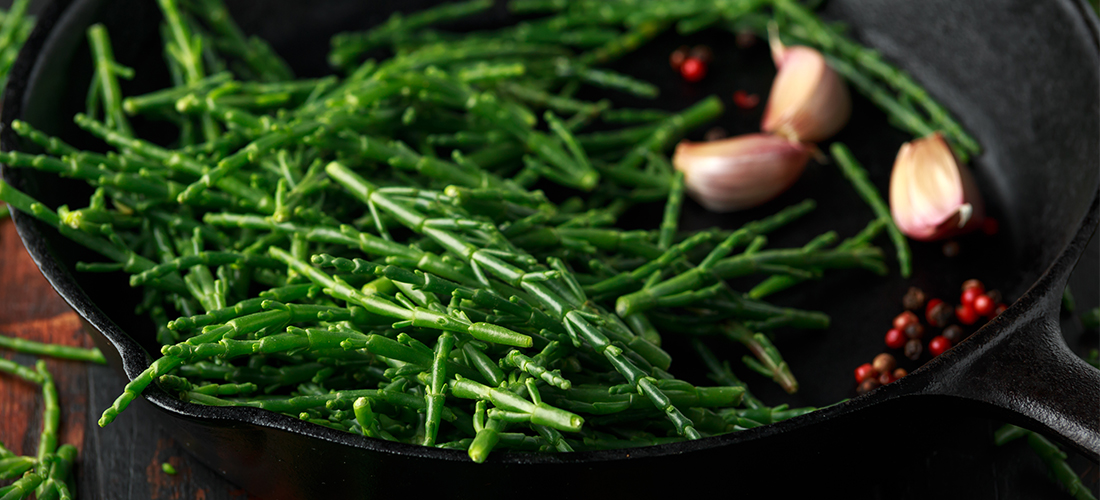
Sea fennel, also known as rock samphire or kritamo, is in fact simply those strands you always see lying along the waterline on the beach. Yes, that really is sea fennel. It gets even stranger when we tell you that those very strands have a deliciously herby, salty and aromatic flavour. What else does it do for you? Plenty: it is rich in vitamins A, C and E, as well as phytonutrients, polyphenols and antioxidants. And it is above all the polyphenols, antioxidants and omega-3 fatty acids that improve cognitive health.
Read also
Probiotics: how healthy are the supplements really? >
Dishes with sea fennel
In terms of taste, sea fennel resembles asparagus, but slightly saltier and with a hint of herbs. It is most often used in salads, soups and fish dishes. You can use sea fennel as a lighter substitute for capers, or chop it finely and add it to tomato or seafood soups, ceviche and fresh salads. Eaten raw, it is also delicious with a little chilli oil.
Extra tip: sea fennel can also be dried and then ground into a powder to use as an alternative to salt. No shortage of experiments here, then. However you serve it, it is good for your brain either way.
Would you like to receive the best stories from Fifty & Me in your inbox? Then sign up for the newsletter.
Image © Shutterstock
 Health
 Travel
 Beauty