
All the benefits of lovage
In the Apiaceae family, you will know parsley and celery. Two kitchen staples. So why not also turn to their distant cousin? Lovage, also known as mountain celery or perpetual celery, whose foliage gives away its kinship with celery. A hardy perennial herb that no garden should be without. For its many benefits.
Translated from French. Original title: “Tous les bienfaits de la livèche”
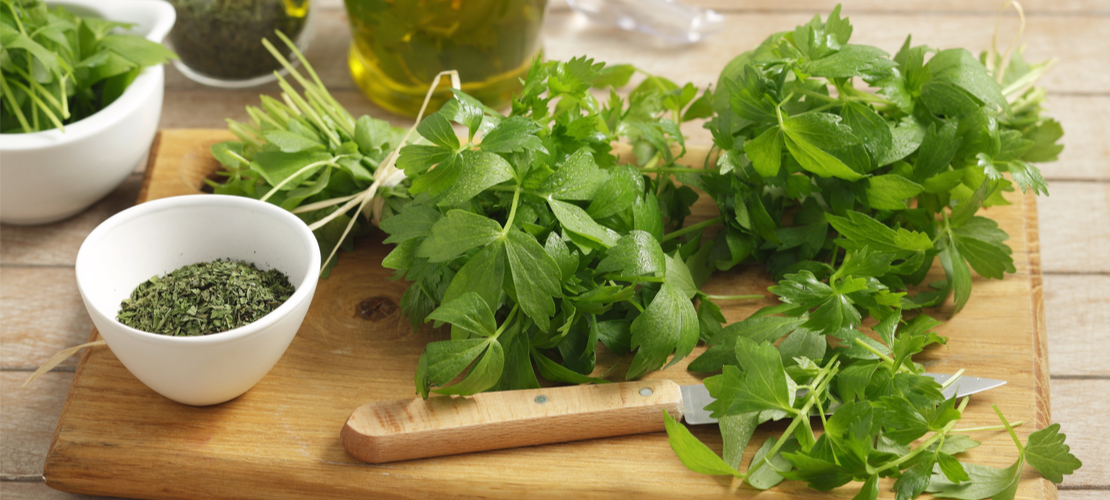
The strengths of lovage
- Detoxifying action, helping to eliminate toxins
- Rich in vitamin C
- Helps prevent kidney stones.
- Soothing effect on period pains, migraine and cramps
- Powerful antiseptic
- Used in herbal medicine
- Aids digestion
- Eupeptic effect. To counter intestinal gas, bloating and aerophagia.
- Good for the heart, with better regulation of the heart rhythm
- Stimulates the immune defences.
An ally against cystitis
A very common complaint among women, cystitis is as painful as it is wearisome. Without being a miracle cure, lovage can help to ease the symptoms. Drink it as an infusion, no more than three times a day. To prepare it, you need just 2 teaspoons of dried, ground roots. Then add hot water and leave to infuse for around 10 minutes. If you notice no real effect on the cystitis, medical advice will be needed. This will generally mean antibiotics.
How should you eat it?
The first advantage of the plant in the kitchen: every part of it is edible. From the foliage to the roots, by way of the seeds. But it is mainly the leaves that are used in recipes, with a flavour that is unmistakably reminiscent of celery. As its taste is very pronounced, do not add too much lovage to your dishes, or you risk masking the flavour of the other ingredients. Lovage can be used to accompany a salad. It can be eaten cooked (in a soup, for instance, or with mussels) or raw. It is particularly well suited to fish dishes. Its seeds can also be used to make infusions or a good hot toddy if you have caught a cold.
Growing lovage in the garden
Having your own supply at home could not be easier. Simply grow lovage in a corner of the vegetable patch. It is not demanding. A spot in full sun will suit it perfectly, with fertile, well-drained, slightly moist soil. In summer, you will also enjoy its lovely yellow-green umbels. The plant attracts bees too. One more benefit.
A few contraindications
Before starting a course of lovage, it may be worth checking with your doctor, particularly if you suffer from kidney failure or nephritis. Lovage is not recommended for these two conditions. The plant also has photosensitising properties, especially as regards the use of its essential oil. So take care.
 Health
 Travel
 Beauty